Office Cleaning Schedule: Build a Practical Plan
A practical office cleaning schedule starts with the workplace, not a standard daily and weekly template. Map each area, assign tasks and owners, set frequencies around traffic and operating hours, and use the completed scope when comparing cleaning quotes.
Build an Office Cleaning Schedule That Works
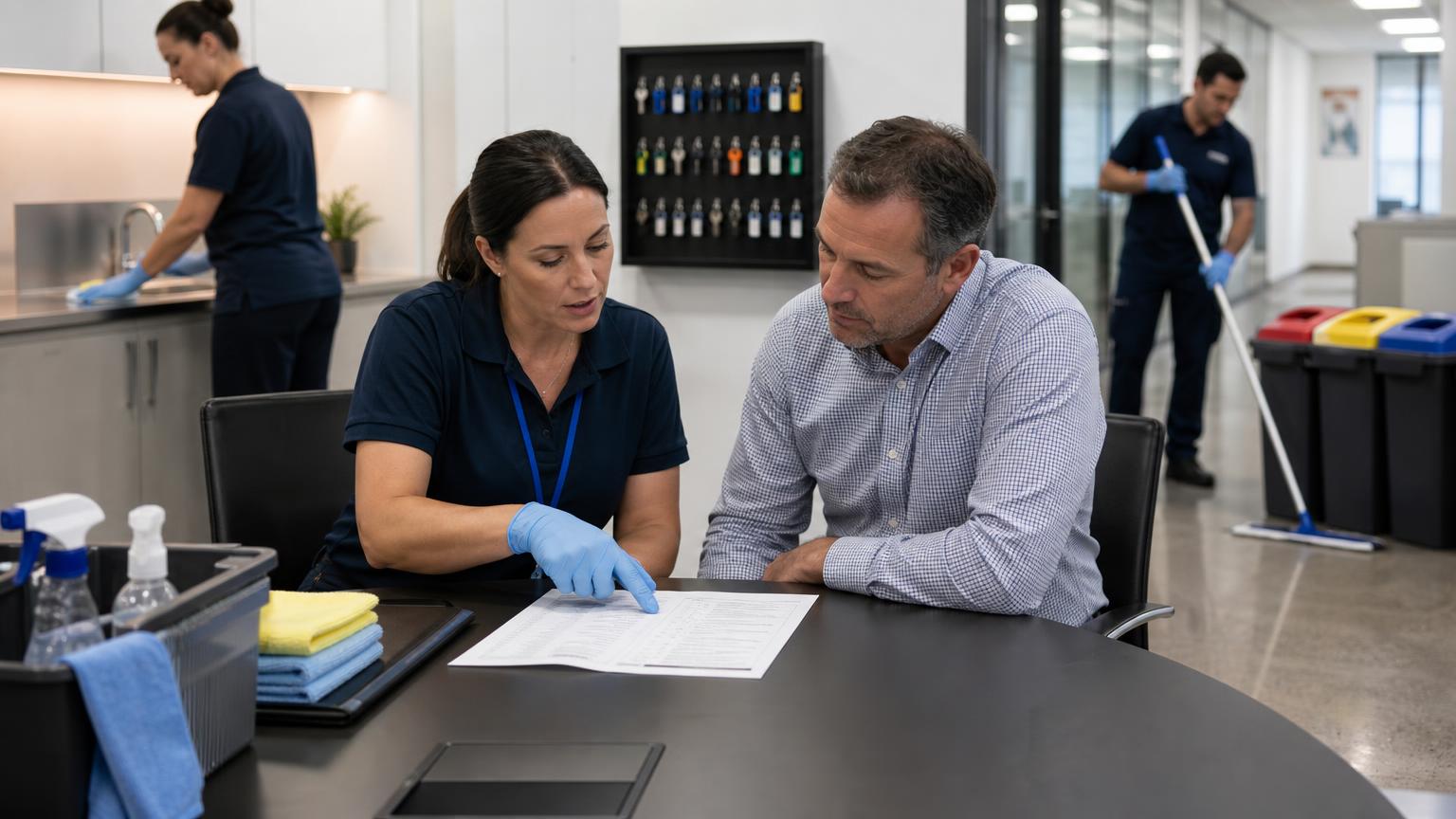
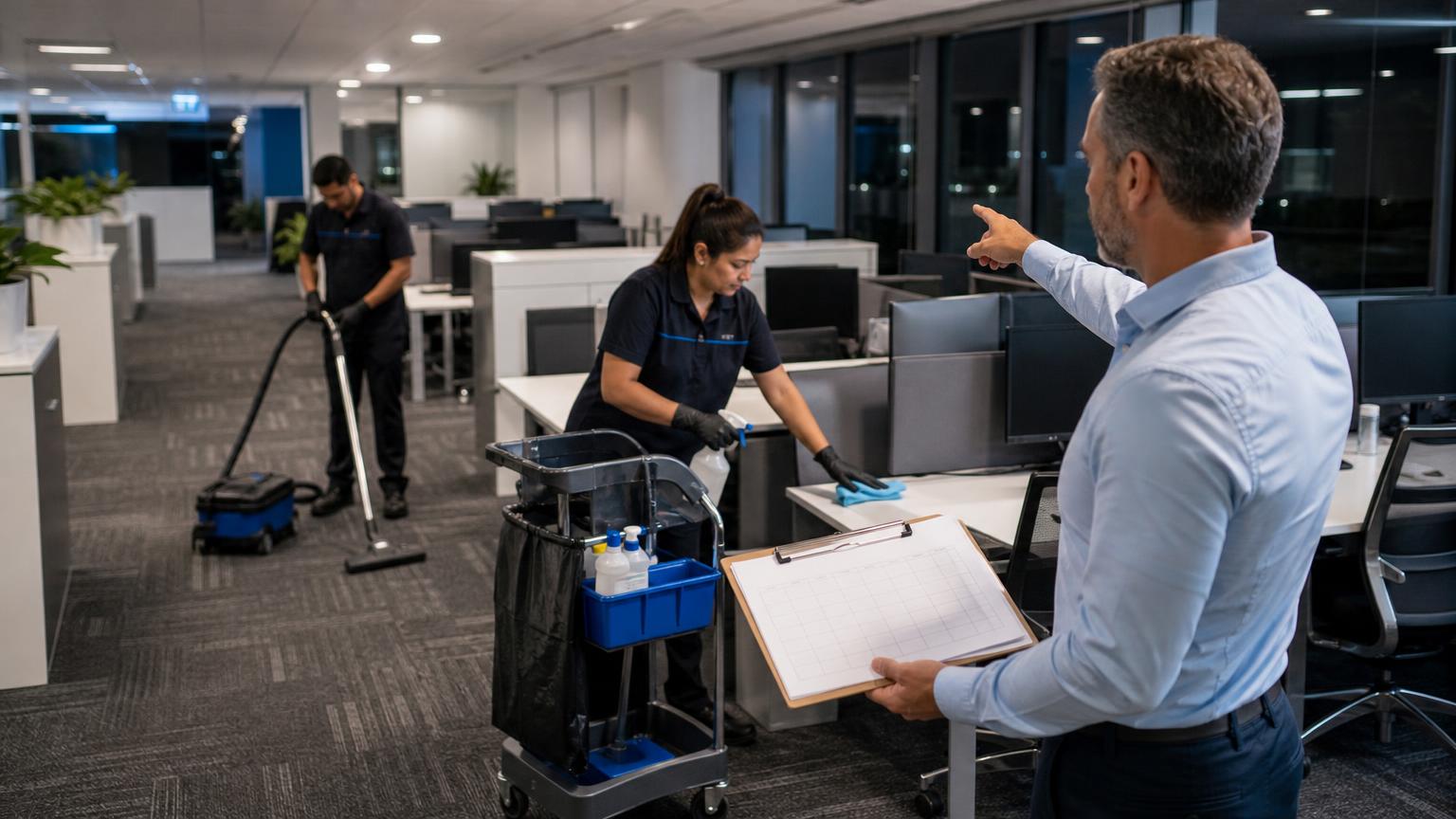
Start with a site map that names each room or area, the task required there, the frequency, and the person who checks completion. Build the work around traffic, hygiene needs, surfaces and operating hours, including after-hours access when the workplace needs it.
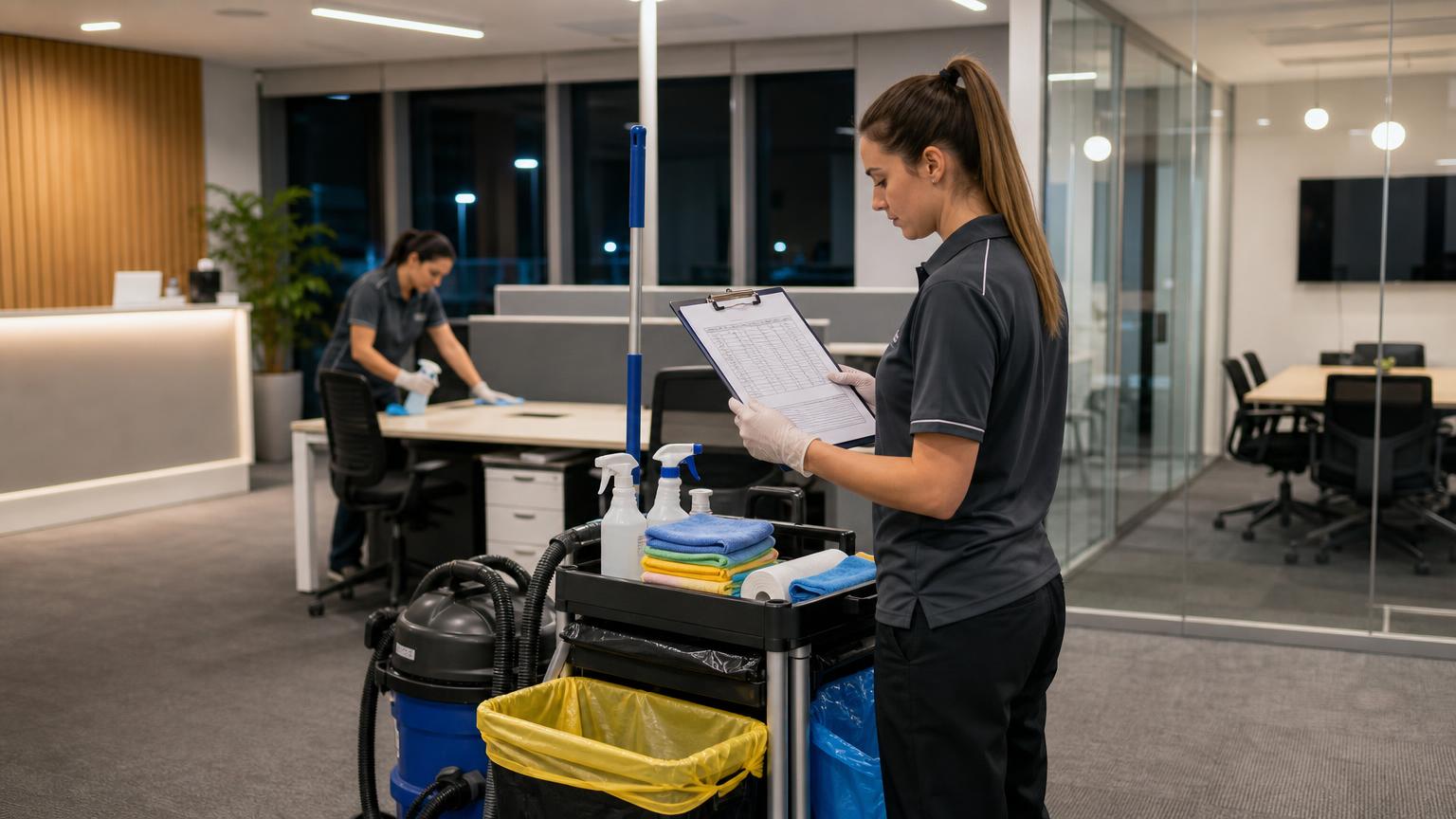
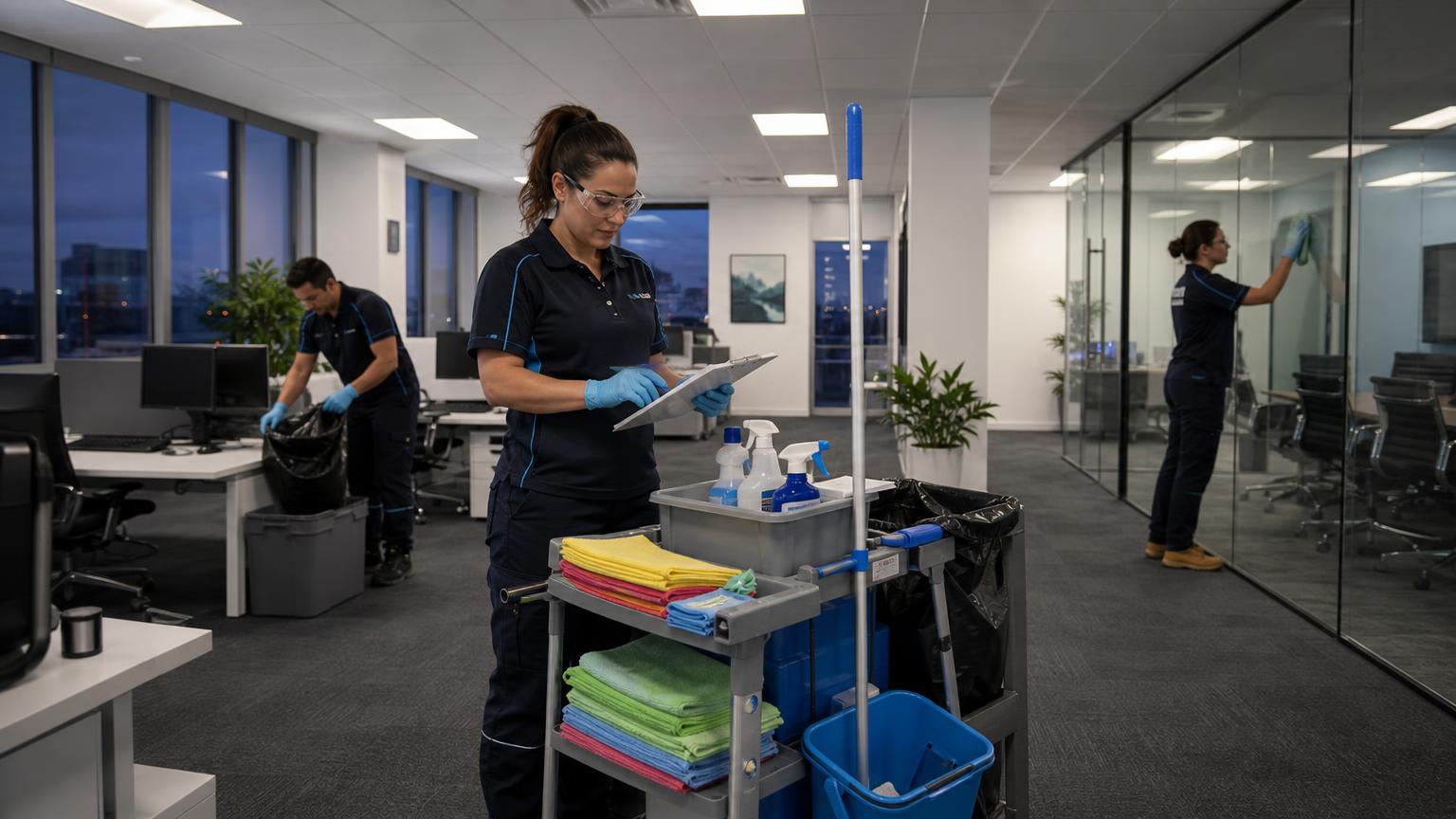
Keep the schedule as a working table, not a generic list. Give every row a location, task, service frequency, responsible person and completion check, so a cleaner or facility manager can follow the commercial cleaning schedule without guessing.
Author: Cygnus Facility Services
The short answer
Most people begin by choosing daily and weekly tasks. That is backwards because frequency depends on the site. First map the rooms, access windows and surfaces, then rank the work by traffic, visible soil, hygiene sensitivity and disruption risk. Assign frequencies only after those conditions are clear.
Begin with entrances, reception, kitchens, bathrooms, work areas, meeting rooms, corridors and waste points. Then add site-specific areas such as lifts, storage rooms, loading areas or shared strata spaces. Do not pay for a larger service package until the scope shows which tasks the site actually needs.
Build the schedule from the workplace, not a standard package
- Walk the site. Record rooms, floor types, fixtures, touchpoints, waste stations, access restrictions and areas that need specialist equipment.
- Measure use. Mark areas as high, medium or low traffic based on how often people enter them and how quickly they show soil.
- Separate task types. Put routine presentation work, hygiene tasks, waste handling, floor care and periodic deep cleaning into separate sections.
- Set frequencies. Assign each task to a shift, weekly visit, monthly review or less frequent specialist service.
- Assign ownership. Name the cleaner, team leader, facility manager or tenant responsible for completing and checking each item.
- Review the result. Use missed tasks, complaints, inspection notes and changes in occupancy to adjust the scope.
Frequency should follow demand. A busy bathroom may need attention during each service, while a low-use storage room may need less frequent work. A meeting room used for client visits may need a different presentation standard from a back-office area, even if both have the same floor covering.
Schedule cleaning outside peak activity where possible. After-hours work may reduce disruption, but the plan still needs clear access arrangements, alarm procedures, lighting, waste storage and handover points.
What this looks like in practice
A practical schedule connects each area to a measurable task. For example, an entry area might include removal of visible soil, spot cleaning of glass and attention to mats. A kitchen scope might separate bench cleaning, sink cleaning, appliance touchpoints, floor care and waste removal.
Use a table or spreadsheet with these columns:
- Area or room
- Task
- Frequency
- Preferred service time
- Preferred product or equipment requirement
- Person responsible
- Completion check
- Notes, defects or follow-up action
This structure makes gaps visible. A task without a frequency will probably be missed. A row without an owner can lead people to assume somebody else completed it. Without an inspection method, the schedule cannot show whether the agreed scope was delivered.
For larger sites, keep the office schedule separate from specialist scopes. Retail, healthcare, industrial and education facilities need different controls and task lists. A clinic may need procedures aligned with its operator's infection-control requirements, while an education or early childhood site may need to account for the National Quality Framework (NQF), ACECQA guidance and age-specific areas. Food preparation areas may also require a HACCP-based approach. An office cleaning checklist should not be copied into a clinic, shop or multi-site operation, and an industrial floor plan needs more than a standard office vacuum run.
When comparing commercial cleaners, ask what each ISO 9001, ISO 14001, ISO 45001 or CM3 credential changes in the service, such as scope control, safety planning, environmental choices, checking or continuous improvement. The logo matters less than the documented day-to-day process it supports.
How to make a business plan for a cleaning company?
A cleaning company business plan should explain the service scope, target customers, delivery model, staffing, equipment, compliance approach, pricing method and measures for quality. For a facility manager choosing a contractor, these sections also show what questions to ask before accepting a quote.
- Define the service. State whether the work covers offices, warehouses, retail, healthcare, strata, education, builders cleaning or another facility type.
- Define the customer and site. Identify who approves the work, who uses the site, when access is available and which areas need separate treatment.
- Explain delivery. Show how the contractor will schedule visits, allocate staff, manage keys or access, handle issues and record completed work.
- Set the commercial basis. Price from a site-scoped list of tasks, frequencies, labour requirements, equipment and consumables. A one-line price does not explain what the customer will receive.
- Set controls. Include training, site information, induction, incident reporting, environmental choices and quality checks appropriate to the work, including relevant WHS requirements.
- Define review points. Decide how the parties will handle occupancy changes, seasonal demand, construction work, new rooms or repeated missed tasks.
The business plan does not replace the cleaning schedule. The plan explains how the contractor runs the service; the schedule explains what happens at the site. Keep both documents aligned.
What is the 5-5-5 rule for cleaning?
Treat the 5-5-5 rule as a shorthand that needs defining, not as the basis for an office scope. Cleaning advice uses the label in different ways, so a facility manager should not accept it without seeing the tasks, areas and inspection method behind the name.
If someone proposes a 5-5-5 schedule, ask them to define the three groups of five in writing. Confirm the areas, tasks, frequency, responsible person and inspection method. A memorable label is less useful than a schedule that tells the team exactly what to do.
For an office, a better starting point is a frequency matrix. Rank tasks by traffic, visible soil, hygiene sensitivity, surface type and disruption risk. Then test the proposed frequency during normal operations and change it when inspection records show that the standard is not being met.
Cleaning every week needs a defined purpose
Weekly service should not mean that every task happens once a week. It should identify work that does not need attention at every visit but still needs a planned place in the cycle.
Examples may include detailed dusting of less-used surfaces, cleaning internal glass, checking skirting boards, refreshing low-use rooms and reviewing areas that routine work does not fully address. The right tasks depend on the building, finishes, occupancy and existing daily scope.
Monthly or periodic work should also have a reason. Floor maintenance, high-level dusting, detailed fixture cleaning and other specialist tasks may need separate equipment, access or approval. Put those requirements in the schedule instead of hiding them under a vague label such as deep clean.
Do not use weekly frequency to compensate for an incomplete daily scope. If bathrooms, kitchens or high-traffic entrances decline between visits, the schedule needs a better routine allocation or a different service time.
Checks for safety, access and specialist areas
Before finalising the schedule, record hazards and site controls that affect the work. This may include wet-floor procedures, chemical storage, equipment access, manual handling, restricted areas, electrical risks or shared traffic routes. Confirm the workplace controls and any task-specific safe work documentation with the responsible parties, and use Safe Work Australia's chemical safety guidance when the scope involves cleaning chemicals.
Medical and healthcare premises need a scope that reflects the operator's requirements, rather than an ordinary office checklist. Industrial and warehouse sites also need separate attention to floor care, racking dust and vehicle or pedestrian traffic routes. Cygnus provides separate Medical Cleaning Warrnambool and Industrial Cleaning Warrnambool service information because these environments are not interchangeable.
For offices in Warrnambool, South West Victoria, Geelong, Ballarat or Melbourne, document the actual site and available service window rather than copying a location label into a template. Cygnus Facility Services is based in Warrnambool and handles commercial and industrial cleaning across Victoria and Australia-wide for open projects.
Turn the schedule into a reviewable document
Give the final schedule a version date, site name, scope owner and review trigger. Review it after a layout change, occupancy change, change in operating hours, repeated complaints, a new tenant or a change in the cleaning contractor.
Use a simple completion record. A tick alone may show that somebody marked the task complete, but notes, defect records and supervisor checks provide more useful information. Track recurring gaps by area so you can decide whether the task, frequency, access window or training needs changing.
This advice will not solve a site that lacks access, suitable equipment or an agreed scope. Those constraints need a site discussion before anyone promises a frequency, so businesses without a defined workplace, service window or responsible contact should not use a generic template as a quote.
Where to go from here
Use your schedule to prepare a clear scope before requesting prices. The scope should show areas, tasks, frequencies, service windows and any specialist requirements. To learn how to maintain a clean office and assess the commercial side of that decision, read Budgeting for Commercial Office Cleaning.
If you want to compare the available service categories, discover Commercial Cleaning Services and the office-specific Commercial Cleaning Warrnambool page. When your schedule is ready, get a free quote from Cygnus Facility Services using the completed scope so the proposal reflects the actual workplace.