Bank Branch Cleaning Security Requirements
Bank branch cleaning requires more than a standard office checklist. This guide explains how to define access, privacy, safety, contractor and scheduling controls around the branch's actual operations.
Bank Branch Cleaning Security Requirements Explained
Author: Cygnus Facility Services
Before requesting a quote, define which rooms cleaners may enter, when they may work, how they receive access and what they must do with keys, alarms, documents and incidents. Use the bank's security policy and site instructions to create that scope, then price the actual premises and operating schedule instead of requesting a generic office-cleaning package.
The short answer
Bank branch cleaning security requirements usually cover authorised access, key and alarm control, confidentiality, restricted rooms, chemical safety, incident reporting and a written cleaning scope. The bank's policy, security provider, lease conditions and applicable legal duties determine the controls for each site.
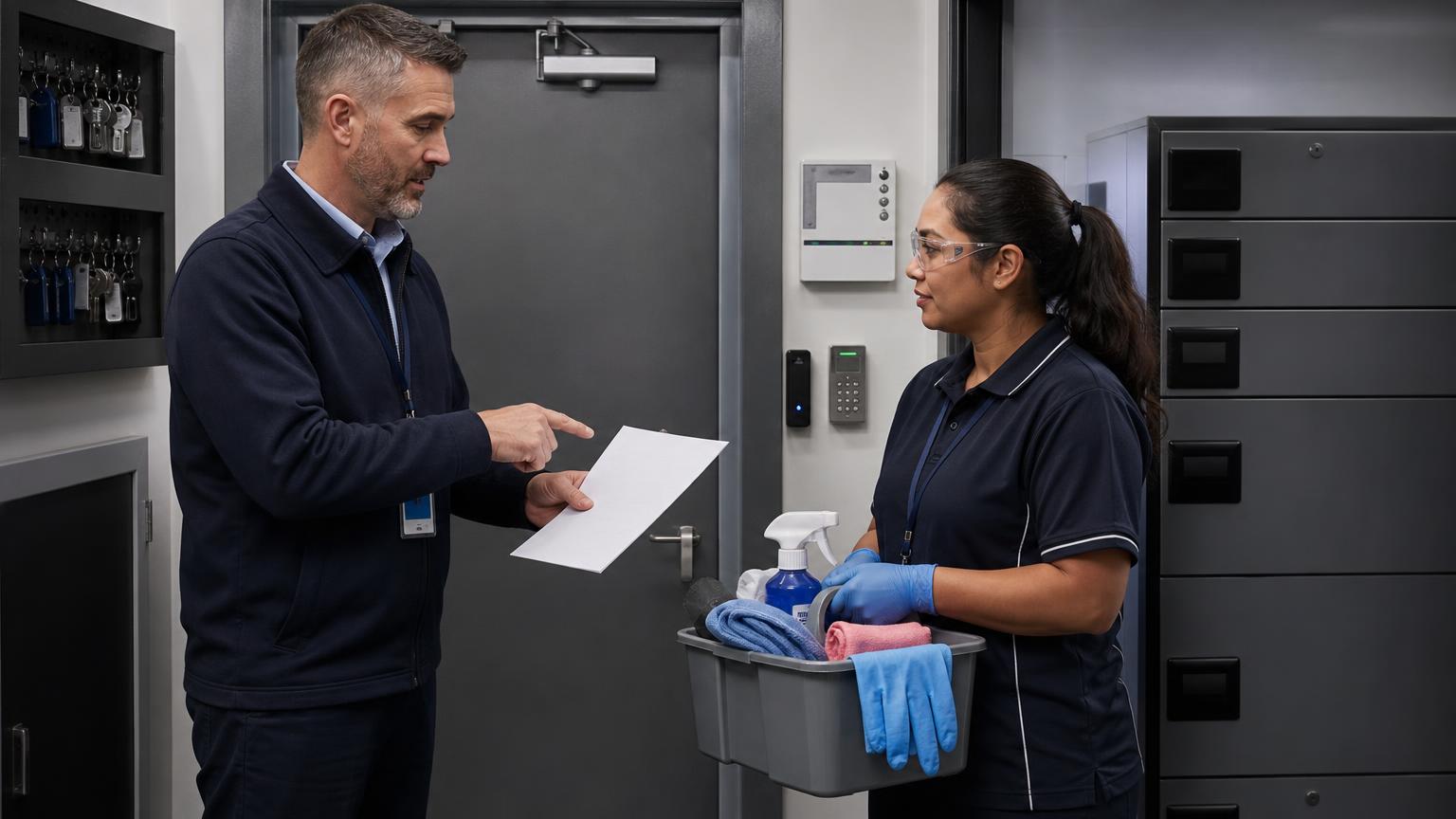
A cleaner should never decide which doors, cabinets, devices or records to access. Before work begins, the bank should name the permitted areas, access method, responsible contact, approved cleaning times and escalation process for a lost key, open cabinet or suspicious item. Put those instructions in the site scope or induction, preferably in a version-controlled PDF that the supervisor can review with workers.
What this looks like in practice
Turn each security expectation into a task instruction. For example, the site scope should mark public areas, staff areas, toilets, meeting rooms, cash-handling zones and storage areas, then label rooms that cleaning staff must not enter.
It should also record who issues access, where keys or cards are kept, what happens if an access device is lost, and who the cleaner contacts after finding a suspicious item, damaged lock, open cabinet or unsecured document. A written process gives an after-hours team something specific to follow instead of relying on memory.
Cygnus Facility Services uses ISO 9001 for quality management, ISO 14001 for environmental management, ISO 45001 for occupational health and safety, and CM3 contractor management compliance. These frameworks can support consistent delivery, but they do not replace the bank's own access instructions, induction or incident process. When comparing commercial cleaners, ask what each credential changes in day-to-day work, not just which logo appears on the website.
What are the compliance requirements for banks?
There is no single public checklist that covers every bank branch. Requirements are usually assembled from the bank's internal security policy, workplace health and safety duties, privacy obligations, contractor controls, insurance conditions and the cleaning contract.
For an APRA-regulated organisation, APRA's CPS 230 Operational Risk Management sets expectations for operational risk management and service provider arrangements. It does not prescribe how a cleaner mops a branch. It helps explain why a bank may require documented controls, clear responsibilities, incident escalation and evidence that an outsourced service is managed.
Privacy duties also matter. Cleaning staff may work near forms, screens, printer trays, customer correspondence or discarded documents. The bank should set rules for documents and information, while the contractor should instruct workers not to read, photograph, move or dispose of material outside the agreed process. The Office of the Australian Information Commissioner explains the Australian Privacy Principles.
Before appointing a contractor, ask for these items:
- A site-specific scope showing included and excluded areas.
- Named access and key-handling instructions.
- An incident and escalation process.
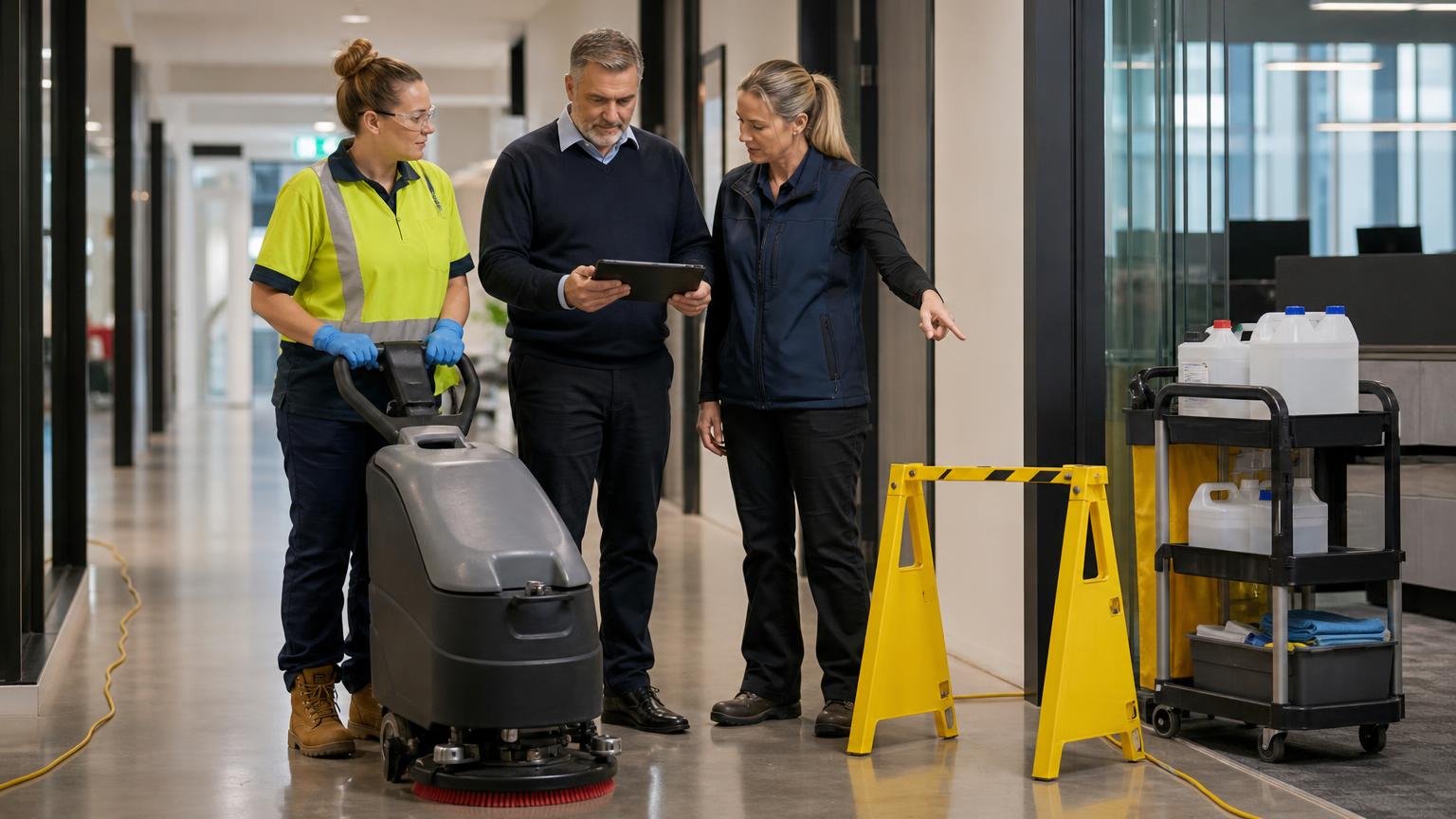
- Worker induction and supervision arrangements.
- Safe work procedures for chemicals, equipment and waste.
- A method for checking completed work against the agreed scope.
- Evidence of relevant insurance, contractor compliance and management systems.
Do not pay for a polished proposal until the contractor has inspected the branch or received enough site information to define the work. A one-line price cannot show whether restricted areas, after-hours access, alarm procedures or high-touch surfaces sit inside the scope. Quotes should be based on the real scope of the space, not a one-line price.
Do you need a licence to clean in Aus?
Australia does not have one general national licence called a bank cleaner licence. Licence, permit and registration requirements depend on the business structure, state or territory, local government area and the work being performed.
Use the Australian Government's ABLIS licence and permit finder to check the requirements that apply to the business and location. A bank may also impose its own contractor conditions, such as evidence of insurance, worker checks, inductions, safety documents or security approval. Those conditions can apply even when a specific cleaning licence does not.
For a Victorian site, the cleaning contractor and the bank should also identify the applicable workplace safety duties and follow relevant WorkSafe Victoria guidance. The WorkSafe Victoria information on cleaning products and chemicals is relevant when the scope includes chemical handling, storage or use.
Licence status alone does not prove that a contractor can manage a secure branch. Ask what the contractor's compliance controls change in daily delivery, who checks them and how the bank receives notice of an incident.
What is a bank cleaner?
A bank cleaner is a commercial cleaning worker assigned to a banking or finance premises. The role may include cleaning customer-facing areas, staff offices, toilets, kitchens, floors and shared surfaces, subject to the branch's approved scope and access rules.
The role is different from a general household cleaner because the worker may operate around restricted rooms, customer records, security equipment, cash-handling areas and sensitive business information. A bank cleaner must follow the bank's instructions rather than treating every room as an ordinary cleaning area.
The contractor should schedule work around branch operations. After-hours cleaning may reduce disruption, but it also requires reliable access instructions, contact details, alarm arrangements and incident reporting. Cleaning should follow how the workplace actually operates, whether that means after hours or another agreed window.
Safety measures that protect the branch and the cleaning team
The useful safety measures are the ones tied to hazards at the site. Start with a documented induction, then confirm the hazards present in the branch and the controls required for each task.
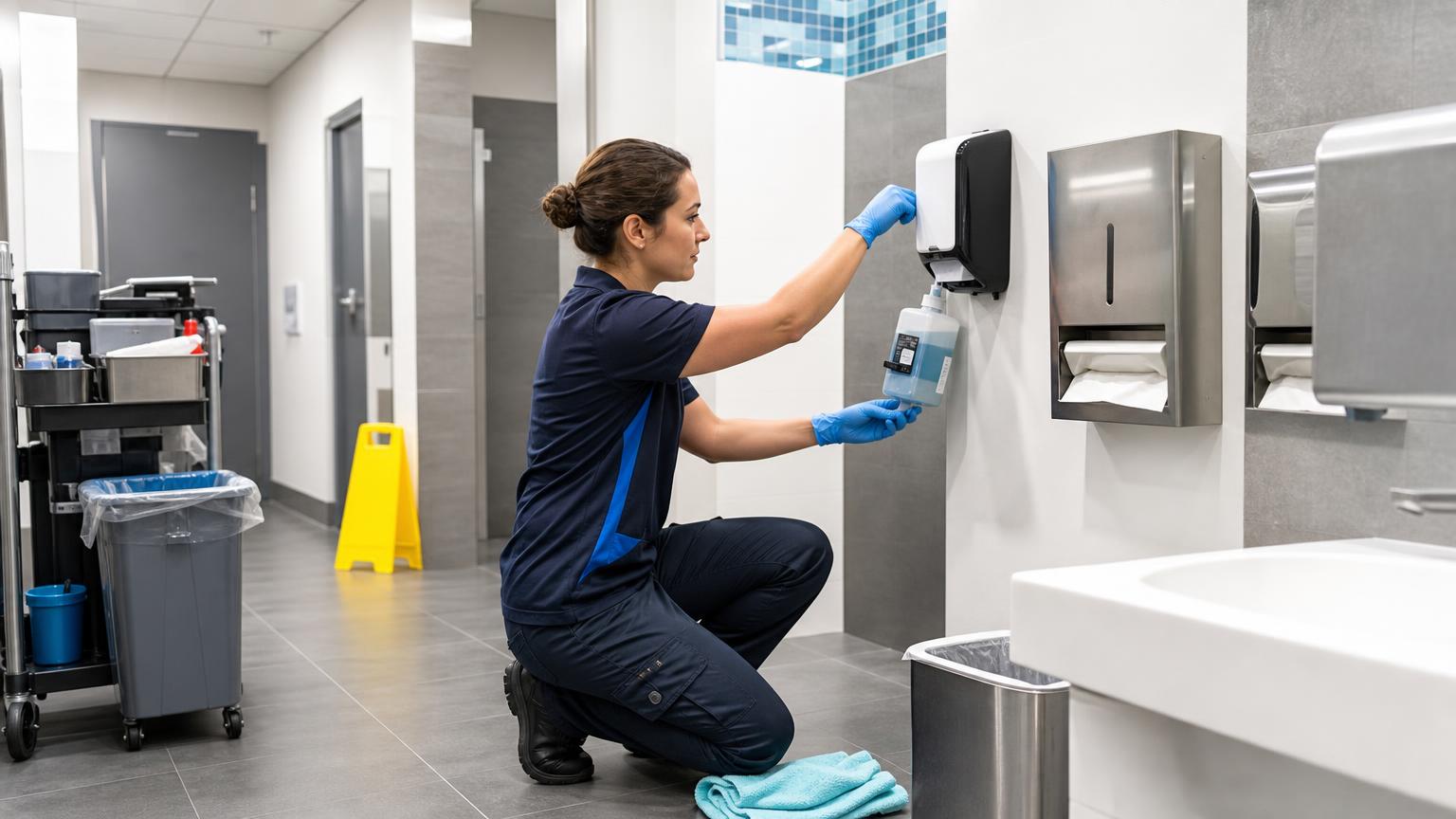
- Control access. Give workers only the access they need. Record keys, cards and codes according to the bank's process, and report any loss immediately.
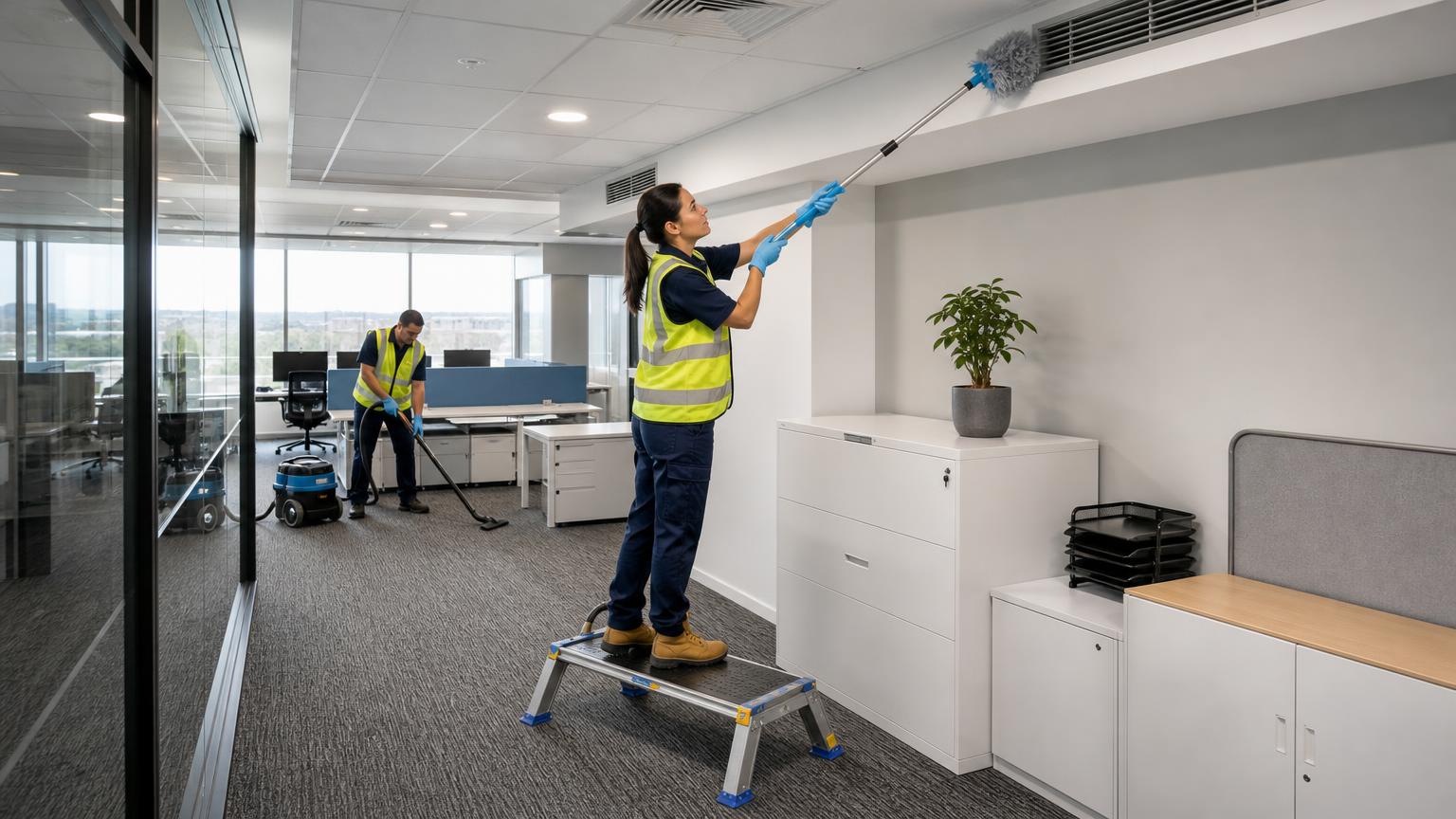
- Separate cleaning from customer movement. Use signs, barriers and suitable timing around wet floors, entrances and busy service areas.
- Handle chemicals correctly. Keep products labelled, follow product instructions and prevent incompatible chemicals from being mixed. WorkSafe Victoria guidance should inform the site's chemical controls.
- Protect information. Do not read, photograph, relocate or discard documents unless the bank's written process permits it.
- Report unusual conditions. Escalate damaged locks, unsecured rooms, unknown people, spills, broken fixtures and suspected security incidents through the nominated contact.
- Check equipment and routes. Keep cords, buckets and cleaning equipment away from customer paths, exits and access-controlled doors.
The bank should not treat safety as a separate document that nobody uses. Put the controls in the induction, shift instructions, supervision and review process.
Why cleaning affects a bank's reputation
Customers judge a branch through visible details such as entry glass, floors, counters, seating, touchpoints and toilets. A missed spill or dusty customer area can undermine confidence even when the bank's financial service remains sound.
Security failures create a different kind of risk. An unsecured office, misplaced access card or discarded document can matter more than an imperfect floor. A bank's cleaning scope should therefore rank access and information controls ahead of cosmetic extras.
The strongest service combines a defined cleaning schedule with a defined security process. Daily, weekly, fortnightly and after-hours work may suit different branches, but frequency should follow use, traffic, risk and the bank's operating pattern rather than a generic office package.
The high-stakes environment of financial institutions
A branch is both a public workplace and a controlled business environment. It may contain customer service areas, staff facilities, meeting rooms, storage, technology and financial records within the same footprint. One blanket office-cleaning instruction rarely covers those differences properly.
Facility managers should separate the scope into zones and assign controls to each one. Public areas may need frequent touchpoint and presentation work. Staff areas may require scheduled cleaning around occupancy. Restricted areas need explicit permission, and some spaces may need cleaning only when an authorised bank representative is present.
This advice does not replace the bank's security policy, legal advice or risk assessment. It is not for a branch that has not nominated an owner for keys, alarms, incidents and contractor approval, because a cleaning checklist cannot solve an unresolved access-control problem.
Local considerations for Victorian branches
Cygnus Facility Services is based in Warrnambool and services commercial and industrial sites across South West Victoria, Geelong, Ballarat and Melbourne, as well as open projects Australia-wide. A branch in Warrnambool may have different access timing and staffing arrangements from a site in Melbourne, but the control principle remains the same: scope the actual premises and operating pattern.
If a bank schedules a project in June or August, confirm the branch's opening hours, staffing pattern and any temporary access changes before setting the cleaning schedule. For a Victorian bank, also confirm the applicable WorkSafe Victoria requirements, the bank's security conditions and the access arrangements for the particular building. Location alone does not determine the cleaning method. The branch layout, opening hours, restricted areas, floor surfaces and frequency of use determine the practical scope.
Retail and healthcare sites need different checklists from offices, and copying an office scope into a branch can miss the controls that matter. The same principle applies to Bank Cleaning Services and industrial work that protects warehouses and fulfilment centres: the scope must reflect the site's actual operations rather than reuse an office template.
For related service information, see Commercial Cleaning Services, Commercial Cleaning Warrnambool and Industrial Cleaning Warrnambool.
Where to go from here
Before requesting a quote, prepare the branch address, floor plan if available, required frequency, preferred cleaning times, restricted areas, access process, alarm instructions and the person responsible for approvals. Ask the contractor to price the documented scope and identify exclusions rather than supplying a vague hourly figure.
Use that information to compare contractors on daily delivery, safety controls, reporting and site fit. ISO and CM3 credentials matter when comparing commercial cleaners, but ask what they change in day-to-day delivery rather than choosing a logo alone. Cygnus Facility Services can review the requirements for a commercial or banking premises and prepare a site-scoped quote through the enquiry form. Include the location and after-hours requirements so the proposed service matches how the branch operates.