Periodic Cleaning Tasks for Commercial Buildings
Periodic cleaning removes the build-up that routine commercial cleaning does not address. This guide explains how to create a site-specific schedule, separate daily and planned work, and avoid copying an office scope into a clinic, shop or industrial facility.
How to Plan Periodic Cleaning in Commercial Buildings
Author: Cygnus Facility Services
The short answer
Periodic cleaning covers planned work that routine touchpoint and floor cleaning does not address. Typical tasks include dusting above normal reach, detailed carpet care, internal glass, vents, corners, hard-to-reach areas and cleaning behind movable equipment.
Build the schedule around the building's actual use. A clinic may need a documented environmental cleaning process, a warehouse may need attention to racking dust and traffic routes, and a retail centre may need work completed around trading hours. Those sites should not share one generic scope.
What this looks like in practice
Start with a written task register for each area. Record the task, the condition it controls, the proposed frequency, the work window, access requirements and the person responsible for checking completion. This produces a usable commercial cleaning checklist rather than a vague instruction to clean thoroughly.
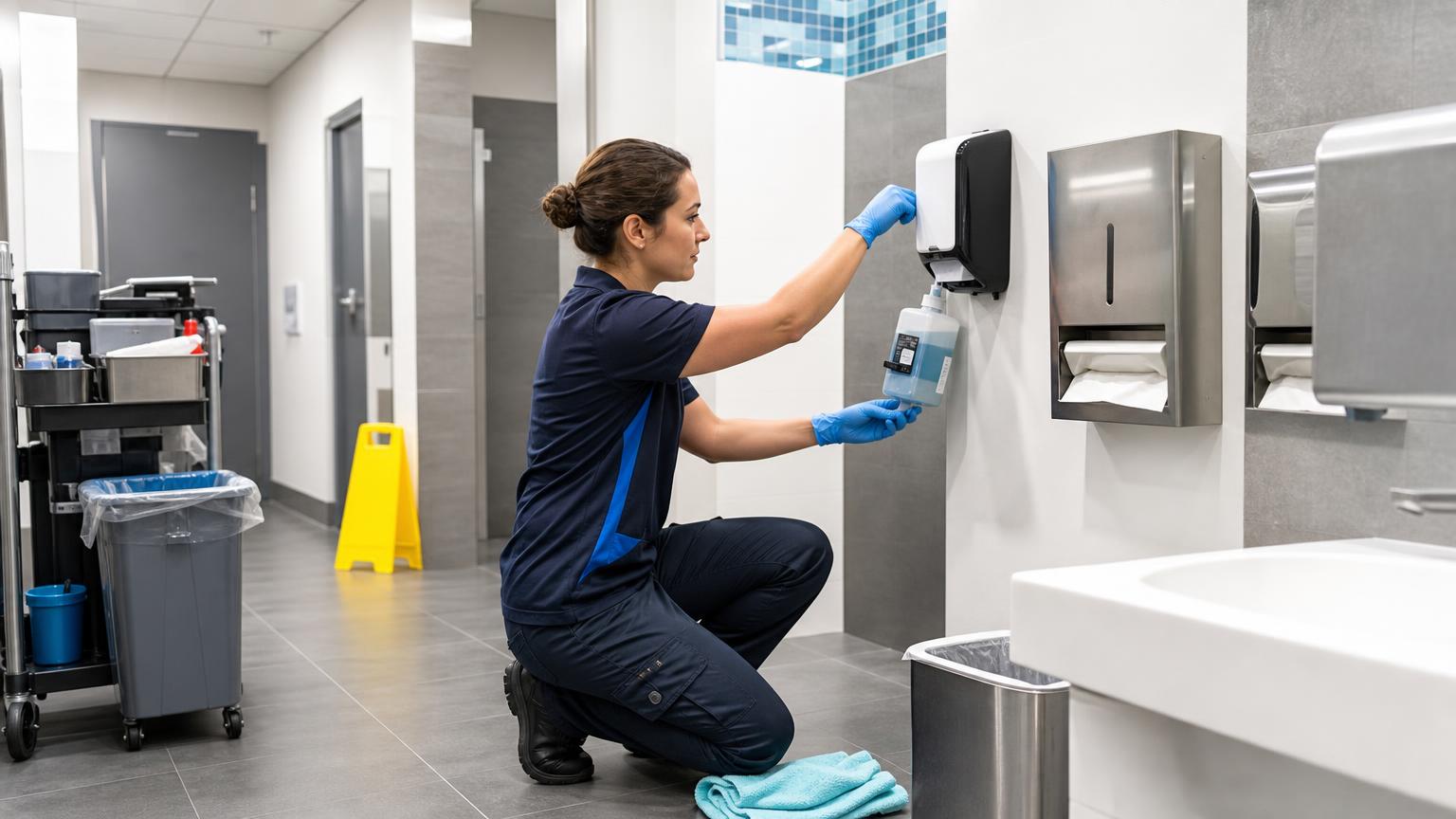
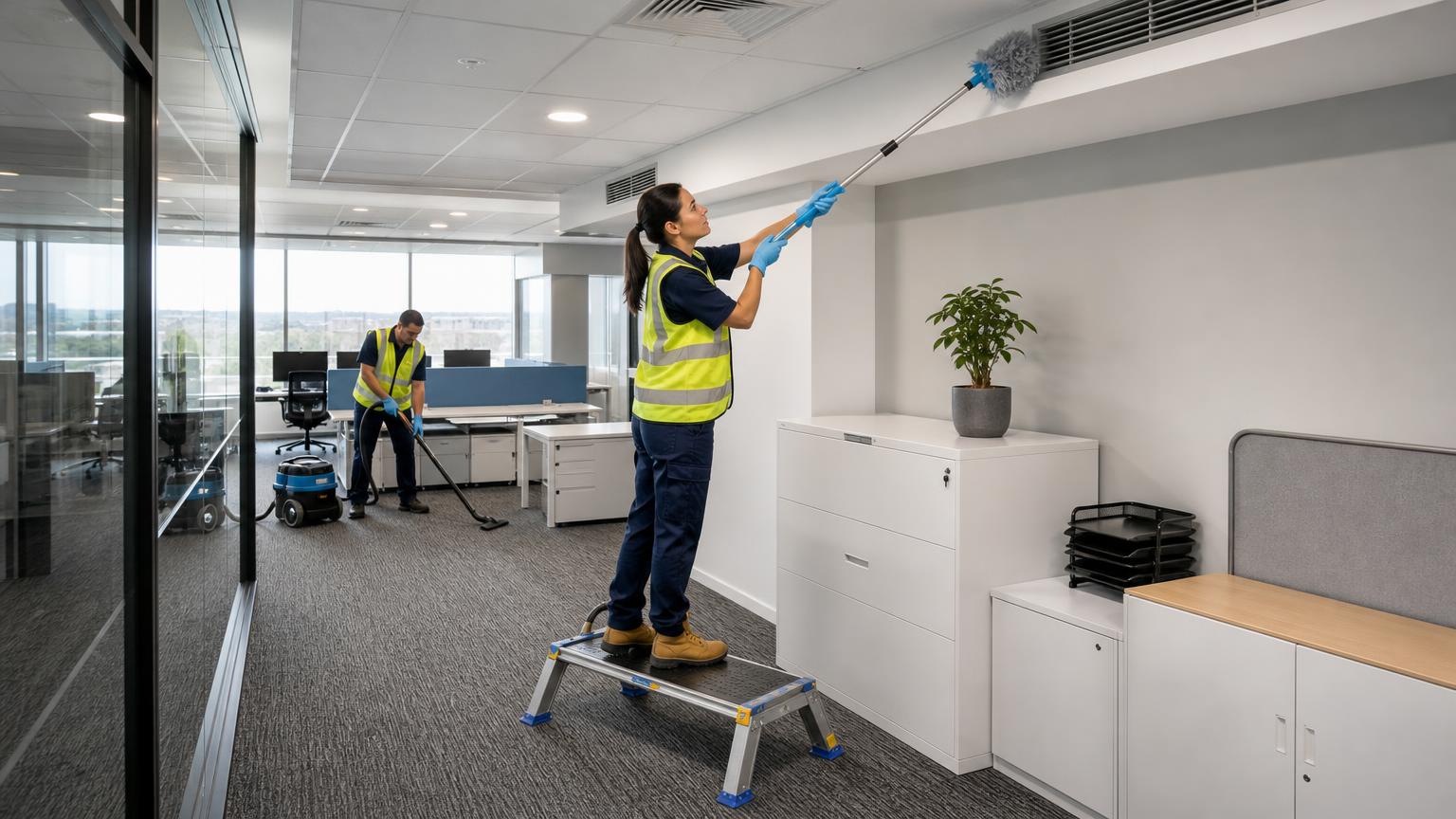
Routine work usually keeps the site presentable and usable. Periodic work deals with the build-up that routine visits do not remove. Examples include detail dusting above normal reach, carpet extraction where appropriate, cleaning behind movable equipment, wiping vents and removing marks from doors, skirting and other frequently handled surfaces.
Frequency should follow risk and use, not a template. A busy entrance may need more attention than a quiet meeting room. A warehouse needs a different scope for traffic routes, racking dust and floor soil. A healthcare setting needs its own documented requirements rather than an office checklist copied across.
Cygnus Facility Services states that it operates with ISO 9001 Quality Management Systems, ISO 14001 Environmental Management Systems, ISO 45001 Occupational Health and Safety Management, and CM3 Contractor Management Compliance. When comparing cleaners, ask what each credential changes in day-to-day delivery, such as scope control, environmental management, risk documentation and service reviews. The credentials do not replace a site inspection or prove that a generic scope suits your building.
What are the 5 basic cleaning principles?
There is no single universal five-point list for every commercial site. A practical set of principles is:
- Work from cleaner areas towards dirtier areas. This reduces the chance of carrying soil into spaces that have already been cleaned.
- Work from high surfaces downwards. Dust and debris can fall, so clean upper surfaces before lower surfaces and floors.
- Use a consistent sequence. A repeatable route makes missed tasks easier to identify and gives supervisors something clear to check.
- Match the product and equipment to the surface. Read the product directions, respect contact instructions where relevant and avoid using an abrasive method on a surface that could be damaged.
- Control cross-contamination. Separate equipment or change it between defined areas when the site risk requires this. Colour coding may support the system, but it does not replace training and a clear scope.
These principles are more useful than a list of fashionable products. They tell a cleaner how to think about sequence, equipment and risk before work begins. For infection prevention and healthcare environments, use the site's approved procedure and relevant official guidance rather than applying a general office method.
The Australian Commission on Safety and Quality in Health Care guidance on cleaning and disinfection is a more appropriate reference for healthcare environments than a general commercial cleaning article. A healthcare site should align its cleaning process with its approved procedures and applicable clinical requirements.
What is the 5-5-5 rule for cleaning?
The 5-5-5 rule is not a single recognised commercial cleaning standard. Different cleaning resources use the phrase for different routines, so a facility manager should not place it in a contract or work instruction without defining exactly what each five represents.
Replace the slogan with written tasks, checks and acceptance standards that match the site. The numbers in the phrase do not establish a compliance requirement. The useful part is making the task and the expected result visible to the cleaner and supervisor.
For example, a team might use a short end-of-service review covering visible soil, waste removal, floor condition, high-touch points and equipment storage. That is a local checking method, not a universal 5-5-5 rule. If a site needs a formal hygiene or safety process, write the actual process into the scope instead of relying on shorthand.
Why consistency matters in occupied workplaces
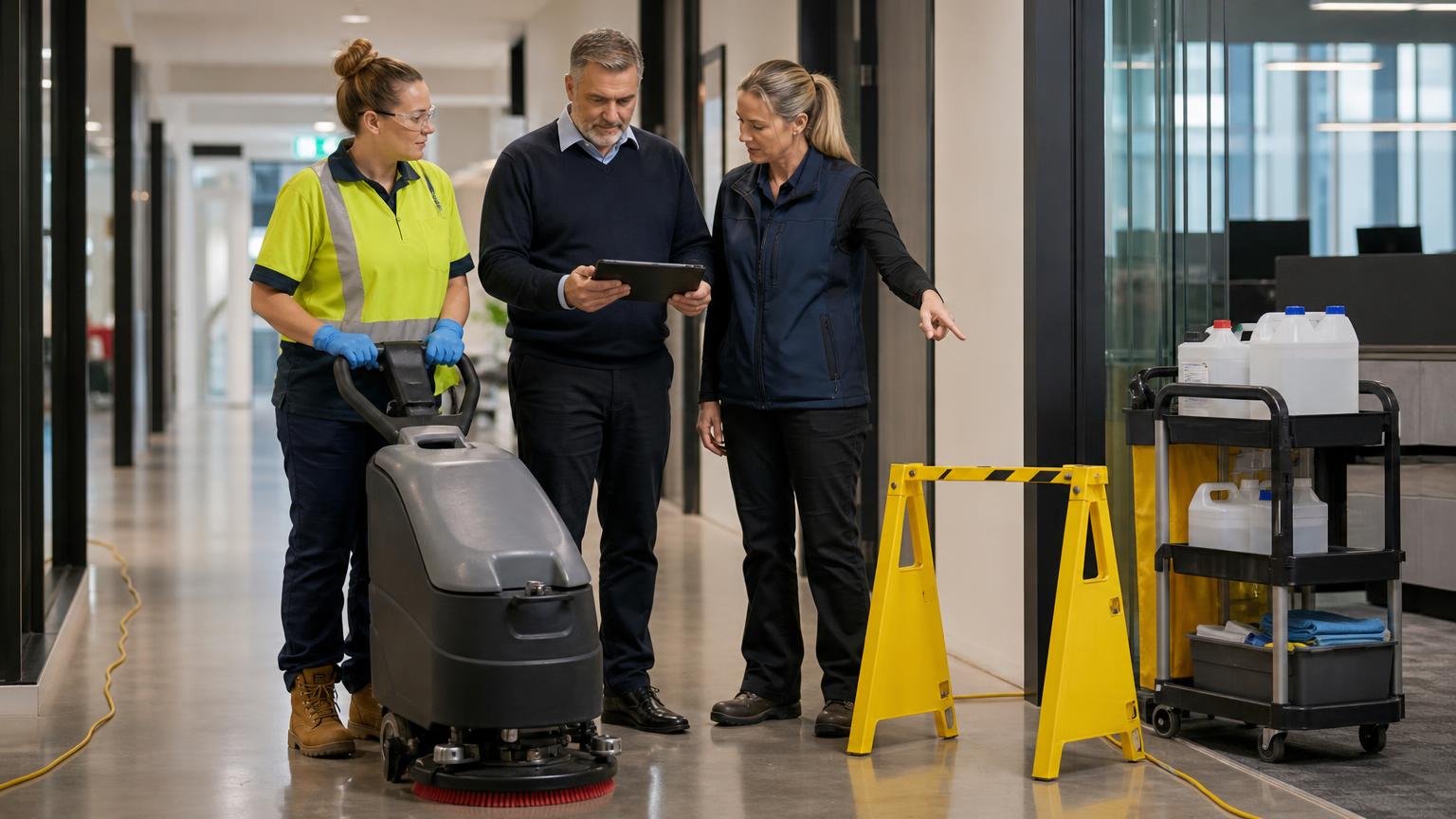
Cleaning affects more than appearance. A consistent service reduces the chance that routine areas are missed, keeps access routes usable and gives staff a predictable standard when they arrive. It also makes complaints easier to investigate because the manager can compare the reported issue with a defined task and work window.
Do not measure quality by fragrance or shine alone. A strong review checks whether the specified areas were reached, whether the correct method was used and whether the building was ready for its next users. Product choice matters too. Cygnus uses eco-friendly and safer product options where suitable for the site, but suitability depends on the surface, task and operating environment.
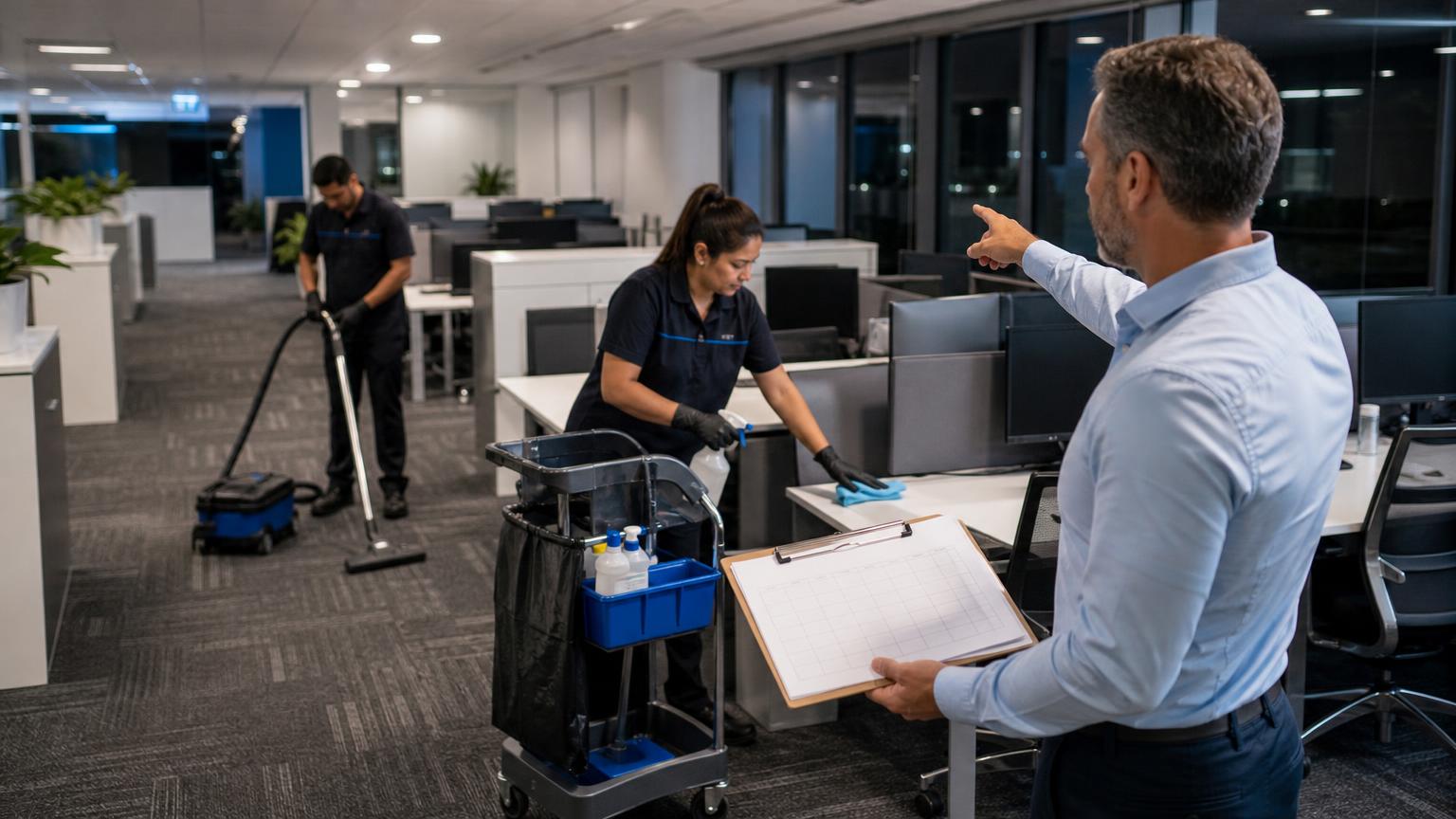
After-hours cleaning is useful when daytime work would interrupt staff, visitors, students, patients or retail activity. It is not automatically better. The work window must also account for access, alarm arrangements, security, ventilation and the time needed to complete the scope properly.
Daily work and periodic work should connect
Daily office cleaning essentials usually include waste handling, visible soil removal, routine floor care and attention to frequently touched or frequently used areas. The exact list depends on the building and the agreed scope. Periodic work should then address tasks that daily visits cannot justify or complete efficiently.
A useful schedule groups work by the condition it controls:
- At regular service visits: remove visible waste and soil, maintain common areas, check high-use points and record issues that need planned follow-up.
- At wider planned intervals: detail dust ledges and fittings, clean internal glass where included, service carpeted areas using a suitable method, and reach behind or beneath movable items where access permits.
- At seasonal or operational changes: review entry areas, floor condition, ventilation grilles, stored dust and any spaces affected by weather, fit-outs, events or changed occupancy.
- When the building changes: revise the scope after a renovation, tenant move, new equipment installation or change in opening hours.
HVAC cleaning and maintenance should not be added casually to a cleaner's list. First identify whether the task concerns accessible external surfaces or internal system work requiring a specialist. The same principle applies to carpet treatment, high-level work and any activity involving unusual access or chemical exposure.
Common mistakes in periodic cleaning schedules
The first mistake is treating every room as equally important. Rank areas by use, soil load, access and consequence of failure. A warehouse traffic route and a low-use office should not automatically receive the same periodic treatment.
The second mistake is buying a frequency before defining the task. A monthly clean could mean detailed dusting, carpet care, internal glass or something else entirely. Do not approve a monthly line item until the contractor states what the team will clean, what access is included and how completion will be checked.
The third mistake is copying an office scope into a clinic, retail centre or industrial facility. That usually fails because each setting has different users, surfaces, operating constraints and safety controls.
Local considerations for Victorian sites
Cygnus Facility Services is based in Warrnambool and serves commercial and industrial sites across South West Victoria, Geelong, Ballarat, Melbourne and other Victorian or Australian locations for open projects. A local scope should name the actual site, building type, access arrangements and preferred work window rather than relying on a city label alone.
For a Warrnambool, Geelong or other Victorian facility, the practical questions remain the same: which areas need periodic attention, when can the work happen, what site rules apply and how will the result be checked? Local availability does not remove the need for a site-scoped quote. It makes the work window and travel or access arrangements worth confirming before the schedule is approved.
Where to go from here
Use this article as a starting point for a commercial cleaning checklist. Write down each area, routine task, periodic task, frequency, work window and acceptance check. Then compare that document with the relevant Commercial Cleaning Services, including Commercial Cleaning Warrnambool, Industrial Cleaning Warrnambool or Medical Cleaning Warrnambool.
Ignore this general guide if you need a healthcare, industrial or high-access procedure without first completing the site's risk assessment and approvals. It does not replace a site-specific risk assessment or an approved procedure for specialist work. If you want the schedule priced against the real building, request a free quote from Cygnus Facility Services with the site type, location, required frequency and preferred work window.