How to Keep Office Washrooms Clean Between Services
A practical interim routine can keep office washrooms usable between professional cleaning visits. This guide assigns supply checks, spill response, maintenance escalation, scheduled cleaning and inspection records to the people responsible.
Keeping Office Washrooms Usable Between Services
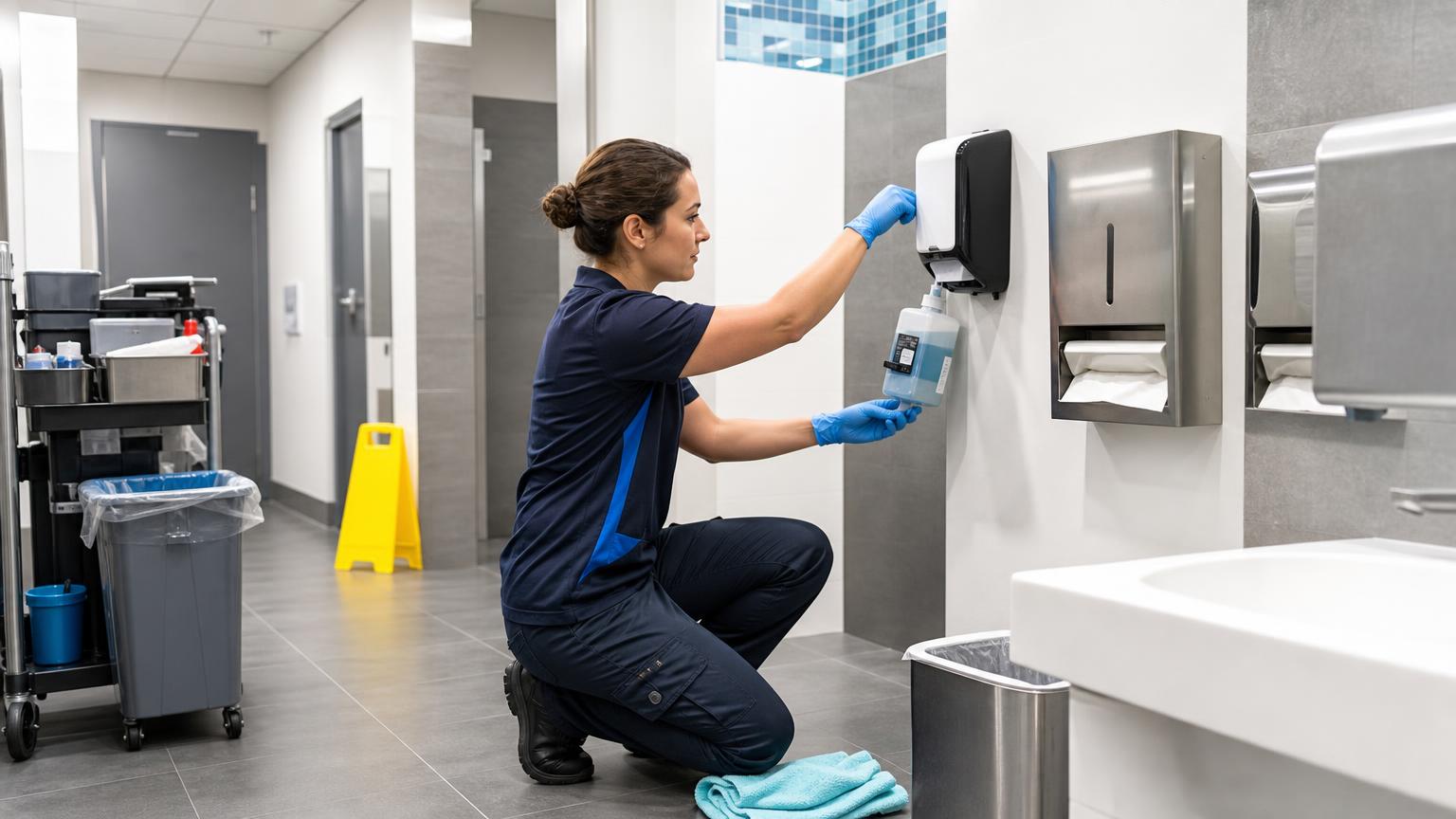
Use a simple interim routine until the next professional service. A nominated facilities person checks each washroom at opening, midday and two hours before close, replenishes soap, toilet paper and hand-drying supplies, removes overflowing waste, isolates wet floors with warning signage and logs faults through one agreed reporting channel.
Staff report spills, empty supplies, leaks, blocked fixtures and damaged fittings as soon as they notice them. Facilities staff respond to consumables and spills, while maintenance receives leaks, blockages and building faults immediately. The cleaner completes the scheduled disinfection, floor cleaning and toilet cleaning during the agreed service window.
The short answer
Start with ownership, not signage. A notice cannot replace soap, a working dispenser, a suitable bin or a named person who checks the room. Set one reporting route, assign responsibility for daytime supply checks and record faults such as leaks, blocked fixtures and damaged fittings.
Keep professional cleaning tasks with the cleaning team. Staff should wash their hands, place waste in the correct bin, leave basins usable and report an empty dispenser, leak, blocked fixture, spill or damaged fitting through the agreed channel. The service scope should state which tasks happen during the scheduled visit and which problems require maintenance.
What this looks like in practice
Apply the same principle to washrooms by separating end-of-day cleaning from daytime response. The contractor can clean toilets, basins, floors, mirrors and touchpoints after staff leave, while the workplace manages consumables, obvious spills, blocked fixtures and other urgent issues during operating hours. The written scope should identify each responsibility.
This approach will not solve a leaking pipe, defective ventilation, unsafe access or a washroom that needs specialist remediation. Facilities with those problems should arrange maintenance or specialist support rather than expecting routine cleaning to fix the cause.
How to keep toilets clean between cleanings?
Use this short routine and assign each action to the right person:
- Staff: Wash hands properly, leave the basin clear of paper, soap residue and personal items, and report problems immediately through the agreed channel.
- Facilities staff: Check each washroom at opening, midday and two hours before close. Replenish soap, toilet paper and hand-drying supplies, remove overflowing waste and isolate wet floors with warning signage.
- Facilities staff: Respond to reported consumable shortages and spills as soon as they are reported, then record the action taken.
- Maintenance: Take ownership of leaks, blocked toilets, defective fixtures, unsafe access and other building faults. Facilities staff should escalate these issues immediately rather than asking the cleaner to fix them.
- Cleaner: Complete the scheduled disinfection, toilet cleaning and floor cleaning during the agreed service window, using the products, equipment and frequency set out in the scope.
Ask the nominated contact to record recurring problems by location, such as a particular basin, dispenser or cubicle, instead of treating each incident as a one-off. Staff should not be expected to perform commercial cleaning tasks during the day. Their role is to leave the space usable, identify problems early and avoid creating additional contamination or damage.
What is the 5-5-5 rule for cleaning?
The 5-5-5 rule is not a universally defined cleaning standard. Different workplaces use the label for different routines, so a facility manager should not place it in a procedure without writing down exactly what each five represents.
For an office washroom, define the routine in plain terms: who checks the room, which items they inspect, how often the check occurs, what they record and who responds to a fault. A named checklist is more useful than a memorable label with no agreed meaning.
Do not pay for extra inspection rounds simply because a contractor mentions a 5-5-5 system. Ask to see the task list, frequency, work window and escalation process first. The value lies in a documented response, not in the name of the routine.
How often should restrooms be cleaned in a workplace?
There is no responsible frequency that applies to every workplace. The schedule should reflect the number of users, opening hours, washroom size, visitor traffic, the type of facility and the consequences of a missed task.
Use a site assessment to decide whether the washroom needs daily, weekly, fortnightly or after-hours service. The correct choice depends on the defined scope and the site's operating pattern. A one-line price cannot show whether the provider has allowed for cubicles, touchpoints, floors, consumables and access conditions.
Retail and healthcare sites need different checklists from offices. Copying an office scope into a clinic or shop usually fails because the users, traffic and operational risks differ. Industrial cleaning also needs attention to floor care, racking dust and traffic routes rather than a standard office vacuum run.
How facility managers can measure cleaning quality
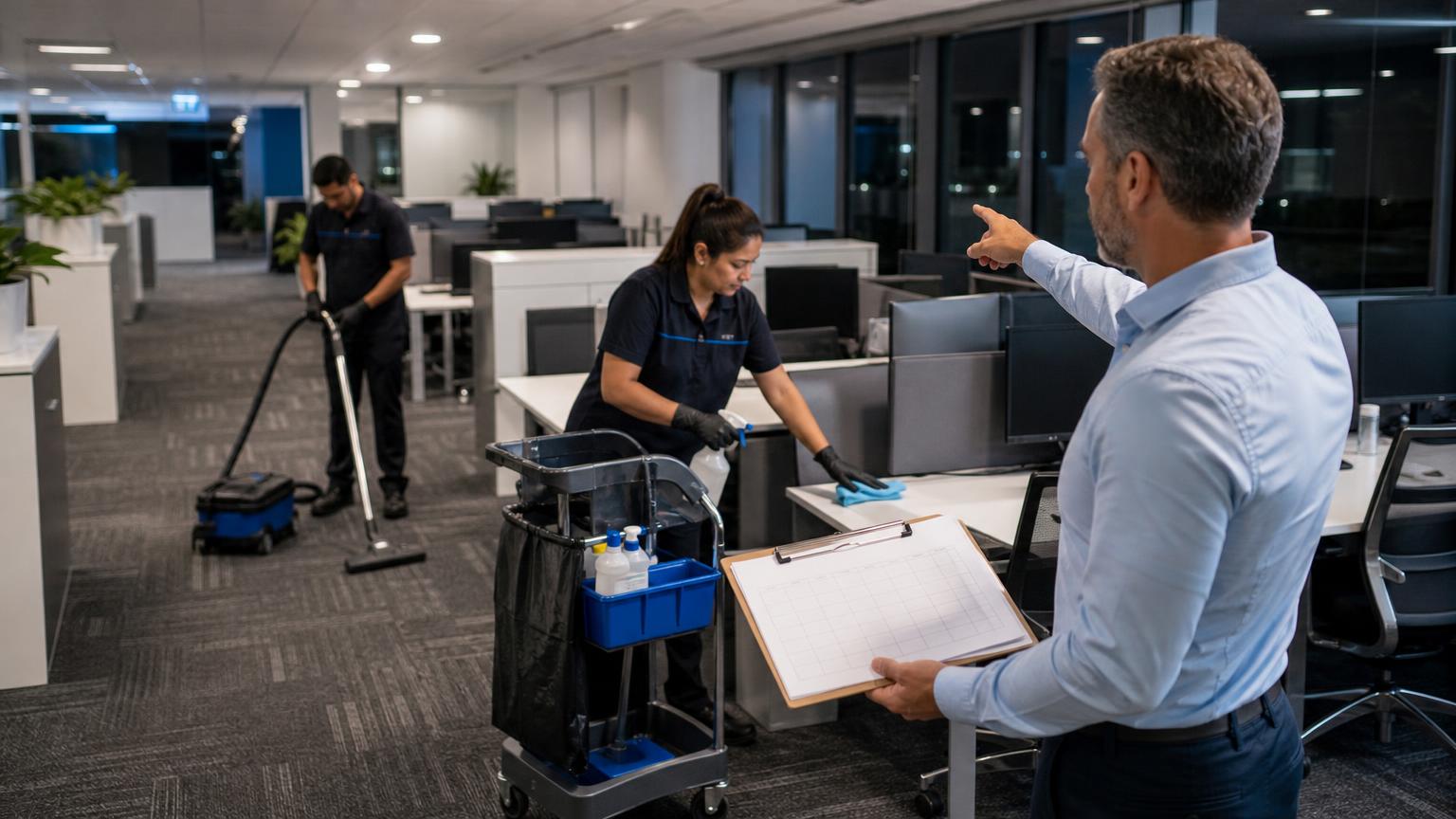
Measure the service against the written scope, not against a vague impression that the room feels clean. A printable inspection sheet can record:
| Time | Room | Soap | Paper | Bins | Visible soil | Faults | Action taken | Escalation owner |
|---|---|---|---|---|---|---|---|---|
Use the sheet at opening, midday and two hours before close. Record whether toilets, basins, floors, mirrors and touchpoints received the scheduled task, whether hand-drying supplies are present, whether the room has standing water or an unresolved odour issue and whether reported faults received an owner and follow-up action.
Review recurring failures by area and task. If consumables repeatedly run out, the supply check or replenishment arrangement needs attention. If a particular basin, floor area or dispenser repeatedly fails inspection, the scope may need a clearer task, different equipment or a maintenance referral.
Build habits that staff can follow
Tell employees exactly what good use looks like, using a short notice near the relevant point. Ask people to leave the basin clear, place waste in the provided bin and report faults through one known channel. Keep the wording respectful and practical rather than implying that every mess reflects an individual.
Washroom notice
Leave the basin clear and place waste in the provided bin. Report spills, empty supplies, leaks, blocked fixtures or damage immediately through the workplace's nominated facilities contact or agreed reporting channel. Do not attempt to clean bodily-fluid contamination. Keep clear of wet floors until facilities staff place or remove warning signage.
Facility managers should also check that the layout supports the behaviour they request. A missing bin, empty dispenser or unclear reporting method creates a predictable failure. Offer one visible reporting route, provide sufficient consumables and give the cleaning team access to the information they need.
Target high-touch points and odour sources
During routine checks, facilities staff can spot-clean visible residue on door handles, taps, flush controls, dispenser surfaces and other high-touch points when the site procedure assigns that task. Use the product label and site risk assessment, never mix chemicals and place wet-floor signage whenever cleaning leaves a wet surface. Spot-cleaning between services does not replace the cleaner's scheduled disinfection, toilet cleaning or floor cleaning.
Escalate contamination, bodily-fluid incidents and any situation outside the site's routine procedure rather than asking ordinary staff to clean them. The cleaner or a specialist response should follow the relevant site process.
Odour control starts with finding the source. A persistent smell may relate to waste, a drain, ventilation, a leak or a maintenance fault. Spraying fragrance over the problem does not resolve it. Record the location and escalate the cause when routine cleaning does not correct it.
Build inspections and feedback into the service
Choose one person to review the washroom checklist and one route for staff feedback. The reviewer should distinguish between a cleaning issue, a consumables issue and a building maintenance issue. That distinction prevents a cleaner from being blamed for a leaking fixture or a contractor from being asked to solve a plumbing fault.
Share patterns with the cleaning provider during a scheduled review. Cleaning should be scheduled around how the workplace actually operates, including after-hours work when needed. A clear scope can then be adjusted around the site's actual use instead of adding visits without identifying the failed task.
Local considerations for Victorian workplaces
A site-specific washroom schedule should be based on the building's use and the agreed service area, rather than copying a generic office checklist.
For a Victorian facility manager, the useful questions remain practical: which rooms are included, which tasks happen after hours, who checks supplies during the day, how are faults reported and how will the provider confirm the agreed work was completed?
Where to go from here
Use the inspection table as a starting checklist, then compare it with the actual washrooms in your facility. Keep the reporting route, response ownership and cleaning scope visible so staff, facilities staff, maintenance and the cleaning team know what happens next.