ISO 45001 Cleaning Safety: What Buyers Should Know
ISO 45001 gives cleaning contractors a structured system for managing occupational health and safety, but certification alone does not define safe site delivery. Learn what to ask about scope, hazards, environmental management and current certification before appointing a commercial cleaner.
ISO 45001 Cleaning Safety: What Facility Buyers Should Know
ISO 45001 cleaning safety is about managing work health and safety through a formal occupational health and safety management system. For a cleaning client, the useful question is not simply whether a contractor displays the ISO 45001 logo, but how its system changes site planning, worker participation, hazard controls and ongoing review.
ISO 45001 does not replace the safety duties that apply to a workplace, and it does not prove that every task is risk-free. It gives an organisation a structured way to identify hazards, control risks and improve its safety management.
The short answer
ISO 45001 is the international standard for occupational health and safety management systems, often called an OHSMS. It focuses on how an organisation manages safety risks, meets applicable obligations, involves workers and improves its system over time.
For cleaning services, ISO 45001 is not a universal legal requirement. A client, tender or contract may require certification or equivalent evidence, but the requirement should appear in the procurement documents or agreement rather than being assumed from the service type.
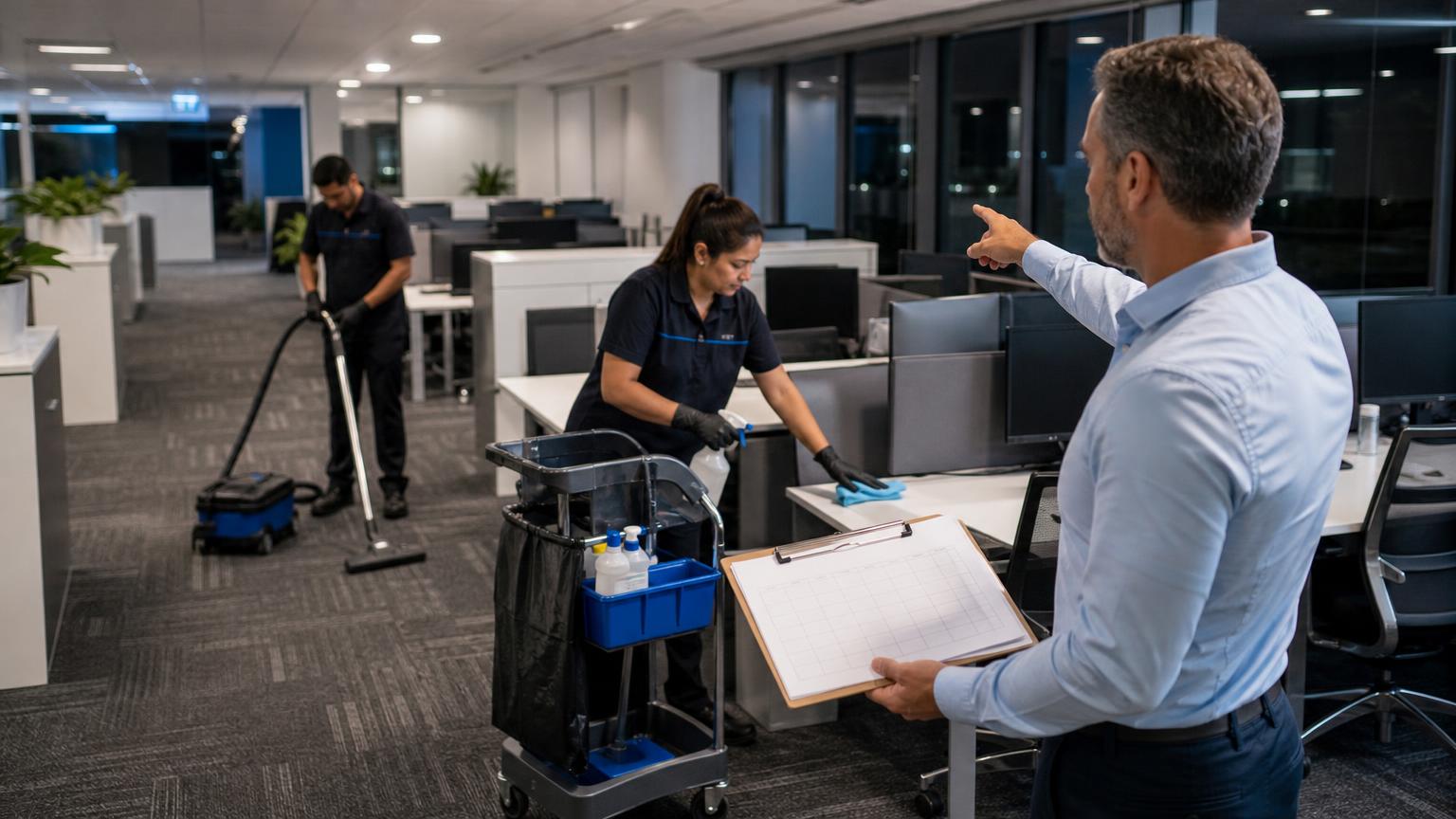
For facility managers and business owners, the strongest test is practical: can the cleaner explain how it scopes the work, identifies hazards, manages changes and checks that controls operate at the site?
What this looks like in practice
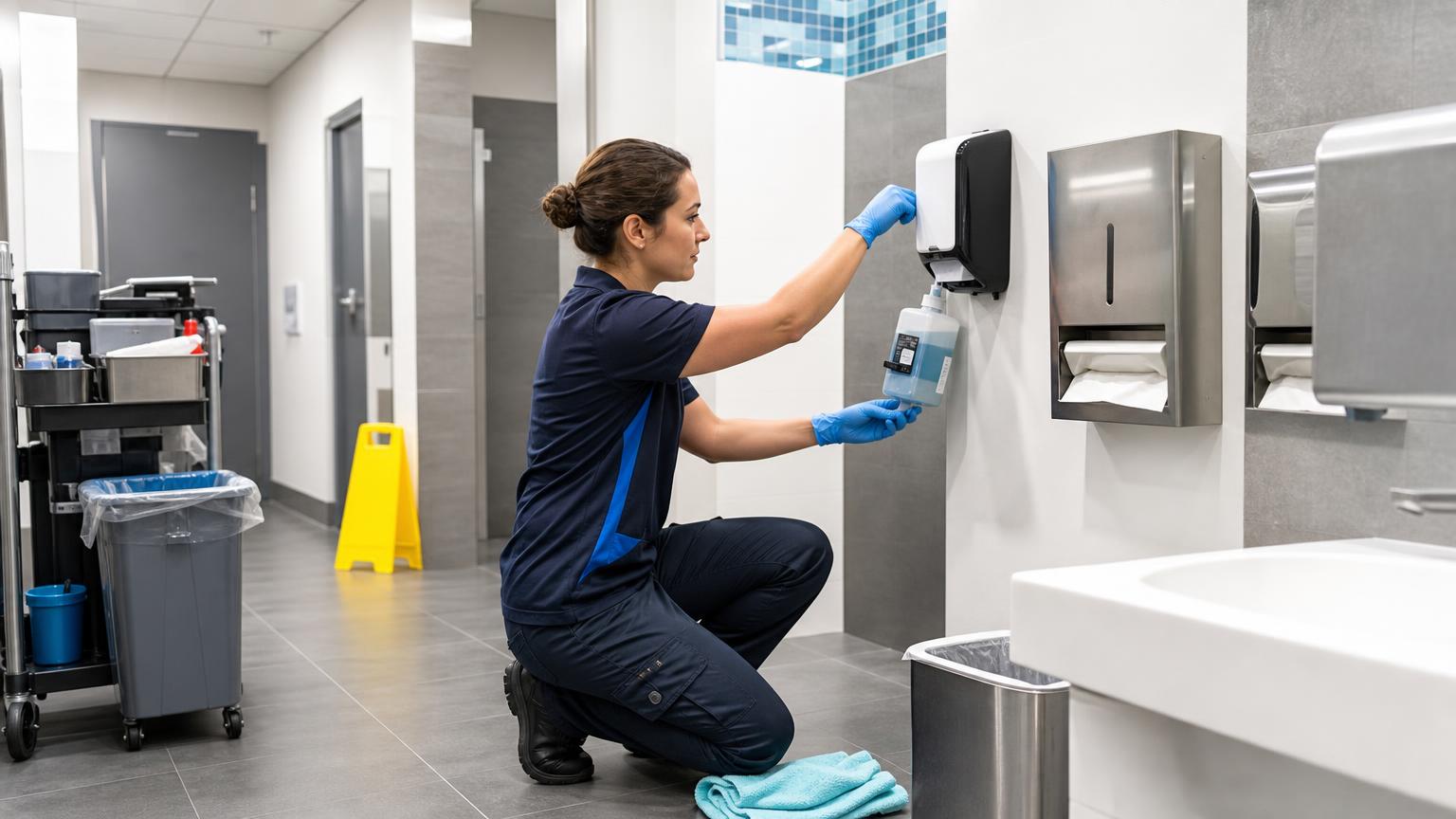
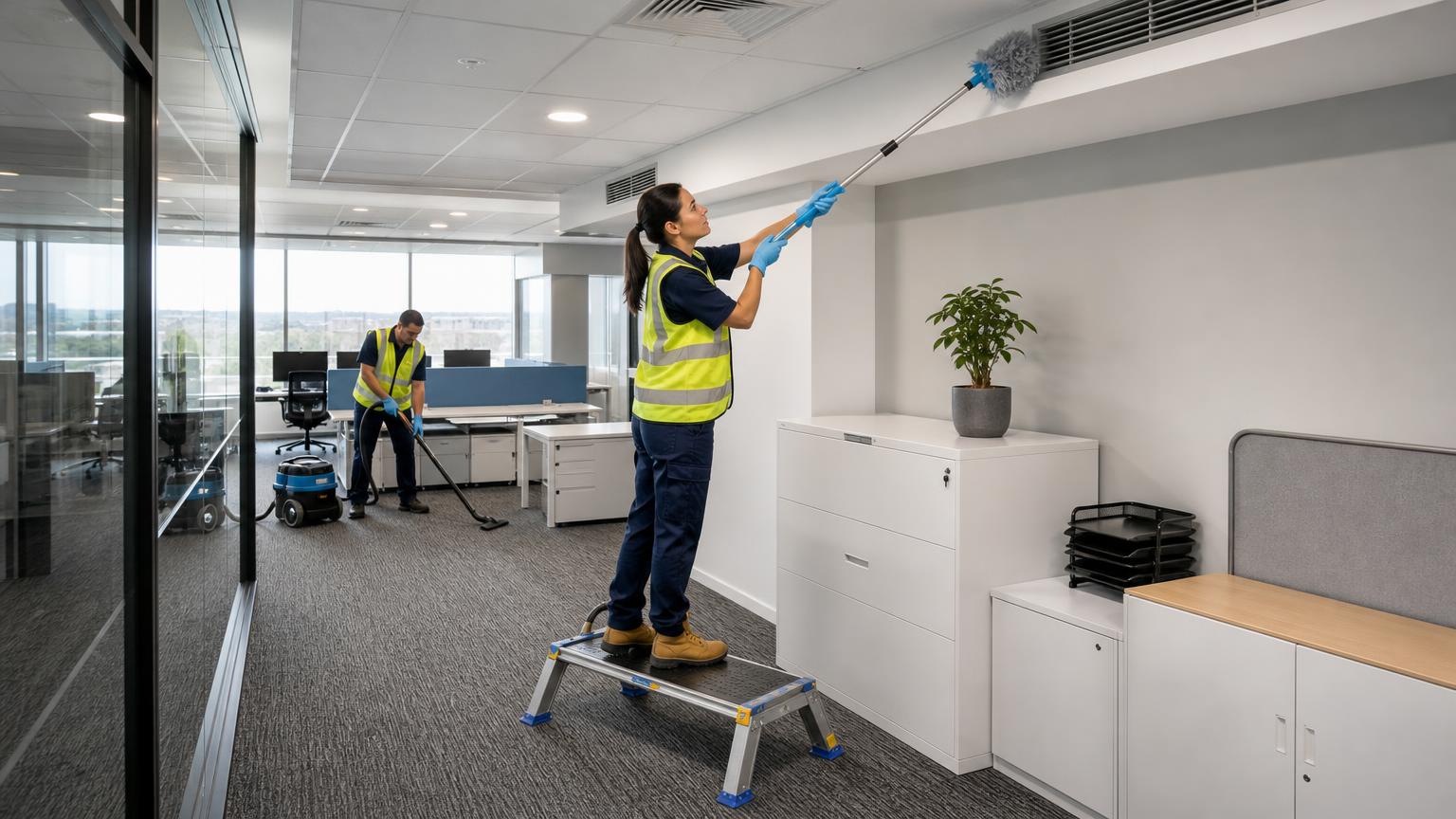
Cleaning creates different safety questions in an occupied office, warehouse, clinic, school or retail centre. The work may involve chemicals, wet floors, manual handling, electrical equipment, vehicles, access restrictions, public interaction or after-hours entry. ISO 45001 gives the contractor a management framework, but the site scope still determines the controls required.
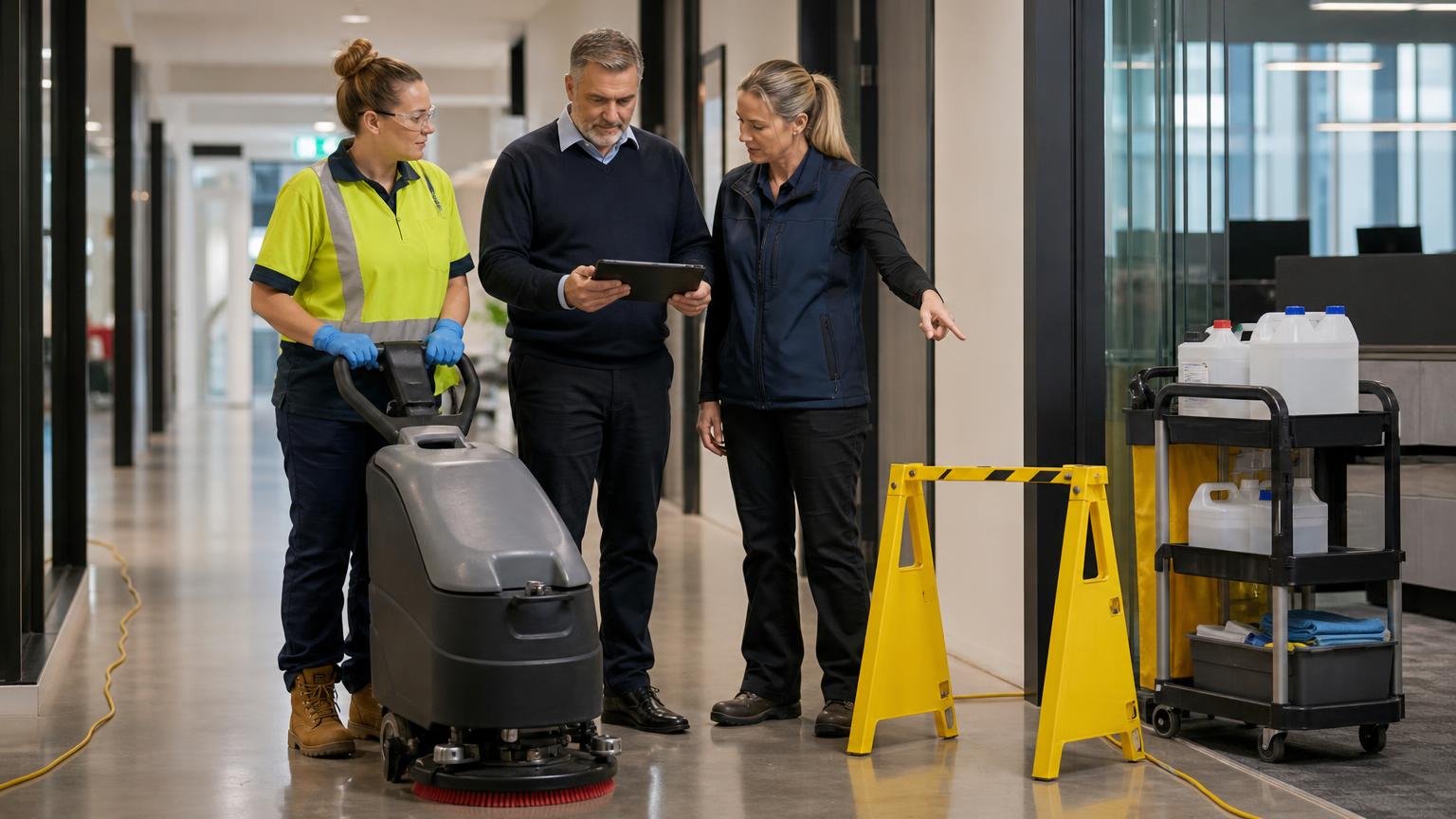
A useful site discussion should cover:
- the areas, surfaces and tasks included in the cleaning scope
- access times, keys, alarms, isolation requirements and interaction with occupants
- known hazards, restricted areas and changes to the workplace
- chemical selection, storage, labelling and safe use
- equipment, manual handling and traffic routes
- how workers report hazards, incidents and near misses
- how supervisors check completed work and follow up corrective actions
Cygnus Facility Services operates with ISO 9001 Quality Management Systems, ISO 14001 Environmental Management Systems and ISO 45001 Occupational Health and Safety Management. The business also lists CM3 Contractor Management Compliance, Australian Standards-aligned operations, external audits and a continuous improvement focus. Those credentials matter most when they connect to the daily scope rather than sitting alone in a tender response.
Ask for evidence that the system affects delivery. A contractor should be able to explain how it handles a new site, an altered work window, a reported hazard or a change in the building's use. Do not pay extra for a certification claim until you know what process and evidence it adds to your contract.
What are ISO standards for environmental management?
ISO standards for environmental management provide a framework for managing an organisation's environmental responsibilities and improving its environmental performance. ISO 14001 is the best-known international standard for environmental management systems. ISO 45001 and ISO 14001 address different subjects: ISO 45001 concerns worker health and safety, while ISO 14001 concerns environmental management.
For a cleaning contractor, environmental management may affect product selection, waste handling, resource use, spill response and the way environmental risks are identified. That does not make ISO 14001 a substitute for ISO 45001. A safer chemical choice, for example, needs to satisfy both the environmental considerations and the worker safety controls relevant to its use.
Cygnus Facility Services identifies both ISO 14001 and ISO 45001 among its management systems. When comparing contractors, ask which environmental controls apply to your site and which safety controls protect the people carrying out the work. A combined credential set is useful, but the site-specific explanation is more useful.
What ISO standard is required for cleaning services?
No single ISO standard is automatically required for every cleaning service in Australia. The applicable requirement depends on the client, contract, tender conditions, site risk profile and any procurement or contractor-management process involved.
ISO 45001 is relevant to occupational health and safety management. ISO 14001 is relevant to environmental management, and ISO 9001 is relevant to quality management. A contract may request one of these standards, several of them, or other evidence of capability. A certificate alone does not define the cleaning scope, frequency, supervision or reporting arrangements.
Start with the contract requirement, then check the scope of the contractor's certification. The certificate should relate to the organisation and activities being offered, not merely appear as an unqualified logo on a website. If certification is not required, ask how the contractor manages hazards, worker instruction, incident reporting and service changes instead.
How ISO 45001 developed and why that still matters
ISO 45001 replaced OHSAS 18001 as the international standard for occupational health and safety management systems. The change matters because buyers may still see older OHSAS references in supplier documents, policies or legacy contracts.
ISO 45001 places strong emphasis on leadership, worker participation, planning, operational controls, performance evaluation and continual improvement. It is designed as a management system that works with an organisation's wider operations, rather than as a standalone safety manual.
The practical lesson is simple: ask which current standard a supplier uses and how it maintains the system. If a contractor only refers to OHSAS 18001 without explaining its current position, ask for clarification before relying on that claim.
Do you need ISO certification?
You may need it if a tender, principal contractor, property group or internal procurement process specifies certification. You may not need it for every small cleaning engagement, particularly where the client can assess capability through other documented controls. The decision belongs in the procurement criteria, not in a generic assumption that all cleaners must hold the same certificate.
Certification provides external assessment of a management system against the relevant standard. It does not certify that every cleaner will perform every task correctly, and it does not remove the client's responsibility to describe the workplace and access conditions accurately.
Rank the evidence in this order: first, confirm the scope and hazards of the work; second, check the contractor's safety system and certification details; third, agree how the service will be monitored and improved. A polished certificate with a vague scope is weaker evidence than a clear contract backed by a system that staff actually use.
Questions to ask before appointing a cleaner
Use these questions to test the connection between certification and delivery:
- Which parts of the proposed cleaning work fall within your ISO 45001 management system?
- How will you identify hazards at this site before regular work starts?
- How do workers report hazards, incidents and changes to the scope?
- Who checks that agreed controls and cleaning procedures remain effective?
- How will after-hours access, alarms, occupants and other contractors be managed?
- What records or reports will the client receive, and how often?
Retail, healthcare, education and industrial sites should not receive an office checklist with a different heading. The work environment changes the hazards, access arrangements and control measures. For that reason, a site-scoped quote is a better starting point than a one-line price.
Local considerations for Victorian sites
Cygnus Facility Services is based in Warrnambool and serves commercial and industrial sites across South West Victoria, Geelong, Ballarat and Melbourne, as well as open projects Australia-wide. Local service availability and the work window should form part of the initial scope, especially when a facility needs daily, weekly, fortnightly or after-hours cleaning.
The company offers commercial and office cleaning, industrial and warehouse cleaning, medical and healthcare cleaning, education facility cleaning and other specialised services. The relevant safety discussion will change with the facility type. A warehouse may need attention to traffic routes and heavier soil, while a clinic or school may require different access and occupancy controls.
This article does not determine the legal duties for a particular Victorian workplace or replace a site risk assessment. Confirm site-specific obligations with the responsible workplace team and the relevant Australian regulator before finalising controls.
Where to go from here
For a practical comparison, review the proposed scope alongside the contractor's ISO 45001, ISO 14001 and ISO 9001 credentials. The next step should be a site-scoped discussion that records the building type, work areas, access arrangements, preferred schedule and safety requirements.
If you are comparing cleaning providers for a Victorian commercial or industrial site, Commercial Cleaning Warrnambool, Industrial Cleaning Warrnambool, Medical Cleaning Warrnambool and Education Cleaning Warrnambool provide useful service-specific starting points. Request a free quote with the site location, facility type, preferred frequency and any known access or safety requirements.
Questions readers ask
What does ISO 45001 talk about?
ISO 45001 covers an occupational health and safety management system. Its focus includes leadership, worker participation, hazard identification, risk control, legal and other requirements, operational planning, performance evaluation and improvement.
What are the key differences between ISO 45001 and OHSAS 18001?
ISO 45001 is the newer international standard and replaced OHSAS 18001. It uses a management-system structure that places clearer emphasis on organisational context, leadership, worker participation and integration with business processes. Buyers should ask suppliers how they maintain their current certification rather than treating an old OHSAS reference as current evidence.