Cleaning Induction Checklist for New Staff
A cleaning induction should connect each new worker to the actual facility, not just record attendance. This guide covers site hazards, access, cleaning scope, chemical controls, demonstrations, quality checks and sign-off.
What to Include in a Cleaning Induction for New Staff
New staff need more than directions to the cleaning store. Before they work alone, they should be able to identify the areas they clean, follow the site's access and safety rules, use the approved products and equipment, and report a problem to the right person.
By Cygnus Facility Services
The short answer
Begin with a walk-through of the site's hazards, entry points and operating conditions. Then explain the cleaning scope, work sequence, approved products, equipment, quality checks and escalation contacts. Finish with a practical demonstration and a record showing which topics the worker covered and understood.
The facility determines the detail. In an office, that may mean occupied rooms, swipe cards and lock-up procedures. In a clinic, warehouse, retail centre or school, the induction may also need hygiene controls, vehicle routes, customer access or restricted areas. Copying an office checklist into a clinic or industrial site usually leaves the wrong gaps.
What this looks like in practice
A useful induction turns a general cleaning role into a defined job at a particular facility. It identifies the areas to clean, the tasks for each area, the approved work window, the equipment available and the person responsible for questions or incidents.
For a commercial cleaning contractor, credentials should support this process rather than replace it. Cygnus Facility Services lists ISO 9001, ISO 14001, ISO 45001 and CM3 credentials as part of its operating framework. Those credentials may support quality, environmental, safety and contractor-management processes, but they do not tell a new worker which rooms to clean, when to enter them or how to escalate a site problem.
Start with the site induction before discussing speed. A worker who misses an access rule, uses an unapproved product or cleans outside the agreed work window has not delivered a successful shift, even if the visible cleaning looks acceptable. Scheduling should follow how the workplace actually operates, including after-hours work where the scope requires it.
What should be included on a new employee induction checklist?
Use the checklist below as a starting point, then edit it for the actual facility. Each item should have a clear explanation, not a tick box with no supporting instruction.
- Role and site details: record the worker's role, site name, induction date, supervisor and areas covered.
- Access and security: explain entry points, keys, swipe cards, alarm procedures, restricted areas, sign-in requirements and who controls access.
- Workplace layout: walk through toilets, kitchens, offices, storage areas, waste points, plant areas, loading zones and emergency exits that relate to the role.
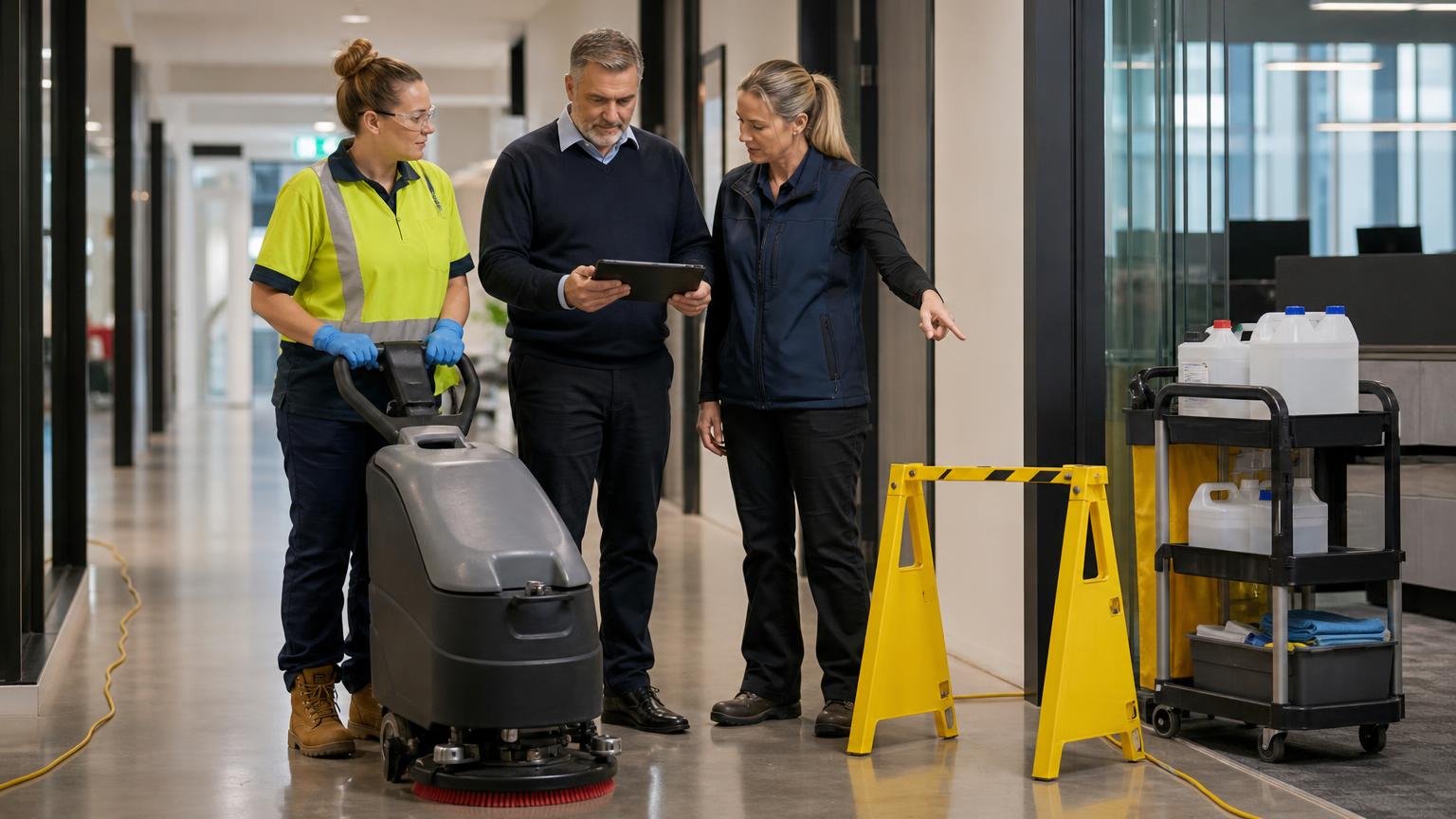
- Site-specific hazards: identify wet floors, vehicle movements, machinery, slips, trips, manual handling risks, sharps, fragile items, uneven surfaces and any area that needs restricted access.
- Cleaning scope: show what the service includes, what it excludes, the required frequency and the order in which areas should be completed.
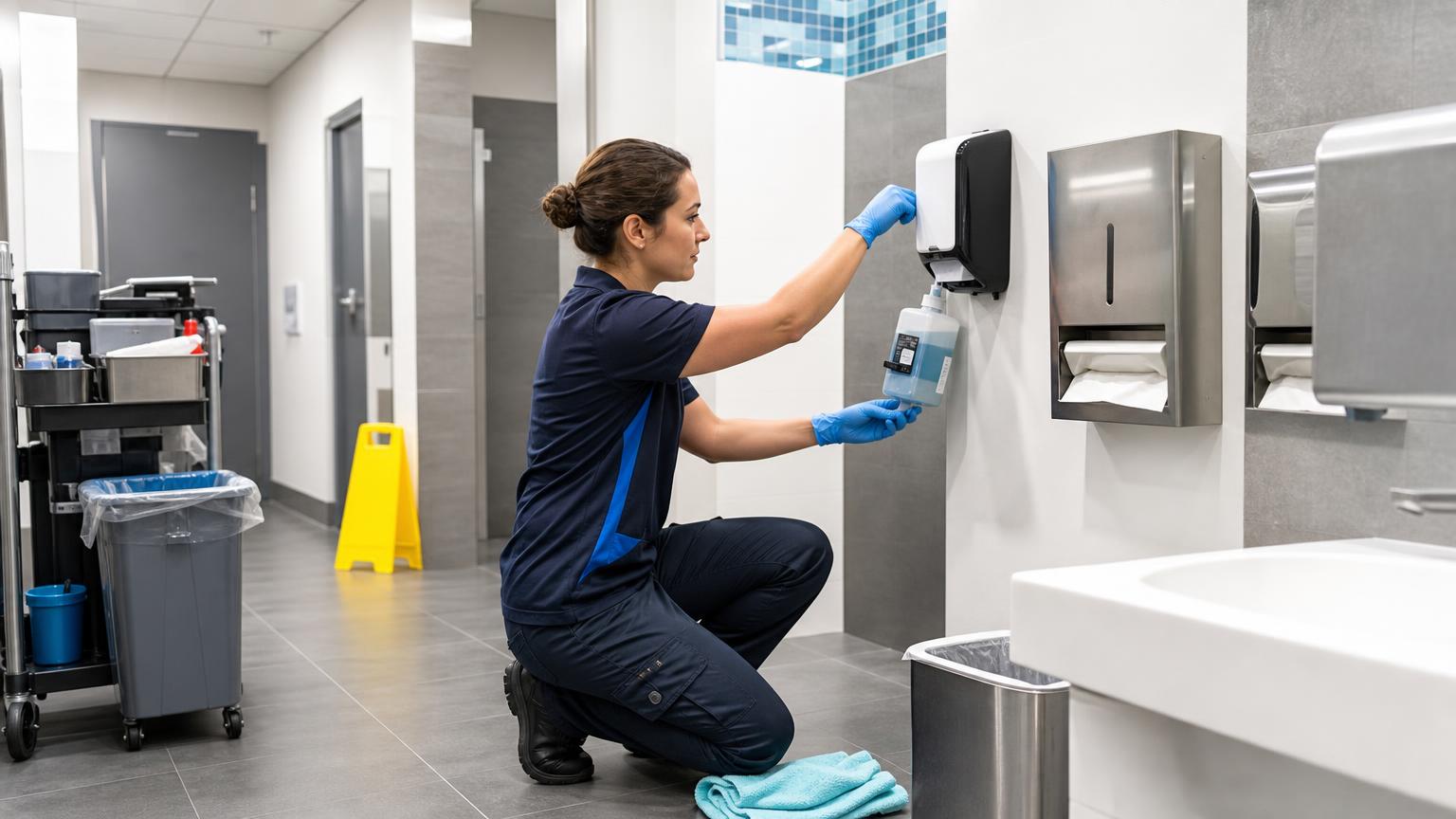
- Products and chemical controls: explain approved products, labels, dilution instructions, storage, personal protective equipment and what to do after a spill. Never ask a worker to guess a dilution ratio.
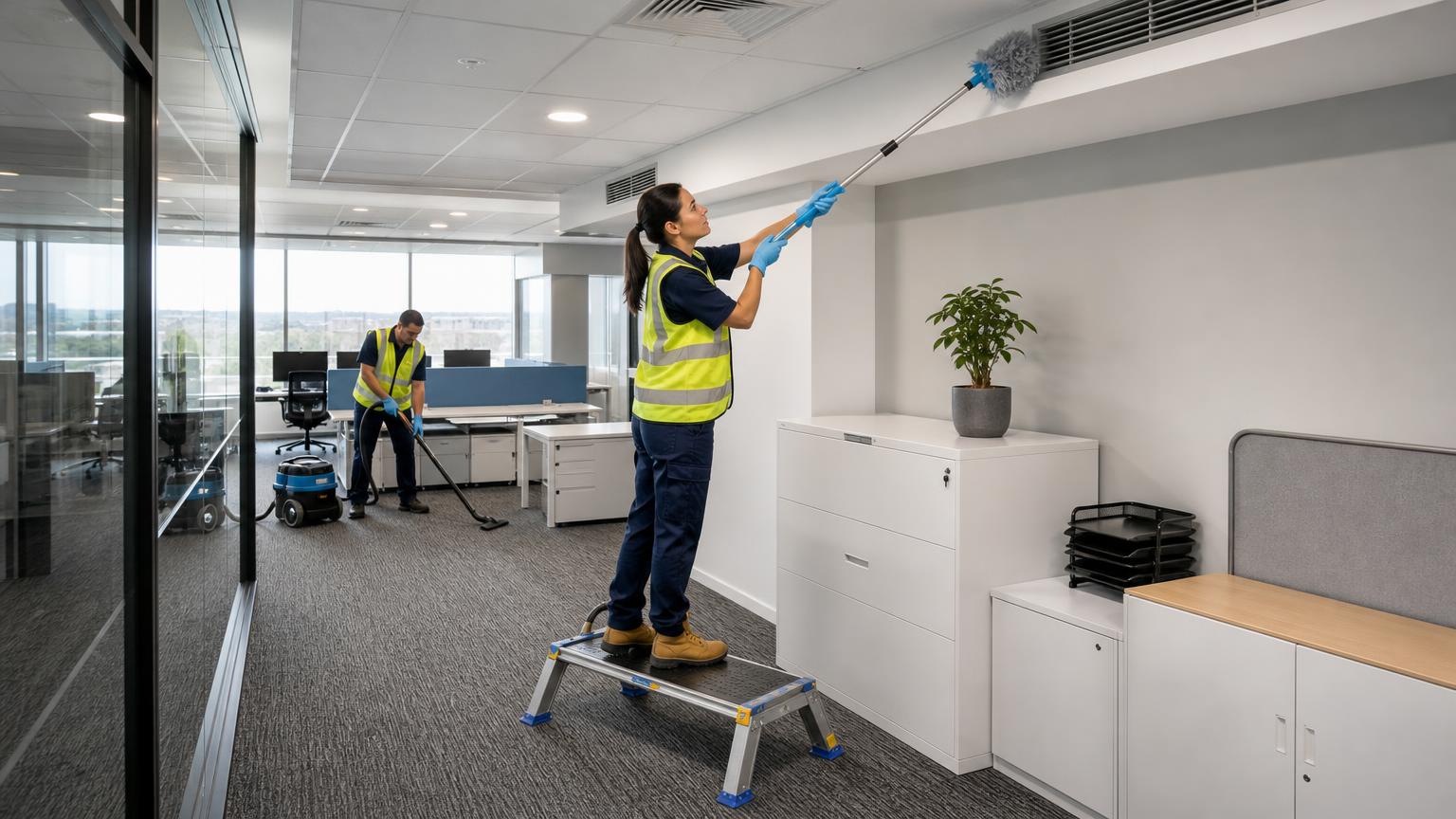
- Equipment: demonstrate the safe use, cleaning and storage of vacuums, mops, buckets, trolleys, floor equipment and any site-specific tools supplied for the job.
- Waste handling: explain waste separation, bagging, transport routes, storage points and the process for unexpected or unsafe waste.
- Infection and hygiene controls: match the process to the facility. A clinic may require controls that do not apply to a standard office, while a warehouse may need greater attention to traffic routes and floor soil.
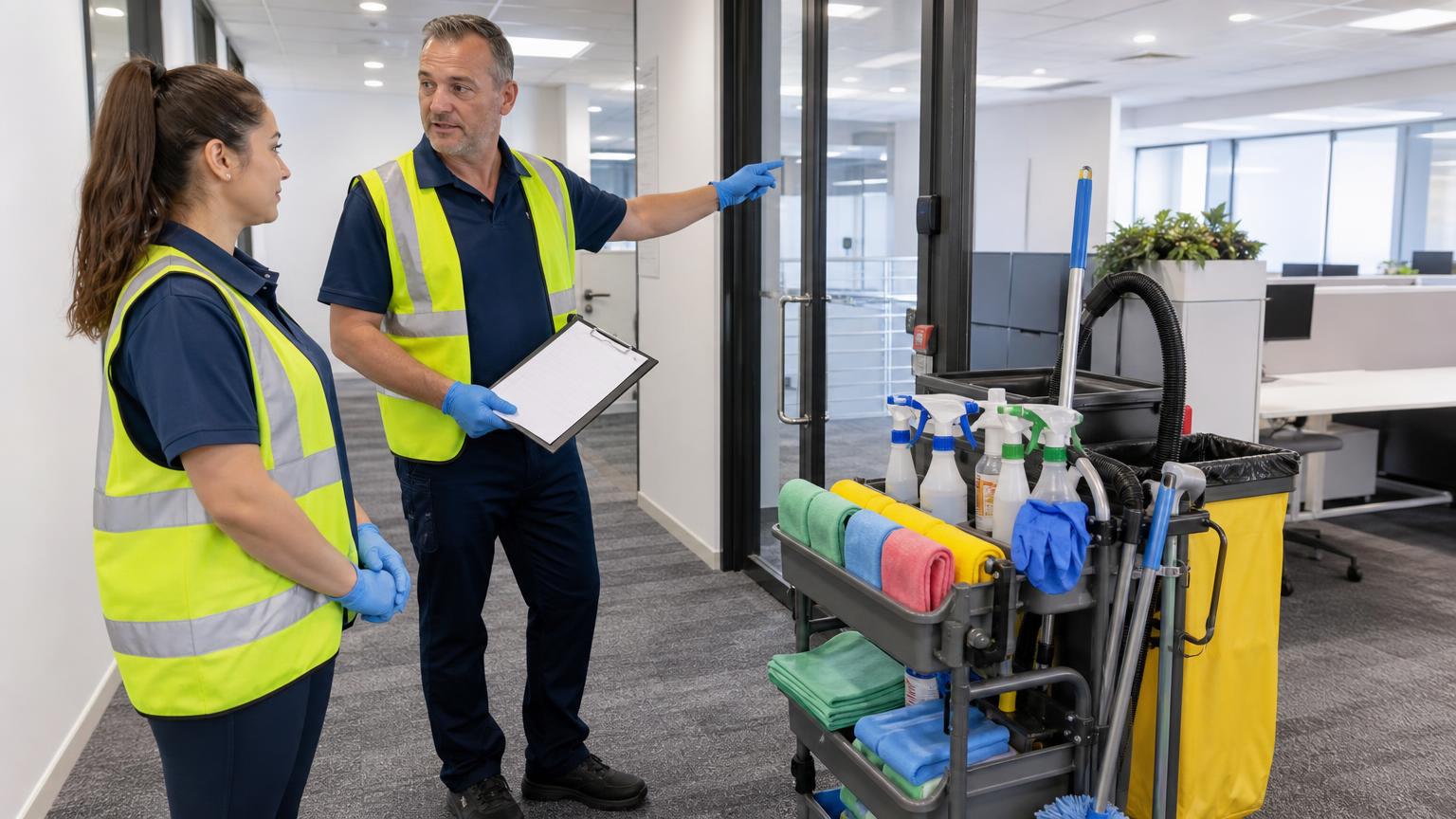
- Communication and escalation: name the supervisor, site contact and emergency contact. Explain how to report damage, hazards, missed tasks, access problems and changes to the scope.
- Quality checks: show what a finished area looks like, which tasks require inspection and how the worker records incomplete work or defects.
- After-hours arrangements: explain the approved work window, lighting, lone-worker arrangements, lock-up process and what happens if the worker cannot safely complete the shift.
- Demonstration and sign-off: ask the worker to repeat key tasks or show the correct process. Record the topics covered, questions raised, trainer and worker sign-off.
A printable PDF can make the checklist easier to use, but the document should remain site-specific. A generic form records attendance; it does not prove that the worker understands the building or can perform the assigned tasks.
Can you provide an example of a site induction?
Yes. A short site induction for a small office might follow this sequence:
- Meet at the agreed entry point: confirm the worker's identity, show the sign-in process and explain who can authorise access.
- Walk the route: point out the cleaning store, toilets, kitchen, office areas, waste point, exits and any restricted rooms.
- Explain the shift: identify the work window, the cleaning order, areas that must remain available and the lock-up steps.
- Demonstrate the method: show the approved products, equipment setup, surface method, waste process and storage routine.
- Discuss exceptions: explain what to do if a room is occupied, an item is damaged, a spill appears or access is unavailable.
- Check understanding: ask the worker to describe the escalation process and demonstrate one representative task.
- Record the induction: note the date, topics, trainer, worker questions, outstanding actions and sign-off.
The same structure needs adjustment for other sites. A warehouse induction should identify pedestrian and vehicle interfaces, racking areas and traffic routes. A clinic induction should use the site's approved hygiene and access procedures. A retail induction should account for trading hours, customer movement and new-store or back-of-house areas.
What to say in an induction program?
Use plain instructions that tell the worker what to do, where to do it and who to contact. For example:
“This is your cleaning area and your approved work window is shown on the schedule. Use only the products and equipment demonstrated today. Keep people away from wet floors, follow the site access rules and report damage, hazards, spills or missed access to your supervisor before leaving. If a task cannot be completed safely, stop and escalate it rather than improvising.”
That wording covers scope, timing, controls, reporting and the instruction to stop an unsafe task. Avoid vague directions such as “clean everything properly”. They give the worker no test for completion and give the supervisor no consistent standard to inspect.
What should be in a contractor induction?
A contractor induction should add the information needed to work under the host site's rules. Include the contractor's role and contact details, evidence of the required checks or approvals, site access, hazards, emergency arrangements, reporting lines, work boundaries, equipment controls, waste requirements and the process for changing the agreed scope.
Do not rank a contractor's certificates above site delivery. Ask how the site team will use those systems during the shift, who checks the work and how a problem reaches the responsible manager. ISO and CM3 credentials matter when they change daily delivery, records and escalation, not merely when they appear as logos on a proposal.
Common induction mistakes that create avoidable gaps
- Starting with products: chemical information means little if the worker does not know the site layout, access rules or work boundaries.
- Using one office checklist everywhere: retail, healthcare and industrial facilities have different operating conditions and cleaning priorities. Industrial cleans fail when floor care, racking dust and traffic routes receive the same treatment as a standard office vacuum run.
- Explaining instead of demonstrating: a worker can repeat an instruction without knowing how to apply it.
- Ignoring after-hours work: the induction must cover lock-up, lighting, lone-worker arrangements and escalation for unavailable access.
- Signing too early: sign-off should follow the walk-through and demonstration, not replace them.
Rank induction tasks by risk and site impact. Access, hazards, emergency arrangements and chemical controls come before polishing preferences or productivity targets. This checklist is not a substitute for a site risk assessment, a defined scope or facility-specific procedures, so teams that lack those documents should resolve them before signing off a worker.
How to check that the induction worked
Check understanding through observation, not attendance alone. Ask the worker to identify the nearest exit, explain who receives a hazard report, prepare the approved equipment and describe what happens if a room remains occupied or inaccessible.
Keep the completed induction record with the site's quality or contractor records. Review it when the scope changes, a new product or machine is introduced, an incident occurs, or the worker moves to another type of facility.
Australian considerations for cleaning inductions
Australian workplaces should use current guidance from the relevant regulator and the facility's own safety system. Safe Work Australia's material on workplace induction and hazardous chemicals can help frame the discussion, but it does not replace the site's risk assessment, procedures or client requirements.
For work in Warrnambool, South West Victoria, Geelong, Ballarat or Melbourne, the induction should still be built around the individual facility. The city does not determine the checklist. The building type, access conditions, equipment, work hours and site risks do.
Cygnus Facility Services is based in Warrnambool and supports commercial and industrial cleaning across Victoria and Australia-wide for open projects. Its listed ISO and CM3 credentials support its operating framework, but every new worker still needs the instructions for the specific site.
Related reading for facility teams
The induction should sit alongside a defined cleaning scope. For background on what a quote should describe, read what a useful quote includes.
For different facility types, see Commercial Cleaning Services, Commercial Cleaning Warrnambool, Industrial Cleaning Warrnambool and Medical Cleaning Warrnambool. These pages help you compare the service context before adapting an induction checklist.
About this guidance
Cygnus Facility Services prepared this article for facility managers, business owners, strata managers, clinic operators, school administrators, retail centre managers and property teams. It reflects the company's listed ISO and CM3 credentials, as well as its focus on site-scoped schedules and after-hours cleaning.
Where to go from here
This checklist will not solve a site with unknown hazards, unclear access authority or an undefined cleaning scope. First confirm those details with the facility manager, then adapt the induction to the actual work areas and shift.
For the next step, read what a useful quote includes and use its scope questions alongside this induction checklist.