Cleaning SWMS: A Practical Review Guide
A cleaning safe work method statement should connect a defined task with the actual workplace, hazards and controls. This guide explains how to review a SWMS, distinguish it from an SOP and compare contractor documentation without relying on templates or credentials alone.
Cleaning Safe Work Method Statement: What a Useful Document Covers
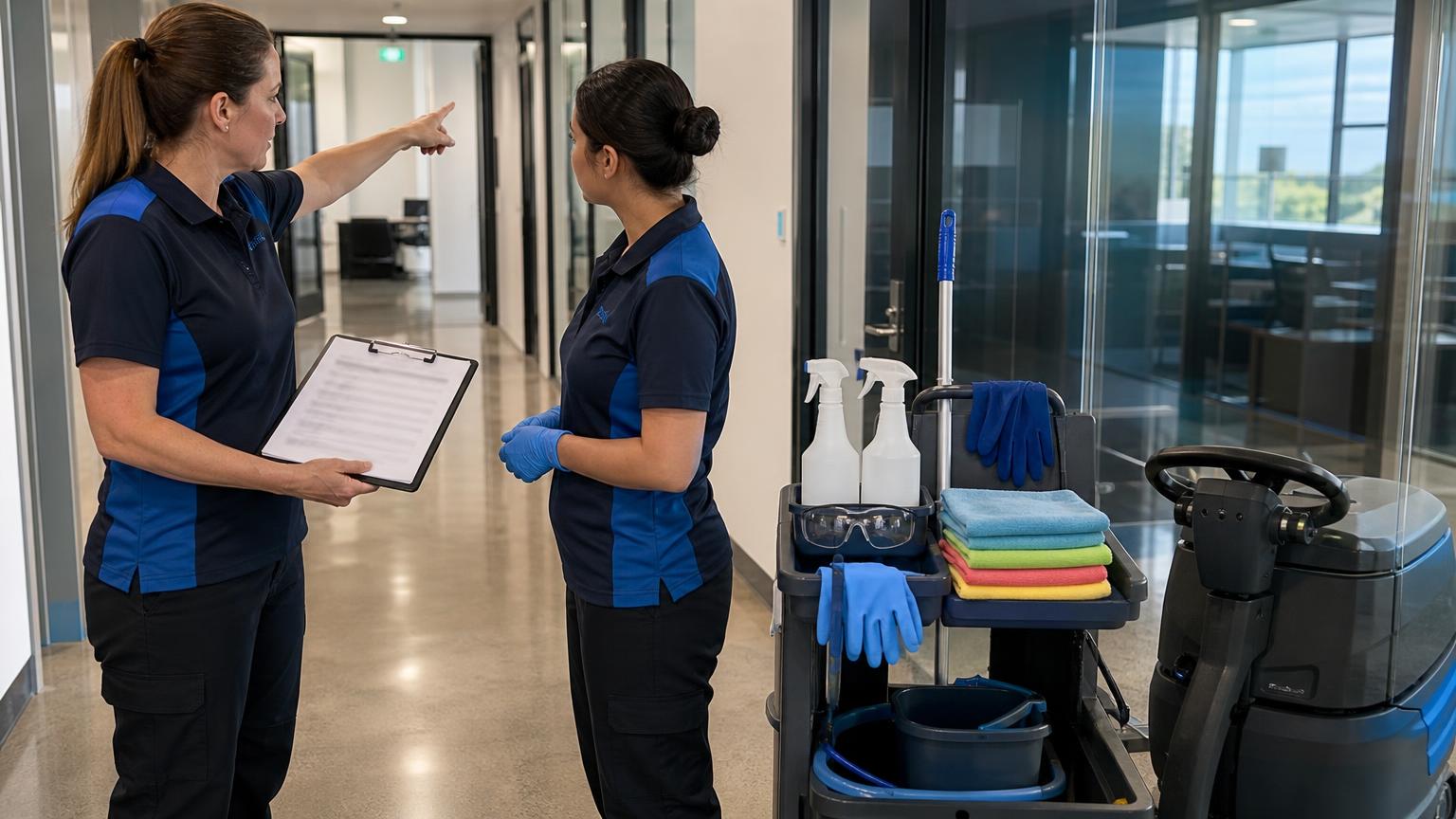
A cleaning safe work method statement should identify one defined task, the workplace where it will happen and the controls workers must follow. It should name site conditions, hazards, equipment, responsible people and the action required when conditions change. Reject a generic file copied from another facility until someone checks it against the actual work area.
Author: Cygnus Facility Services
Purpose and scope
A useful SWMS lets a worker or site contact check the plan before and during the task. The document should identify the task, its hazards, the controls for each hazard, the person responsible for those controls and the step to take if the site or work changes.
Do not decide that a cleaning task needs a SWMS merely because someone has labelled it routine. In Australia, the answer depends on the work and the applicable WHS framework. For construction work, check whether the activity involves high risk construction work, or HRCW, and confirm the position with the site PCBU, principal contractor or other relevant duty holder. Read Safe Work Australia's Safe Work Method Statements guidance before relying on a downloaded template. Requirements and guidance can differ across all states and territories.
Match the method to the workplace
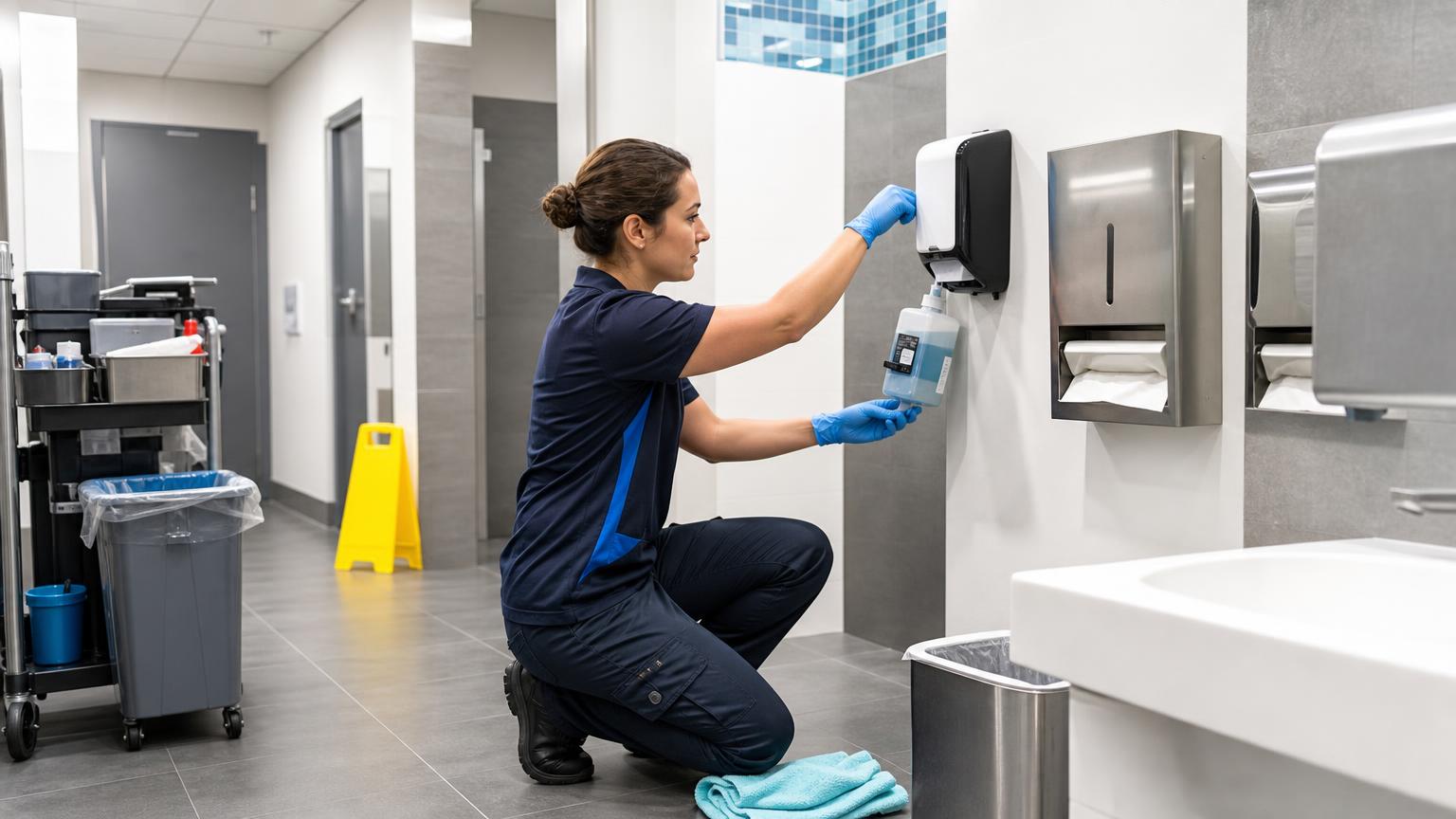
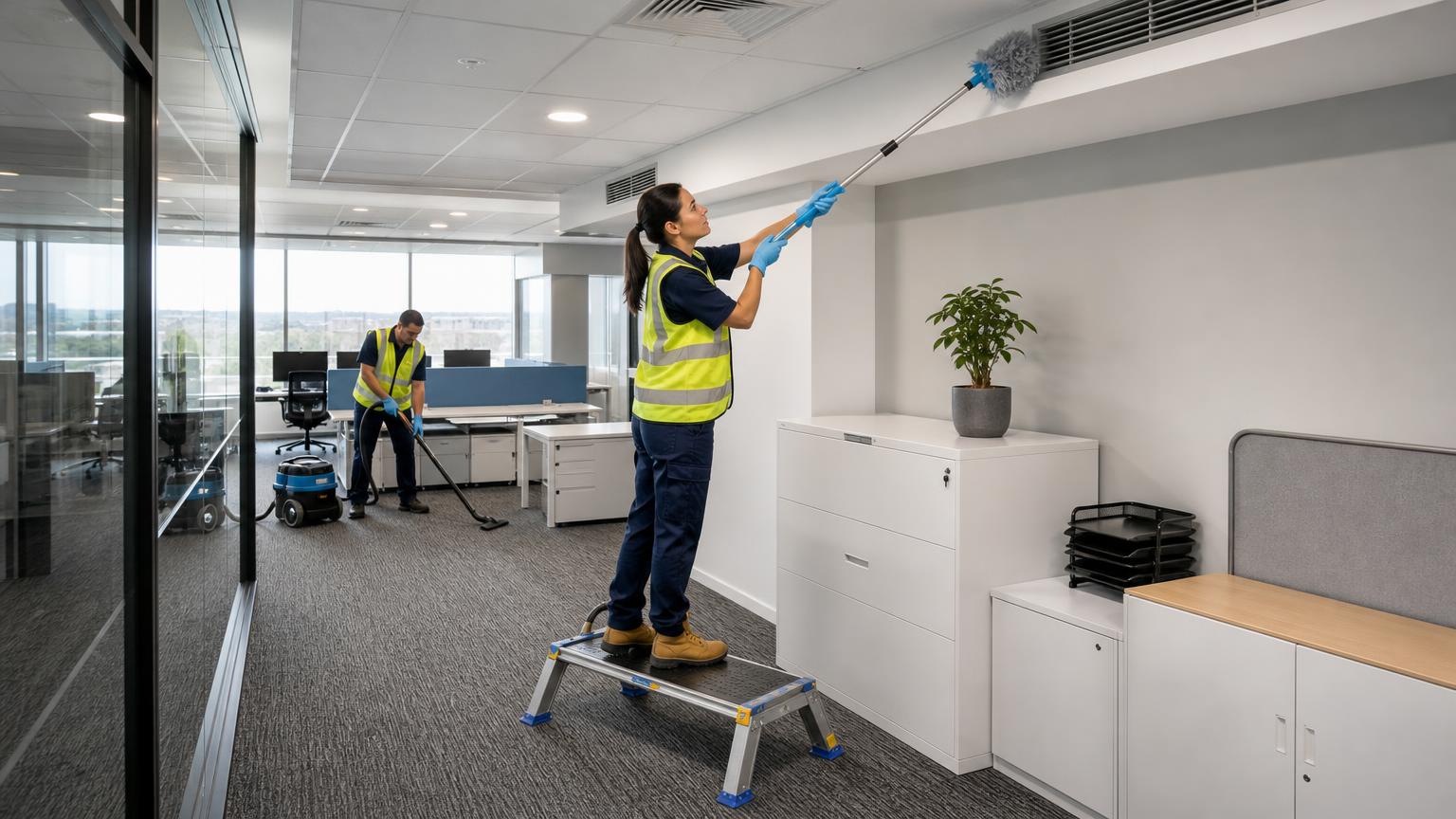
Office cleaning after hours may require controls for access, isolated areas, wet floors, electrical equipment and product storage. An industrial or warehouse clean needs a different method where traffic routes, racking dust, floor equipment and changing site conditions affect the task.
The work sequence should be visible rather than buried in policy language. A reviewer should be able to find the preparation steps, hazards, controls, PPE, responsible people and review point without searching through unrelated pages.
ISO and CM3 credentials can help compare commercial cleaners, but a logo should never outweigh a missing site control. Ask what the listed system changes in daily planning, communication, inspections or corrective action before treating it as procurement evidence.
What are SOPs for cleaning?
SOPs, or standard operating procedures, describe the normal way to complete a recurring cleaning task. An SOP might set out the order for cleaning a room, product handling, equipment use, waste handling or closing a work area.
A SWMS and an SOP answer different questions. The SOP describes the expected process. The SWMS records the hazards and controls for work that presents relevant risk. A facility may need both, but an SOP does not replace risk controls when the work or site requires a SWMS.
Start with the actual task, not a template. A clinic cleaning SOP may specify room sequence and equipment separation, while related safety documentation addresses chemical handling, sharps discovery, slips and access restrictions. Retail and healthcare sites need different checklists from offices, so copying an office scope into a clinic or shop usually fails.
Can you provide an example of a method statement?
Yes. The outline below shows a practical structure for an after-hours office clean. It is a starting point, not a document that automatically meets every site's requirements.
| Section | Example content |
|---|---|
| Task | After-hours cleaning of an occupied commercial office, including floors, amenities and shared areas. |
| Preparation | Confirm the approved work window, access arrangements, site contact, equipment condition and product instructions. |
| Hazards | Wet floors, manual handling, chemical exposure, electrical equipment, restricted access and interaction with other site users. |
| Controls | Use signage and barriers where needed, follow product labels and safety data, inspect equipment, keep routes clear and report changed conditions. |
| Work sequence | Prepare the area, place controls, complete the agreed cleaning steps, remove equipment and check the area before reopening. |
| Review | Stop and reassess if the site, task, equipment or hazard changes. Record issues through the agreed site process. |
This example does not solve the planning problem for industrial, medical, education or retail work. Industrial cleans fail when floor care, racking dust and traffic routes are treated like a standard office vacuum run. The method must follow the facility's actual hazards and operating conditions.
How do you ensure safety while cleaning?
Safety planning starts before equipment enters the work area. Confirm the scope, inspect access routes, check equipment, review product instructions and make sure workers understand the controls. Select PPE for the task rather than treating it as a substitute for other controls.
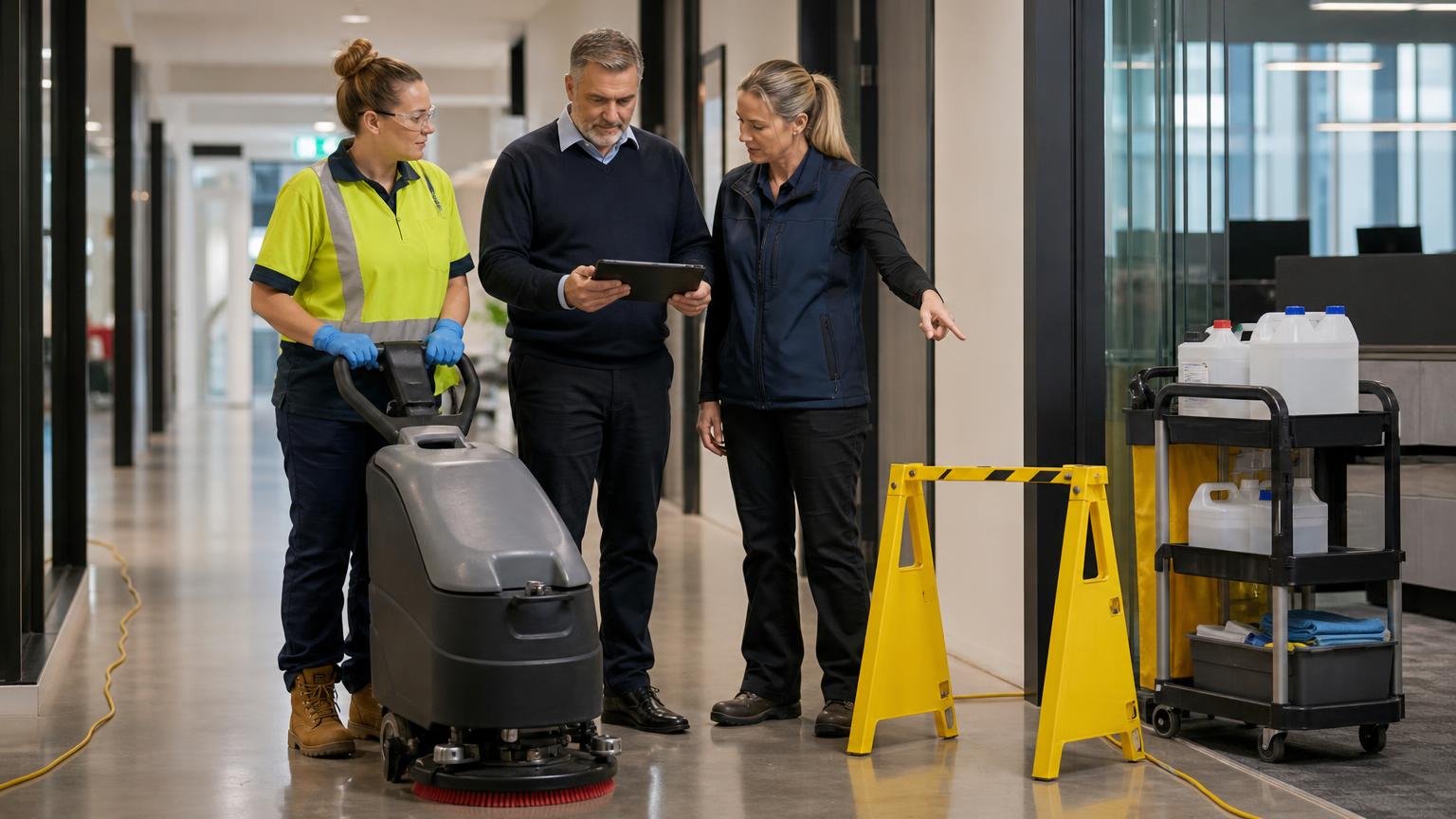
Make each control actionable. If cleaning creates a wet floor, the method should identify who places warning signs, how access is restricted and who confirms the area is ready to reopen. If a worker finds an unexpected hazard, the document should state when to stop, who to contact and how the work is reassessed.
Schedule the service around how the workplace actually operates, including after-hours work when needed. A quieter work window may reduce contact with occupants, but the method still needs an access plan, an emergency contact and a response to isolation or changed conditions.
The ISO describes ISO 45001 as a standard for occupational health and safety management systems. That framework can support consistent planning and review, but it does not turn a generic SWMS into a site-specific plan. This advice is not for someone seeking a legal determination for a high-risk project; that person should obtain project-specific guidance from the relevant regulator or duty holder.
WHS duties and site information
A cleaning business and other businesses connected with the workplace may hold WHS duties, depending on how the work and workplace are arranged. Safe Work Australia's guidance on the primary duty of care explains the model-law position, but each project should be checked against the applicable jurisdiction.
A client should not treat a SWMS as a form to collect and file. The stronger test is whether the proposed method matches the site's access rules, equipment, hazards and work schedule, and whether the contractor received relevant site information before work starts.
Victoria has its own WHS regulatory framework, so Victorian projects should be checked against current guidance from WorkSafe Victoria. For work in other states, read the relevant regulator's current material rather than assuming a Victorian document transfers unchanged.
How the management system supports the document
A WHS management system is the broader process around safe work. It can include policy, responsibilities, consultation, training, risk management, incident reporting, inspections, document control and review. The SWMS is one task-level document within that process, not the whole system.
This distinction matters during contractor selection. A polished PDF says little if workers cannot access it, supervisors do not discuss changes or the site has no way to report an issue. Ask how the contractor controls document versions, records relevant checks and responds when the agreed method no longer fits.
When a contractor lists ISO 45001, ISO 9001, ISO 14001 or CM3, ask what workers do differently because that system exists. The practical evidence is in the proposed scope, site communication, checks and response to changed conditions, not the credential alone.
Common document failures
- Generic wording: the document names cleaning but not the actual room, equipment, access arrangement or work condition.
- Confusing an SOP with a SWMS: the steps are clear, but the hazards and controls are missing.
- Ignoring changed conditions: the method does not explain what workers should do when another contractor, vehicle, occupant or unexpected hazard enters the area.
- Overlooking the work window: the document assumes daytime access when the agreed service is after hours.
- Using credentials as a substitute for evidence: a certification is listed, but no one can explain how the related system affects the work.
Rank the review this way: first confirm that the document matches the task, then confirm workers can follow it, then assess the contractor's wider management system. Do not accept a credential as compensation for a missing site control, and do not pay for a broad scope before the contractor has inspected or properly defined the space.
Location and jurisdiction checks
Cygnus Facility Services is based in Warrnambool and supports commercial and industrial sites across South West Victoria, Geelong, Ballarat, Melbourne and other Victorian or Australian locations for open projects. Location affects who needs to review the work, which site rules apply and how access and scheduling are arranged.
For a Warrnambool or South West Victoria facility, begin with the site's hazards, operating hours and emergency arrangements. For work in Geelong, Ballarat or Melbourne, confirm the same points with the relevant site contact rather than assuming a document from another location transfers unchanged.
This article does not determine whether a particular task legally requires a SWMS. The work type, workplace, jurisdiction and duties of the parties determine that answer. Obtain project-specific advice where the risk or legal position remains unclear.
Next steps for facility managers
Ask for the proposed task scope, the hazards it addresses, the controls workers will use, the relevant SOPs, the review process and the person responsible for site communication. Download or retain the current approved document through the site's document-control process, not as an isolated template.
If you are comparing cleaning contractors, do not accept a one-line price before the scope is defined. Quotes should be based on a real scope of the space, including the site type, location, work window and known access or safety requirements. See Cygnus Facility Services' Commercial Cleaning Services, Commercial Cleaning Warrnambool, Industrial Cleaning Warrnambool or Medical Cleaning Warrnambool when assessing the service scope.