Commercial Cleaning SLA: Scope, Costs and Contracts
A commercial cleaning service level agreement should connect the price to a clear site scope, measurable tasks, frequencies and work windows. This guide explains what to include, how to compare quotes and where generic contracts create risk.
Commercial Cleaning Service Level Agreements
A commercial cleaning service level agreement should tie each charge to a defined task, area, frequency and work window. For example, the scope can state that amenities receive daily cleaning, internal glass receives periodic cleaning and inspections use a signed checklist. It should also name the person who checks delivery, identify the record used for that check and explain how the contractor corrects work outside the agreed scope. A one-line price cannot provide that control.
The decision in brief
Most buyers start by comparing the headline price. That is backwards, because two quotes may cover different areas, frequencies or periodic tasks. Use one site-specific scope of work for every bidder, then compare the resulting prices. Attach observable quality measures, access arrangements, safety requirements, pricing, review terms and a problem-reporting process. A clinic, warehouse, retail centre and school do not share an office checklist.
Write variations into the agreement and require approval before changed work starts. A scope agreed in June may need a written variation in July if occupancy, building use or operating hours change. Record the affected area, added task, new frequency, price and start date. This approach improves cost control, but it does not assess legal liability or replace advice from an Australian legal adviser for high-value contracts, unusual liability arrangements or serious site risks.
What this looks like in practice
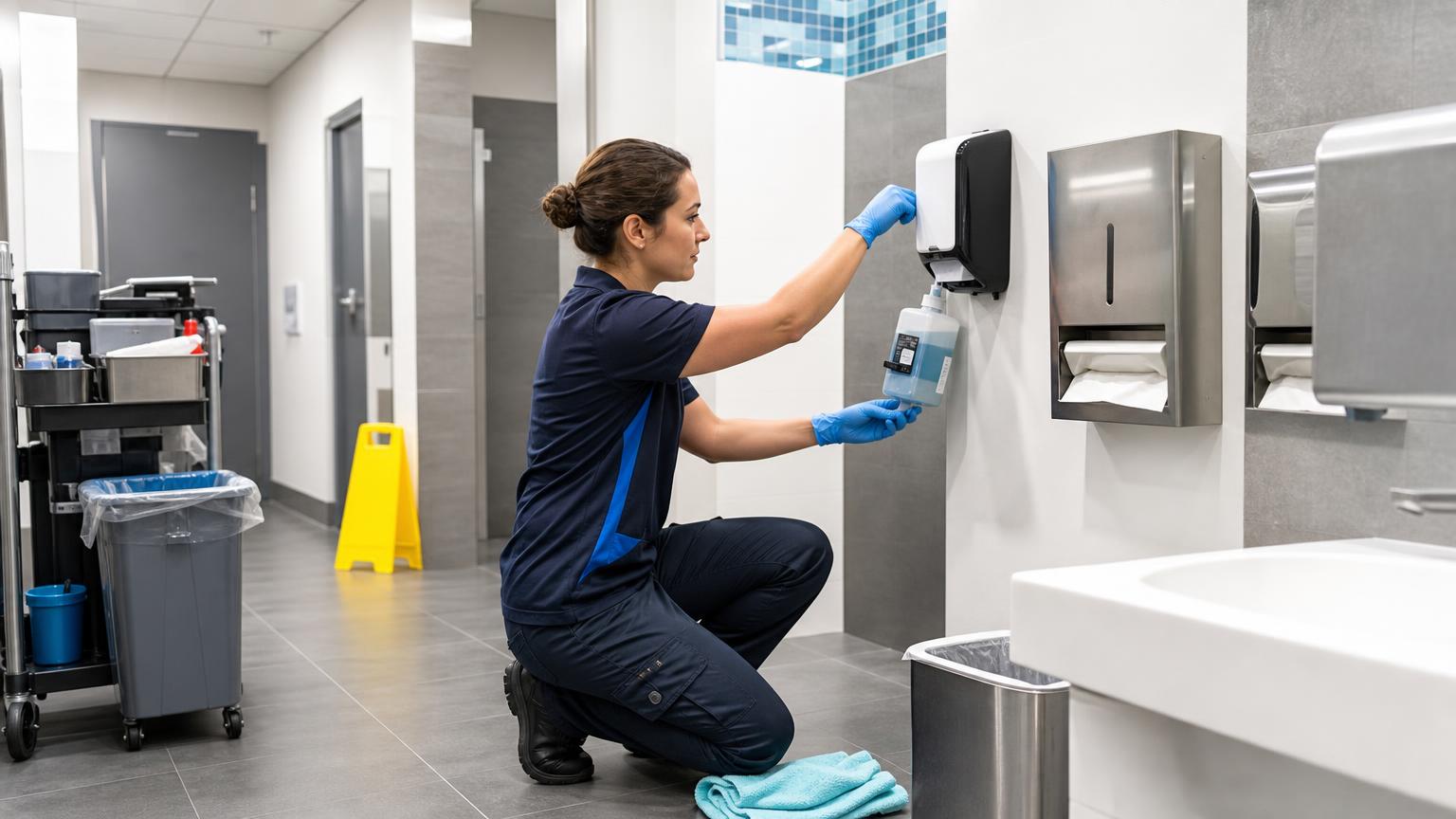
An occupied office scope may name workstations, shared areas, kitchens, amenities, floors, bins and after-hours access. A warehouse scope should separately identify floor care, racking dust, traffic routes and heavier soil instead of hiding them under general cleaning.
Retail and healthcare sites need different checklists from offices. A clinic may need separate routines for treatment areas and shared spaces, while a shopping centre may require work around trading hours. Copying an office scope into either site is a mistake because it leaves important tasks or access restrictions unclear.
Cygnus Facility Services publishes service lines for commercial offices, industrial and warehouse sites, shopping centres and retail, banking and finance premises, government facilities, medical and healthcare sites, owners corporation and strata properties, education facilities, and builders cleaning. The agreement should follow the site's function, risk profile and operating pattern rather than the contractor's most convenient template.
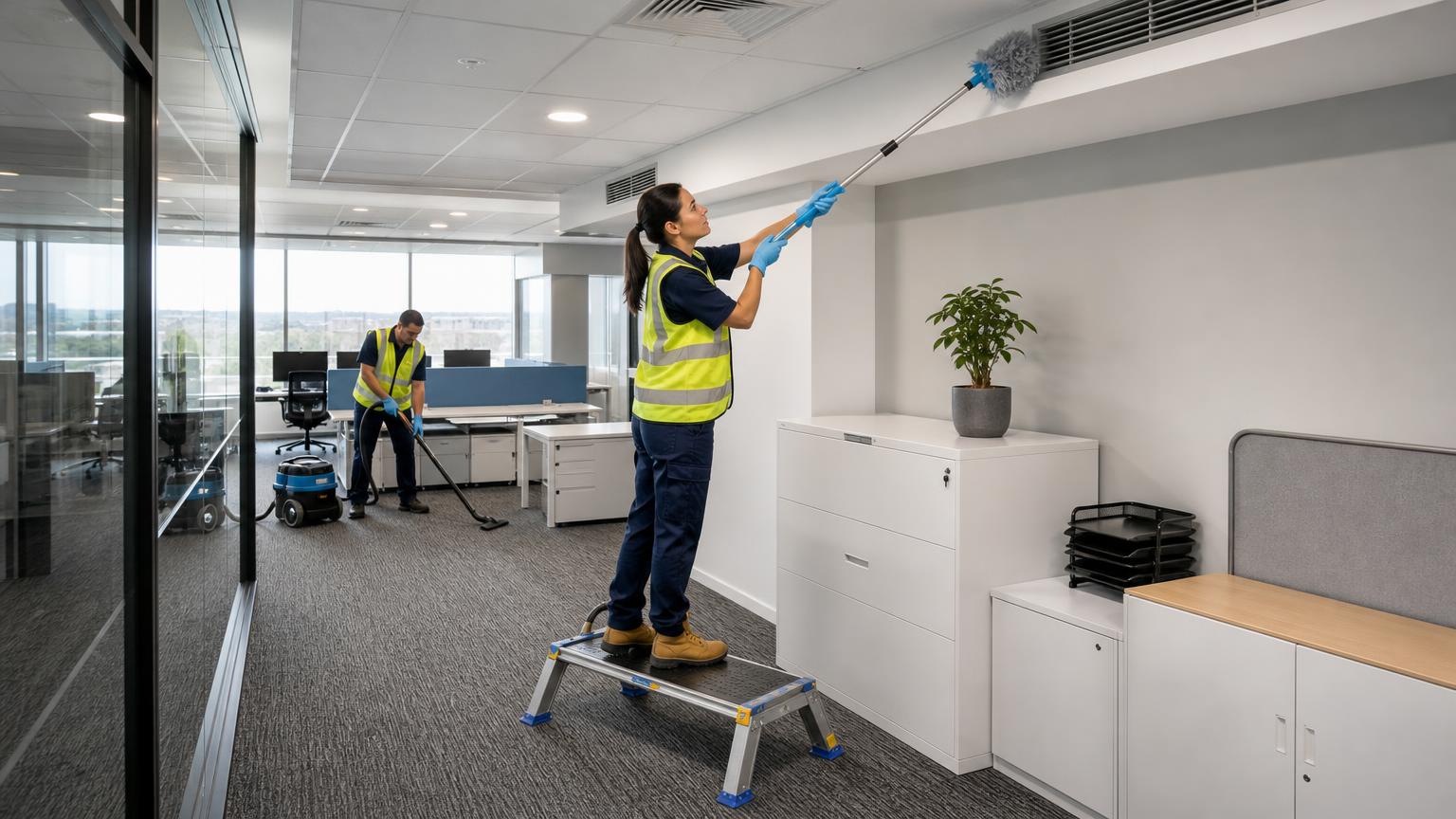
Schedule cleaning around how the workplace actually operates, including after hours when needed. State which areas receive daily, weekly, fortnightly, periodic or one-off work, then assign responsibility for keys, alarms, security contacts and handover. Industrial cleans need separate attention to floor care, racking dust and traffic routes, because a standard office vacuum run does not address those conditions.
What must a service agreement include?
A usable agreement should include these parts:
- Parties and premises: name the contracting parties, ABNs where relevant, the site address and the areas covered.
- Scope of work: describe each task, surface or area. State what the contractor does not include, such as specialist restoration, pest control or maintenance outside the cleaning scope.
- Frequency and timing: record daily, weekly, fortnightly, periodic and one-off work separately. Include after-hours requirements and any blackout periods.
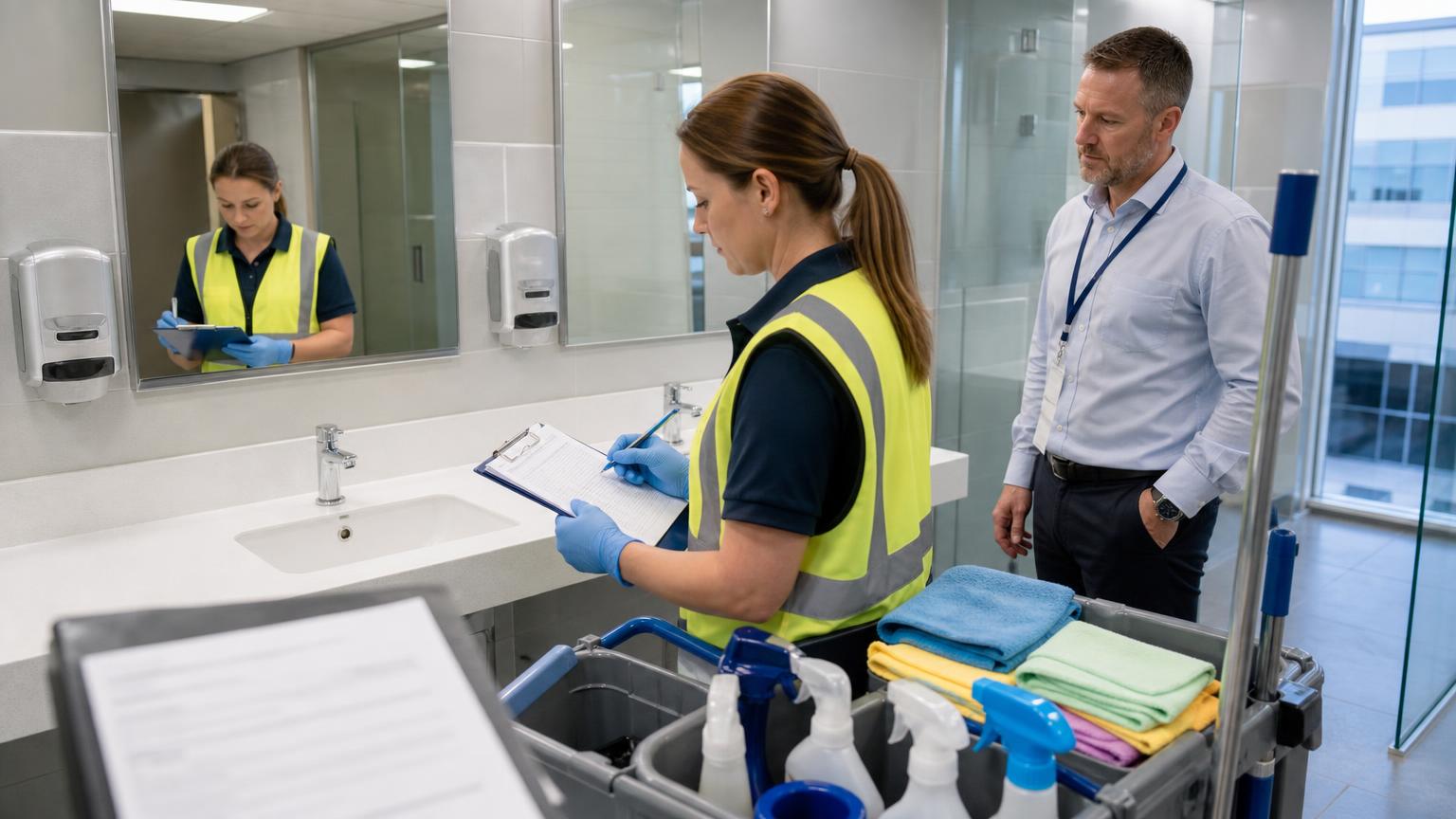
- Service standards: define observable results, inspection methods and the person who records or reviews issues. Avoid relying on words such as clean or high quality without a practical explanation.
- Site responsibilities: identify who provides access, utilities, consumables, storage, waste instructions, security information and notice of changed conditions.
- Health and safety: state how the parties share site information, report hazards, manage incidents and control access to restricted areas. Site-specific requirements should sit alongside the contractor's documented systems.
- Products and equipment: record any approved products, safer or eco-friendly product preferences, equipment restrictions and storage arrangements.
- Pricing and variations: show the agreed charge, GST treatment where applicable, invoicing cycle, extra-work approval process and the events that may require a revised quote.
- Performance reviews: set the review interval, escalation contact, response process and time allowed to correct an agreed service failure.
- Term and exit: state the start date, renewal position, notice requirements, immediate termination events and handover duties.
Put the scope and exclusions beside the price. A low figure can omit periodic floor work, consumables, internal glass, high-level dusting or an extra tenancy. Record any change and its price before the task begins rather than relying on a verbal assumption.
ISO 9001, ISO 14001, ISO 45001 and CM3 credentials matter only when they change day-to-day delivery. Ask to see how the relevant credential supports inspection records, environmental controls, safety processes or contractor checks. A logo does not replace a site-specific scope or prove that every task is included.
How much to charge for a commercial deep clean?
There is no responsible universal price for a commercial deep clean. The charge depends on floor area and layout, site condition, soil or residue, surfaces and finishes, equipment, access, work hours, waste handling, staffing and the deadline.
A deep clean before a retail opening is not priced like a vacant office refresh. A builders clean may involve construction dust and residue. An industrial site may require floor areas, racking dust and traffic routes to be assessed separately. A clinic may need a scope that separates treatment and shared areas.
For a useful quote, provide the site location, building type, approximate areas, photographs, access conditions, preferred work window, known residue and required outcome. The contractor should inspect or otherwise validate the scope before confirming the charge. The quote should identify inclusions, exclusions and the conditions that trigger a variation.
Scope clarity and site fit should rank above the cheapest headline price. A low quote that omits periodic tasks creates rework, disputes or extra approvals later. Cygnus Facility Services bases quotes on a real scope and provides clear pricing without hidden fees, but exact pricing still depends on site information.
What is the purpose of a service level agreement in facilities management?
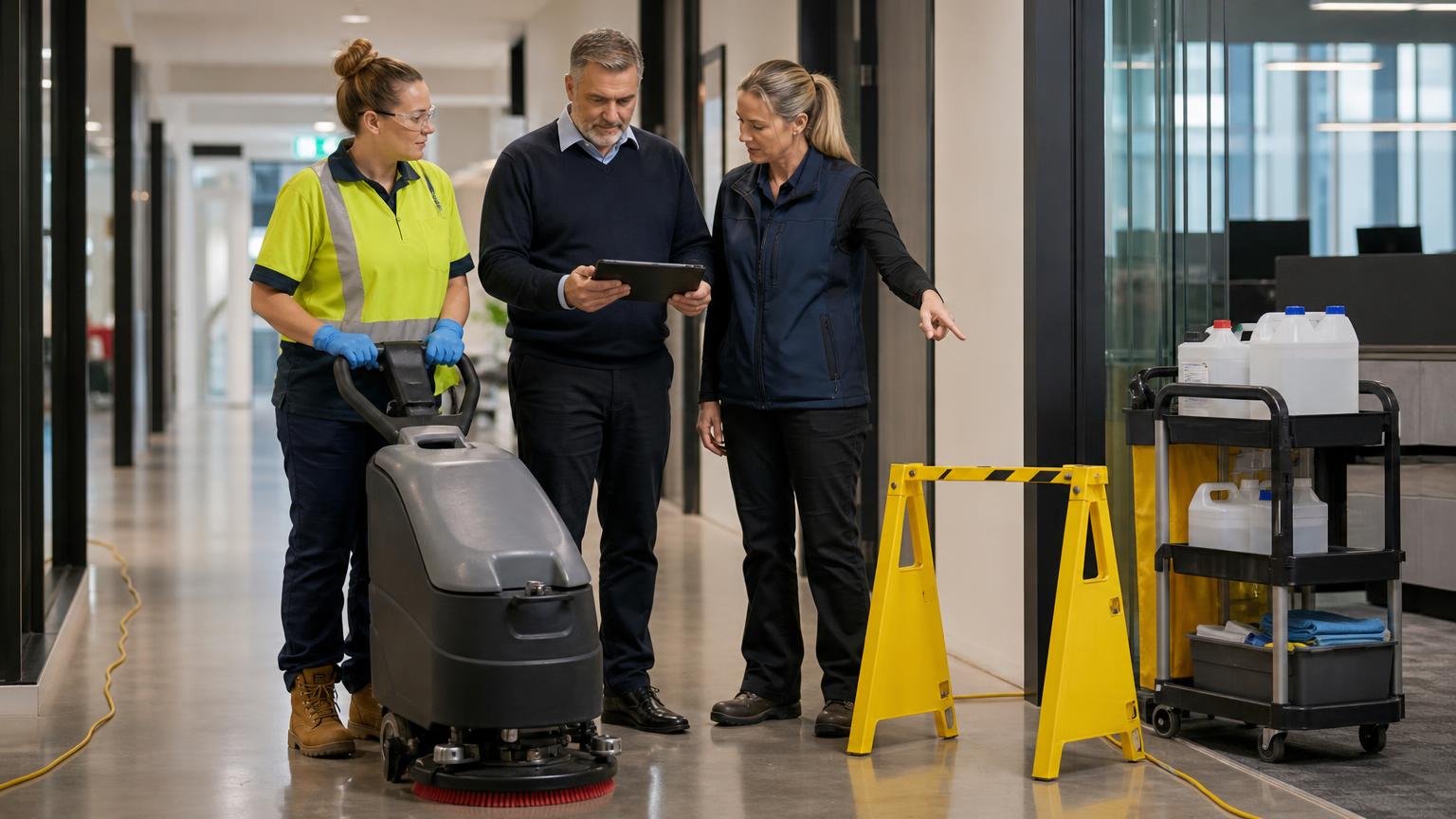
Its purpose is to turn a general expectation into an operating reference. The agreement helps facilities teams schedule work, compare delivery with the approved scope, raise a precise issue and decide whether a requested task is included or needs approval.
It also gives both parties a shared record when the building changes. A new tenancy, altered trading hours, construction activity, seasonal occupancy or restricted area may change the work required. A written variation records the instruction and price before the contractor performs the additional work.
An SLA does not guarantee that every complaint disappears. It identifies the task, location, required standard, responsible contact and correction process. That is more useful than an informal promise to keep the site clean.
Do you need a cleaning services contract?
Yes, if a contractor works on your premises regularly, handles access or security information, uses chemicals or equipment on site, or invoices your organisation over time. A written contract reduces disagreement about scope, payment, responsibility and ending the arrangement.
A purchase order or email may confirm a booking, but it rarely provides enough detail for a recurring facility service. Use a contract with an attached scope and service schedule. For one-off work, the written quote should still identify the site, inclusions, exclusions, price basis, access arrangements and acceptance process.
Do not treat an SLA as a substitute for legal review. This advice is not for resolving ownership disputes, designing an insurance position or managing an undisclosed site hazard. It will not solve those problems, so obtain legal advice for terms that create material risk for your organisation.
How to get a cleaning contract in Australia
For a buyer, define the site first, invite comparable quotes, test the scope, check the contractor's compliance information and agree the contract before work starts. Ask each bidder to price the same areas, frequencies, work windows and periodic tasks. Otherwise, the cheapest quote may simply omit work that another contractor included.
For a cleaning business, identify the sectors and work it can safely deliver, then establish a legal business structure, ABN and appropriate records. Confirm employment, safety, tax and contract obligations through official Australian sources rather than relying on a generic template. Prepare a scope document, variation process, incident process and insurance information before approaching facility managers.
Relevant checks may include the Australian Taxation Office for ABN and tax matters, ASIC for business structures, Fair Work Ombudsman information for employment obligations, and the relevant state or territory work health and safety regulator for safety duties. Check whether the Fair Work Cleaning Services Award applies, and retain the relevant official PDF with the contract records.
Also consider whether the Australian Consumer Law (ACL) affects the transaction and whether a PPSR registration is relevant to the arrangement. Check official guidance and current updates before relying on a template. A contract should be reviewed by a qualified Australian legal adviser when the risk or value justifies it.
Do not copy a cleaning contract template and assume it covers your premises. Templates commonly omit site-specific access, safety, quality and handover details unless someone adds them. The contract must match the actual services and site conditions.
Local considerations for Victorian sites
Cygnus Facility Services is based in Warrnambool and serves commercial and industrial sites across South West Victoria, Geelong, Ballarat, Melbourne, Victoria and Australia-wide for open projects. A service agreement should state the actual service location and confirm that the proposed schedule works for that site.
For a Warrnambool or South West Victoria facility, define the building type, access, frequency and site-specific requirements rather than relying on a regional label. The same principle applies to sites in Geelong, Ballarat or Melbourne. Location helps establish availability and scheduling, but it does not replace a scope.
Where a property team, strata manager or government facility has its own contractor induction, reporting format or access process, attach those requirements or reference them clearly. Confirm any local or site-specific obligations with the property owner, managing agent or relevant authority before work begins.
Key Takeaways: Get the Scope Right
Define the site before comparing prices, rank scope clarity above a cheap headline figure, and require written approval for variations. Avoid the common mistakes of copying an office checklist into a clinic, shop or industrial site, or treating a credential logo as proof that every task is included. The right SLA follows the facility's operation, not a generic office checklist.
For related articles and a practical next step, review Cygnus Facility Services' Commercial Cleaning Services and match the service line to your facility. Office teams can also review Commercial Cleaning Warrnambool, while warehouse operators can compare the scope for Industrial Cleaning Warrnambool. Healthcare operators should read about Medical Cleaning Warrnambool.
If you want a site-scoped proposal, request a free quote from Cygnus Facility Services with the location, facility type, preferred frequency, work window and any known access or cleaning requirements.
Author: Cygnus Facility Services