How to Handle Commercial Cleaning Complaints
A commercial cleaning complaint should trigger a scope check, site inspection and recorded corrective action, not automatic blame. This guide explains how to identify the cause, prevent repeat issues and recognise when contract, safety or specialist advice is needed.
Responding to Complaints About Commercial Cleaning
Author: Cygnus Facility Services
To handle cleaning complaints in commercial buildings, start with the agreed task rather than blame. Record the exact room or zone, surface, visible issue and time noticed, then compare those details with the scope before arranging corrective work.
Do not treat every complaint as a cleaner performance problem. The written scope should name the areas covered, service frequency, work window and escalation contact. If it does not, the complaint may identify a contract or operating gap rather than a single missed task.
Start with the scope, not the blame
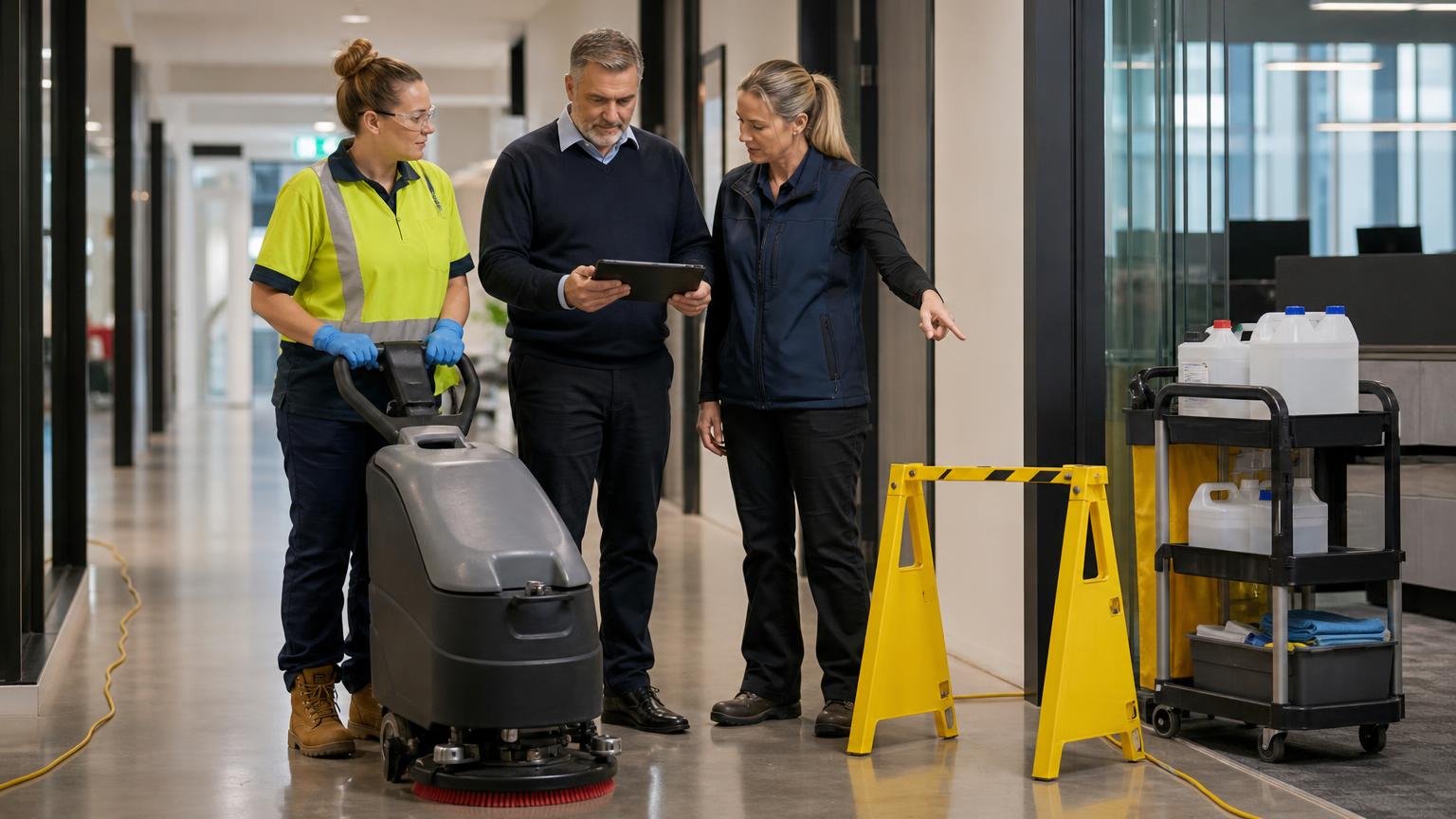
Separate a verified service failure from a request outside the agreement. One person should own the response, inspect the affected area, record whether the task was included and arrange corrective work that matches the cause.
Do not promise a permanent fix before checking what happened. A dirty entry may reflect an unsuitable frequency, heavy foot traffic, weather exposure, a spill after service or an incomplete task. Those causes require different changes to scheduling, scope, training or supervision.
What to do when a complaint arrives
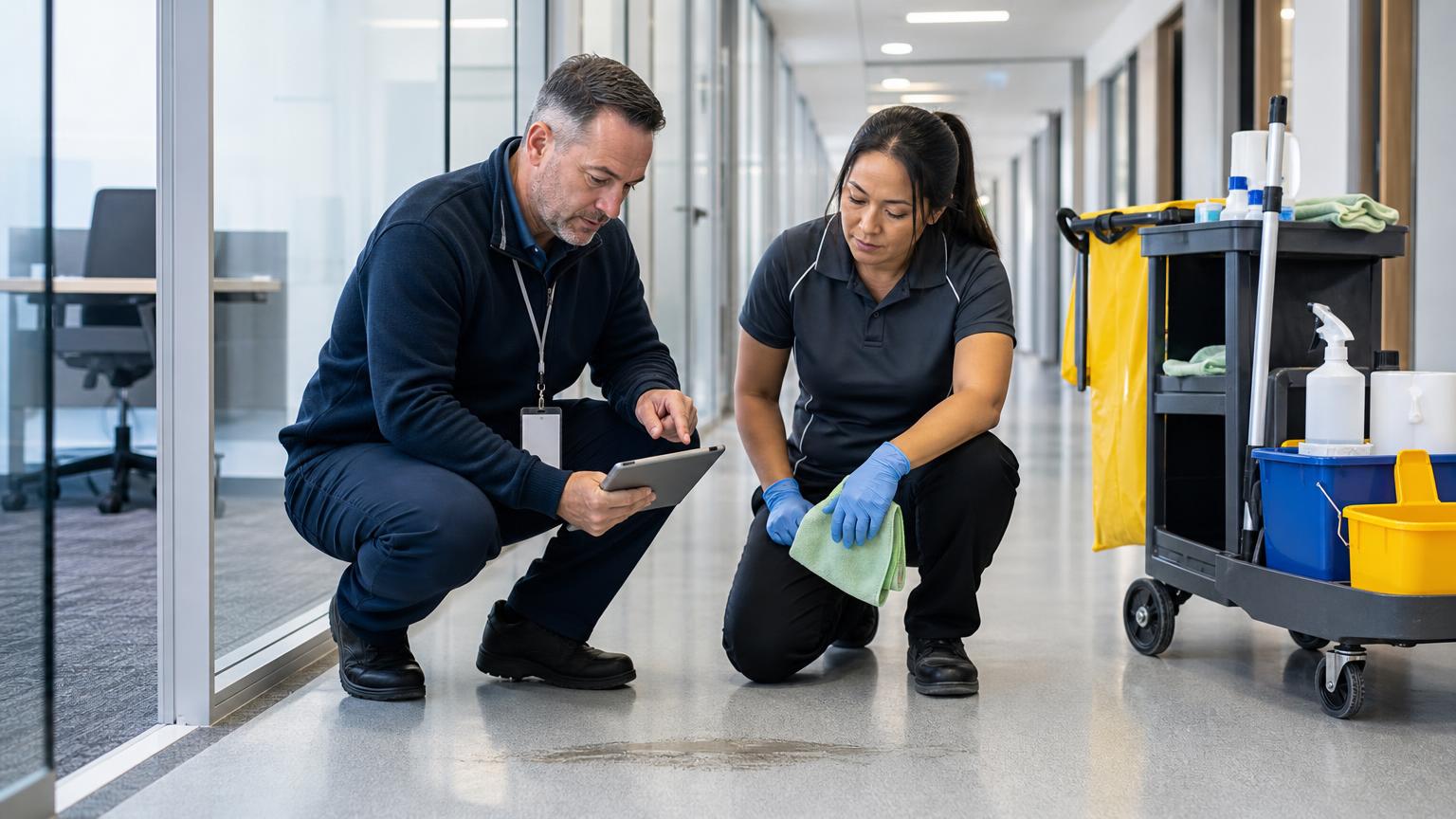
- Capture the location and condition. Record the building, level, room or zone, affected surface, visible issue, time noticed and any operational restriction. A photograph can support the record, but it does not replace an inspection.
- Check the expected service. Review the agreement, task list, frequency and work window. Compare the complaint with what the cleaner was actually contracted to do.
- Inspect the surrounding conditions. Check nearby traffic routes, equipment, products, access conditions and the timing of the last service. Record whether the issue is isolated or repeated.
- Classify the response. A missed task may need rework. A recurring soil problem may require a scope or frequency review. A safety concern, chemical incident, mould concern or contamination issue needs escalation through the building's relevant safety process.
- Correct and verify. Record who completed the agreed action and inspect the result. Close the complaint only after the person responsible for the area knows what changed.
- Review the pattern. Repeated complaints about the same washroom, entry or loading route indicate a control problem. Changing the cleaner without reviewing the scope may leave the cause untouched.
ISO and CM3 credentials can matter when comparing commercial cleaners, but the logo alone does not prove that a complaint will be handled well. Ask what the contractor's documented quality, environmental, safety and compliance processes change in day-to-day delivery, such as inspections, escalation, records or corrective action.
Effective tips for preventing repeat complaints
Prioritise the areas that generate the most complaints instead of starting with a generic list of every possible task. Entrances, shared kitchens, washrooms, lifts, high-touch points, carpeted routes and waste areas often need clearer inspection points than low-use offices.
- Use zone-based checks. Name the room or zone rather than writing only clean building. A manager can verify a defined area; they cannot verify a vague promise.
- Match work to occupancy. Schedule noisy, wet or disruptive work outside the busiest operating period where the site allows it. After-hours cleaning may suit some offices, while retail, healthcare and education sites need different access controls.
- Separate appearance from hygiene and safety. A mark on a wall, a missed bin and a spill on a traffic route do not have the same urgency. Record the risk and the required response separately.
- Use the right method for the surface. A routine office process should not automatically transfer to a clinic, retail centre or warehouse. Flooring, equipment, stock, furnishings and access arrangements change the cleaning method.
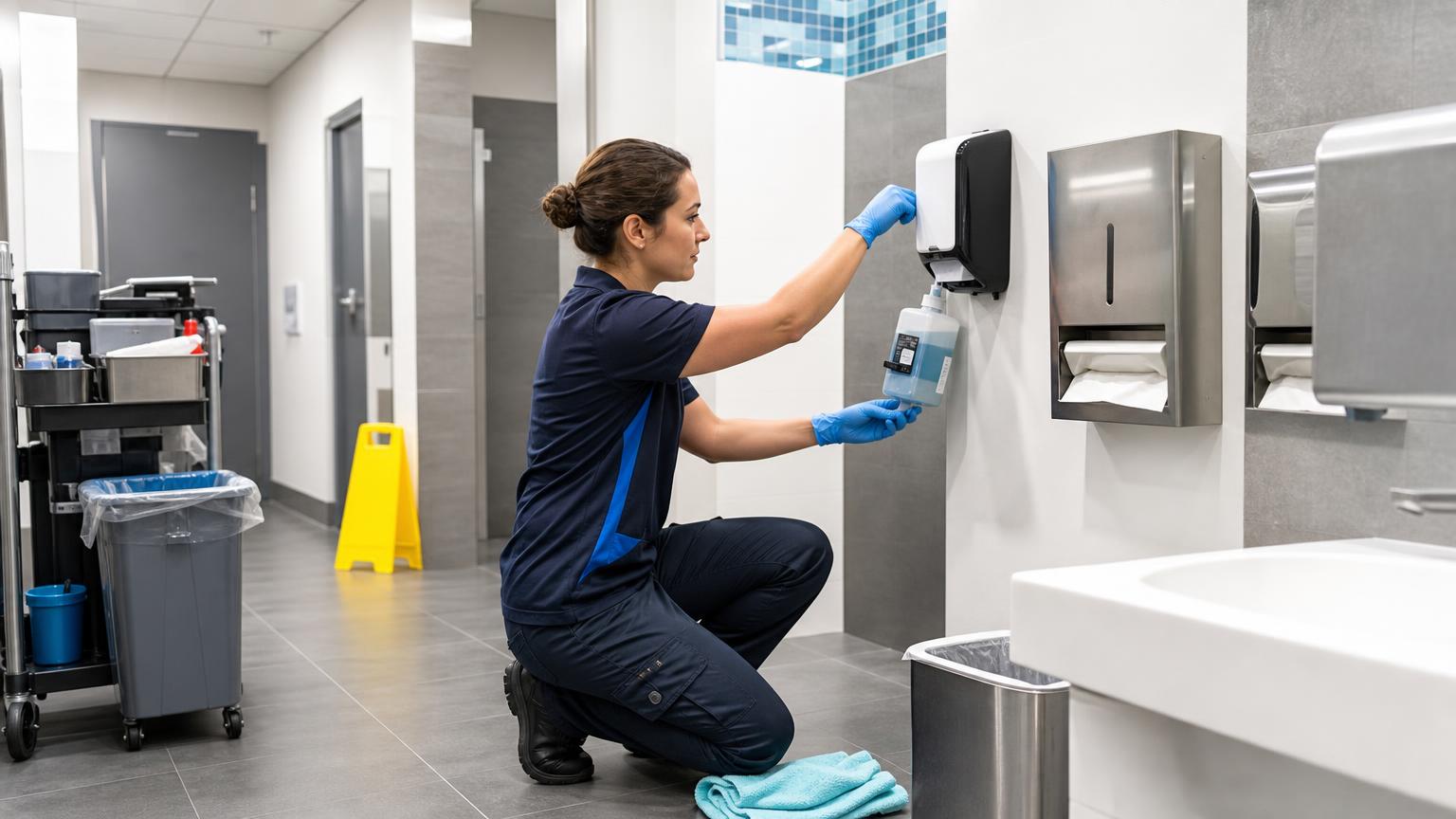
- Give cleaners a usable handover. Include restricted areas, fragile equipment, alarm procedures, supply locations and changes to access. A short site-specific handover is more useful than adding general tasks to a long checklist.
- Review repeated complaints. Group them by location, task, shift, cause and required correction. The pattern tells you whether to change training, supervision, frequency, products, equipment or scope.
The strongest practical tip is to define what good looks like before service begins. Do not wait for a complaint to discover that the client and contractor pictured different standards.
What are the 5 basic cleaning principles?
A useful five-part cleaning framework is planning, soil removal, contamination control, surface protection and inspection. These principles guide the work, but a building still needs a site-specific scope.
- Plan the task. Identify the surface, soil, equipment, product, access condition and required finish before starting.
- Remove soil systematically. Work in a logical order so dust, debris and used solution do not move back onto areas already completed.
- Control cross-contamination. Keep equipment, cloths and methods appropriate to the areas being cleaned. Higher-risk or sensitive spaces need controls set by the site and its procedures.
- Protect the surface and people. Use products and equipment that suit the material, allow required drying time and do not create an avoidable slip, chemical or access hazard.
- Inspect and improve. Check the result against the scope, record exceptions and change the process when the same failure repeats.
Most people start by asking which product or machine to buy. That is backwards. The task, surface, traffic level and site risk should determine the product and equipment, not the other way around.
Common issues seen by cleaning teams
Cleaners often work around constraints that managers do not see from a finished room. Record the constraint instead of treating poor access or changing building use as poor effort by default.
- Unclear scope: the contract names an outcome but not the rooms, tasks, frequency or finish standard.
- Blocked access: desks, stock, stored materials or locked rooms prevent the cleaner from completing the task.
- Changing building use: a new tenant, event, shift pattern or trading period increases soil and traffic without a scope review.
- Unsuitable equipment: the machine cannot reach the area, creates too much noise, lacks suitable attachments or does not suit the floor or furnishings.
- Stubborn or aged soil: carpet stains, built-up residue and neglected surfaces may need a periodic treatment rather than another routine pass.
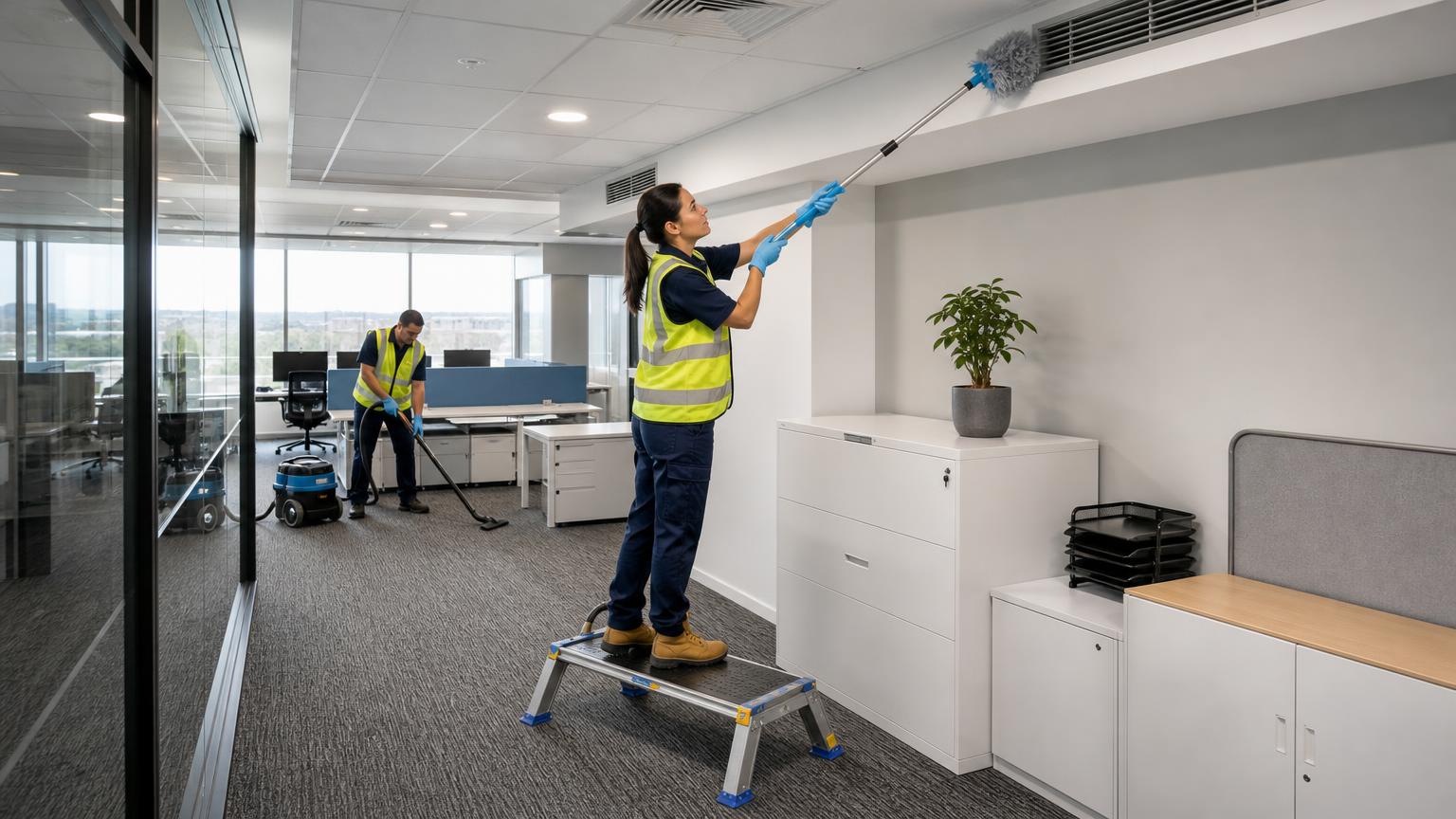
- Hard-to-reach areas: high ledges, racking, vents and service zones require planned access and a safe method. They should not be added informally during a routine shift.
- Weak handover: a change in building conditions does not reach the supervisor or the next team.
For industrial and warehouse sites, a standard office vacuum routine will not address floor care, racking dust and traffic routes properly. For retail and healthcare premises, copying an office scope also creates gaps because customers, patients, stock and sensitive areas change the required controls.
Mould in HVAC systems needs a separate response
Visible mould or a musty smell around heating, ventilation and air conditioning equipment should not be handled as an ordinary dusting task. First record where the concern appears, restrict unnecessary disturbance of the affected material, and refer the building manager to an appropriate assessment and remediation process.
Cleaning staff should not open equipment, disturb suspected mould or apply chemicals without the required site controls, training and approval. The building owner or manager needs to identify the source of moisture and decide whether a qualified specialist is required. The Australian Government provides public information about mould and dampness through its mould and dampness guidance.
A complaint about visible mould also needs a clear record of the location, date, photographs if permitted, affected equipment and actions taken. Routine cleaning may remove surface dust, but it does not by itself resolve a moisture source or an HVAC system fault.
Handling complaints in Australia and NSW
Across Australia, use the building's contract, incident process, site rules and escalation contacts as the first reference point. The response should identify the agreed service, the observed condition and the corrective action rather than rely on a general promise that the building will be cleaned better.
For a New South Wales site, keep the same operational process and check the contract and building procedures before escalating a commercial dispute. NSW Government information explains how to talk through a problem and suggest a resolution in its complaints and enquiries guidance. That public pathway does not replace contract advice for every commercial disagreement.
Cygnus Facility Services is based in Warrnambool and serves commercial and industrial sites across Victoria, including South West Victoria, Geelong, Ballarat and Melbourne, as well as open projects Australia-wide. Local availability, access and the site scope still need confirmation before a service arrangement is made.
Which commercial vacuum is best?
The best commercial vacuum is the one that suits the building's surfaces, traffic, noise limits, filtration requirements, storage, power access and service workload. Choose the specification after inspecting the site, not from suction power or a brand name alone.
For an office, noise and manoeuvrability may rank above capacity. A warehouse may need different attachments and a design suited to larger floor areas. A medical or sensitive equipment area needs the site's own cleaning and safety requirements checked before equipment selection. A vacuum cannot compensate for an unclear scope or an unsuitable cleaning schedule.
Where to go from here
Use the complaint record as a scope review, not only as a fault log. If the same issue returns, ask which task, frequency, work window, access condition or site change is driving it.
Quotes should be based on a real scope of the space, not a one-line price. If the site type, operating hours, access arrangements and complaint areas have not been reviewed, the price may not describe the service the building actually needs.
This advice is not a substitute for contract, safety or specialist mould advice. Ignore the checklist as a complete solution if the dispute concerns responsibility under the contract, a serious safety incident or suspected contamination.
For related information, see the Commercial Cleaning Services, including Commercial Cleaning Warrnambool, Industrial Cleaning Warrnambool and Medical Cleaning Warrnambool. If you want to compare your current arrangement with a defined site scope, request a free quote from Cygnus Facility Services with the building type, location, service frequency, preferred work window and known complaint areas.