How to Keep Office Reception Areas Clean
A clean reception area needs a written scope, clear task ownership and a schedule that fits visitor traffic and access hours. This guide explains what to include in daily routines, scheduled cleaning and commercial cleaning quotes.
How to Keep Office Reception Areas Clean
Start with a written reception checklist that names each task and its owner. Record visible clutter, the reception counter, entry floors, glass, visitor seating, door handles, shared equipment and bins as separate line items, then assign each to staff or a cleaning visit.
Most offices start by choosing a cleaning frequency. That is backwards, because the scope comes first. List the floor type, visitor traffic, reception equipment, access hours and tasks required, then schedule the work around those conditions. The scope should determine the frequency, not a standard package.
Build a routine staff can follow
Separate reception cleaning into three levels: tasks staff complete during the day, tasks completed during a regular service, and periodic work such as carpet care or detailed glass cleaning. Keep the first level simple enough to complete without interrupting reception duties.
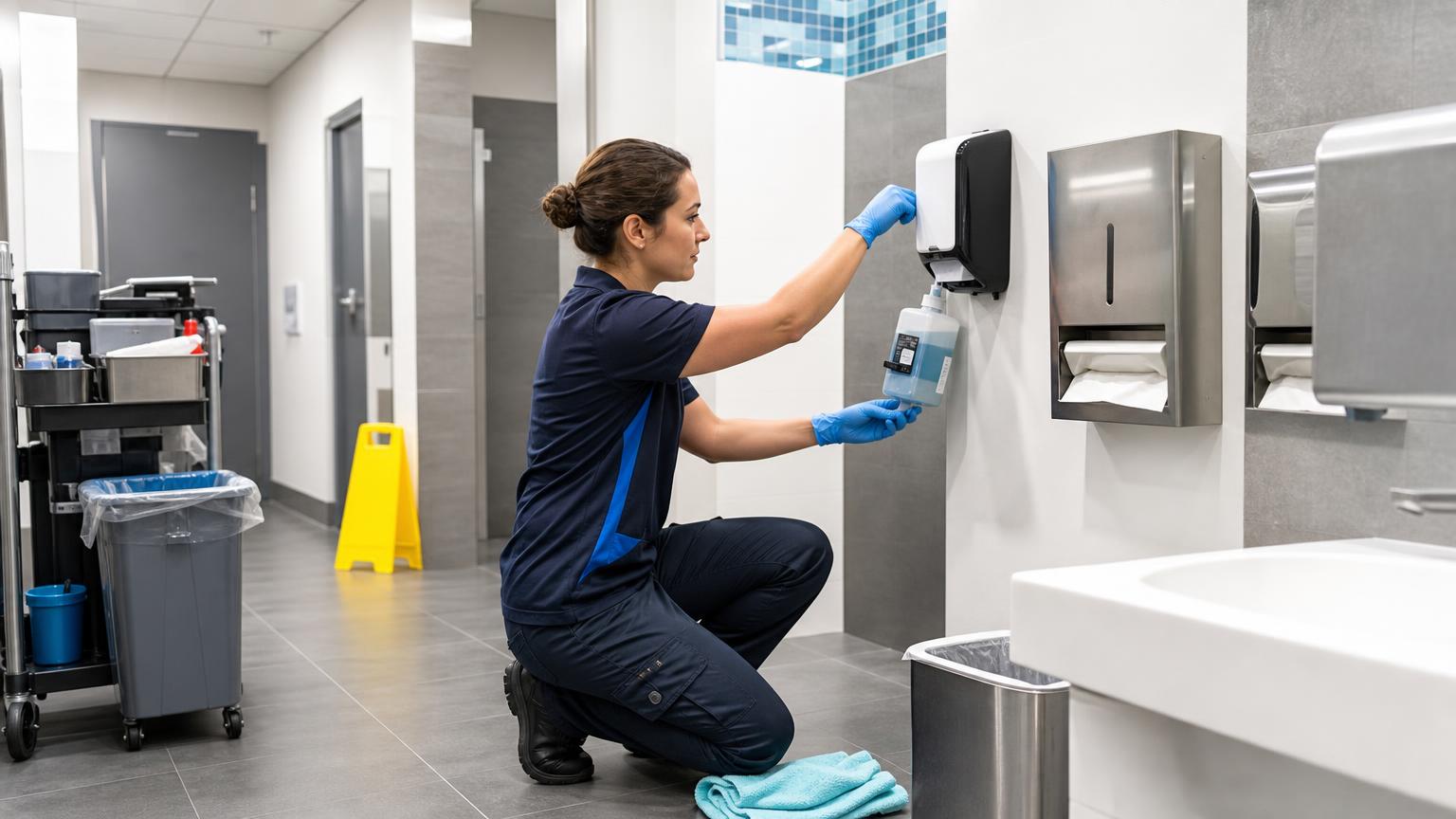
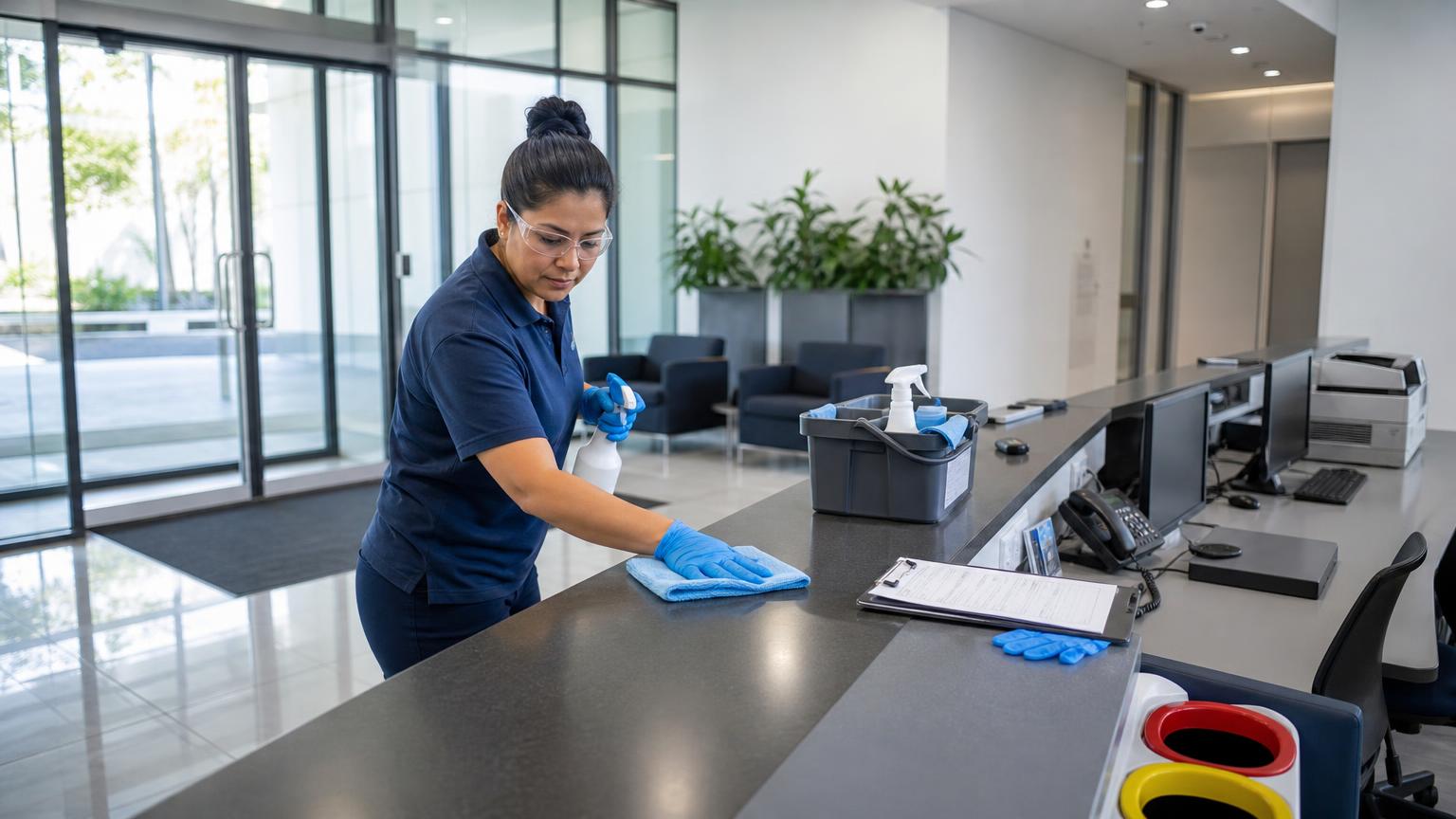
During the day, empty garbage bins daily where the site schedule requires it, clear unnecessary items, wipe the reception counter and frequently touched surfaces, check the entry floor and return shared items to their assigned places. Do not spray product directly onto screens, telephones or electrical equipment. Apply a suitable product to a cloth or as directed by the label, and follow the equipment manufacturer's instructions.
For the scheduled service, define the areas rather than asking for a general clean. A useful scope names the reception counter, visitor seating, entry doors, handles, floors, skirting, glass, bins and nearby shared equipment. It should also state the required frequency and work window.
Fit cleaning into the working day
An after-hours schedule often suits an office reception because cleaners can work after visitors and staff have left. Cygnus Facility Services describes an after-hours commercial office clean where desks, meeting rooms and shared spaces were left spotless and fresh for the following morning. The practical lesson is clear: schedule cleaning around how the workplace operates, including after hours when needed.
A reception routine might work like this:
- During the day: staff remove obvious clutter, report spills and keep visitor materials in their assigned place.
- At the end of the work period: the responsible person empties the bin if required, checks the floor and records anything the cleaner needs to address.
- During the scheduled clean: the cleaner follows the written scope for surfaces, touchpoints, furniture, floors and glass.
- At the next opening: the nominated contact checks that the reception area is ready for visitors and raises any missed task against the scope.
This handover is more reliable than asking someone to notice that the area looks untidy. It also makes a missed task easier to investigate because the task, frequency and work window appear in the scope.
Is the 5-5-5 rule right for reception?
There is no single, universally recognised office cleaning standard called the 5-5-5 rule. Different articles and workplaces use the phrase to mean different routines, so do not rely on the label alone.
If a team wants to use a 5-5-5 routine, write down what each number means before introducing it. For example, the workplace could define five minutes for a reception reset, five priority touchpoints and five items that must be returned to their designated places. That is a local procedure, not a recognised rule, and the business should change it if those tasks do not suit the reception role.
The safer choice is to name the actual tasks. An instruction such as clean the counter, wipe the visitor tablet, remove rubbish, check the entry floor and return brochures to their holder leaves less room for interpretation than 5-5-5.
Five principles for a workable cleaning scope
There is no single official five-point list that applies to every office. For a reception area, these five working principles provide a sound starting point:
- Remove clutter before cleaning. Put documents, parcels and visitor materials in their proper place so the cleaner can reach the surface.
- Work from cleaner areas towards dirtier areas. Avoid moving soil from an entry floor or waste area onto a clean counter.
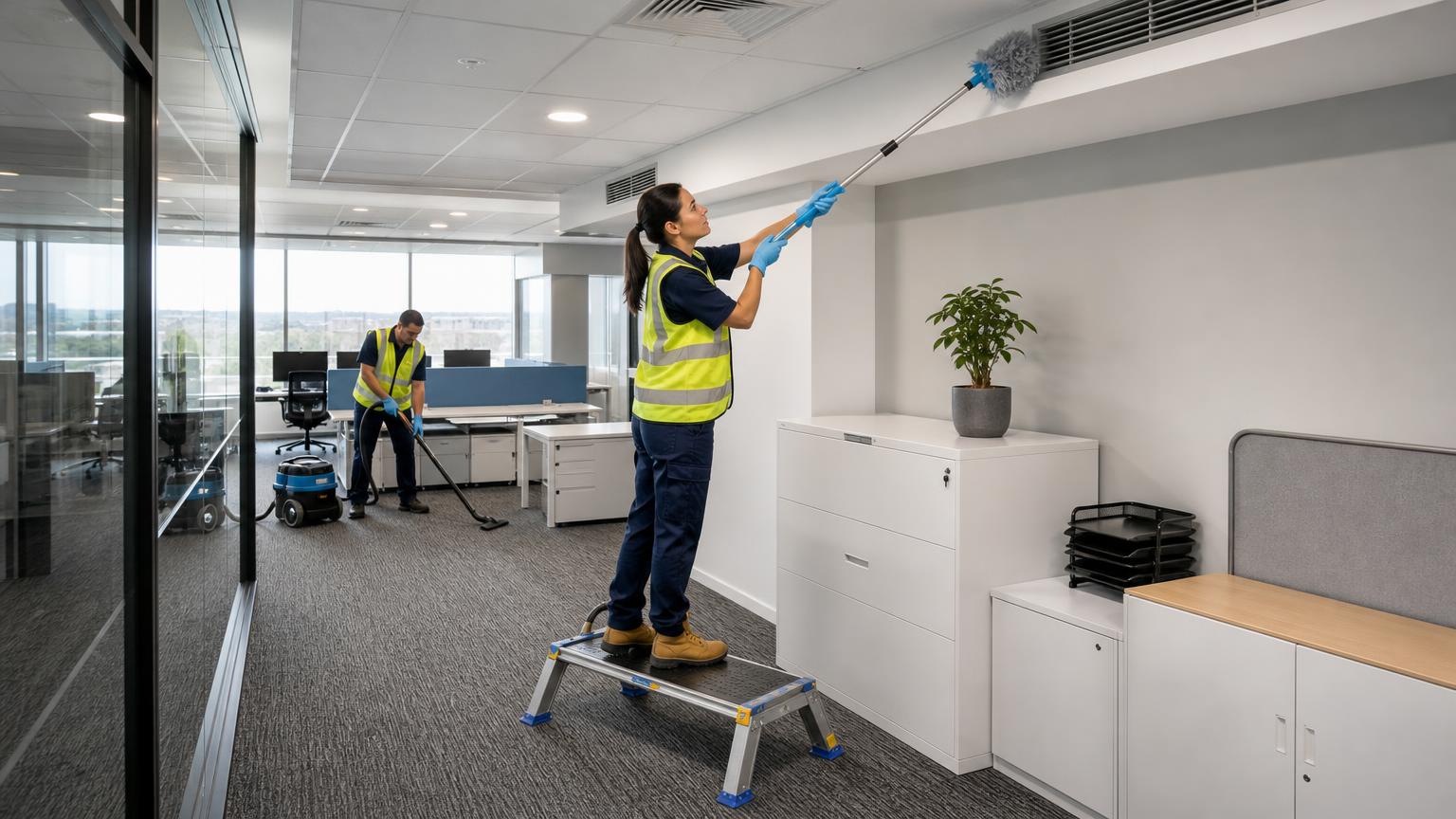
- Work from higher surfaces to lower surfaces. This reduces the chance of dust or debris falling onto an area that has already been cleaned.
- Use the right product and equipment. Follow the product label, keep chemicals in their original containers and check relevant safety information. Safe Work Australia guidance on chemicals and safety data sheets explains the relevant hazard controls.
- Check the result against the scope. A clean-looking counter does not confirm that the door handles, floor edges, visitor seating or bins were included.
Do not pay for disinfecting products or extra treatments until the site scope identifies why they are needed and which surfaces they suit. Routine cleaning, stain removal and disinfection are different tasks, and the product choice should follow the surface, the risk and the manufacturer's directions.
Give every task an owner
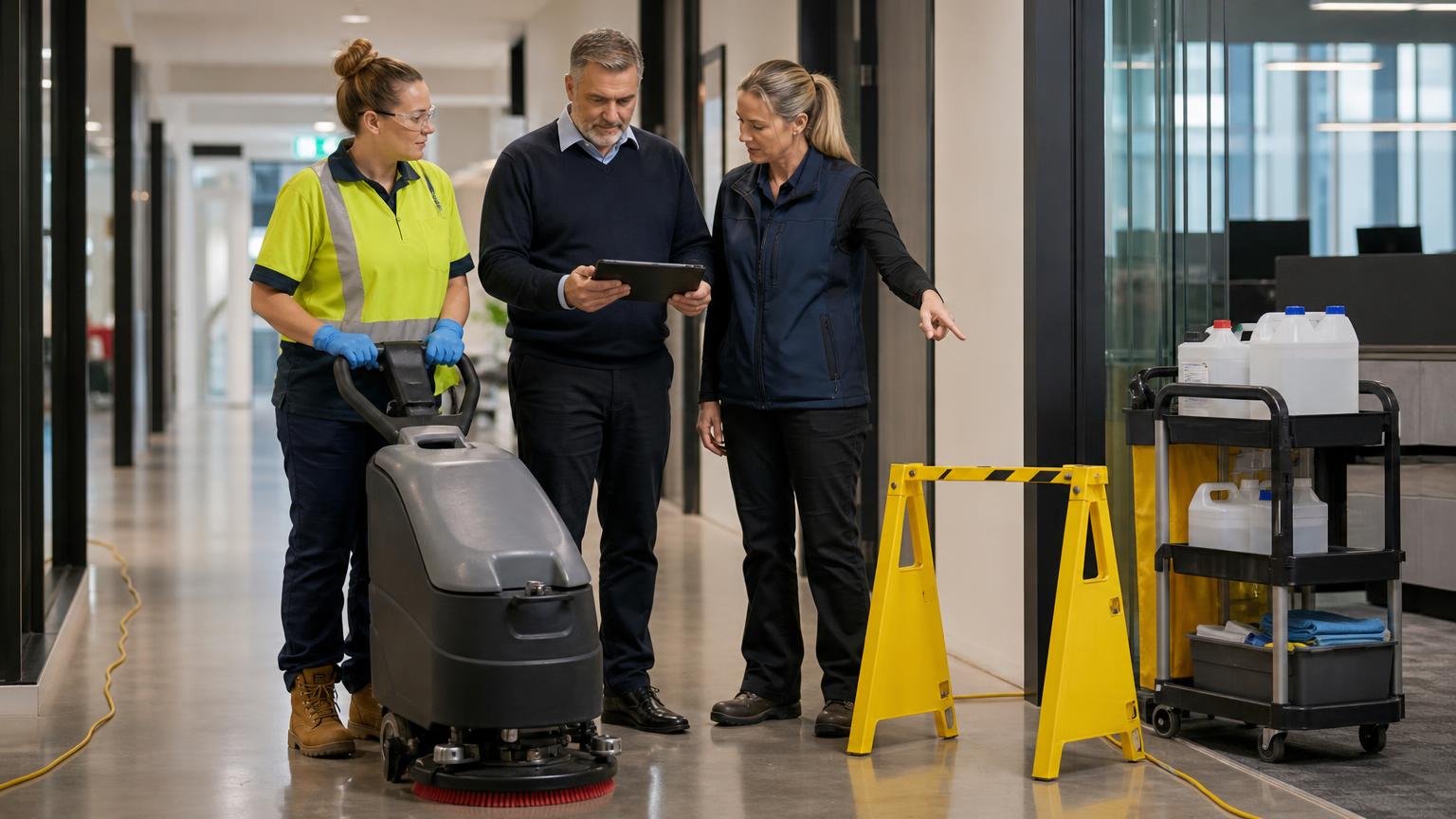
Everyone who uses the reception area should leave it usable, but one person or role should coordinate the standard. Staff can remove personal items, report spills and return shared materials. The cleaning contractor handles the tasks included in the agreed cleaning scope. A facility manager, office manager or property representative checks that the arrangement remains suitable.
Responsibility fails when the workplace expects cleaners to sort every item or expects reception staff to complete detailed cleaning while serving visitors. Assign ownership by task, not by a vague instruction to keep the office tidy. Include who reports a spill, who replaces visitor materials, who approves a scope change and who checks the scheduled service.
Set the standard around actual risks
Reception combines visitor traffic, shared surfaces, deliveries and staff movement. That combination makes an informal cleaning standard unreliable. A visible layer of dust on a counter is easy to notice, while missed touchpoints, sticky door handles or debris at the entry can remain unnoticed until someone reports them.
Cleanliness also affects the working conditions for the person stationed at reception. Keep cables, paperwork, parcels and promotional materials under control so the desk remains usable and the cleaner can reach the surfaces. This is a better priority than adding decorative items that create more objects to dust.
Cleaning does not remove every workplace risk, and this advice does not replace a site risk assessment, product instructions or a task-specific cleaning procedure. Medical, industrial and other specialised facilities need a scope suited to their activities rather than an office reception checklist copied without changes. Retail and healthcare sites should use different checklists from offices, while industrial sites need specific attention to floor care, racking dust and traffic routes.
Prioritise the entrance, not just the counter
Touchpoints and shared equipment
Identify the surfaces people actually use. These may include entry handles, the reception counter, visitor sign-in equipment, pens, chair arms, intercoms and shared screens. The final list should match the equipment present at the site, not a template that includes items the office does not have.
Use a cloth and product suitable for each surface. Screens and electronics need particular care, and the person cleaning them should follow the equipment instructions rather than applying liquid directly.
Floors, mats and entry edges
Check the entrance at the start of the cleaning shift. Dirt tracked in from outside usually collects at mats, corners and the edges of flooring before the centre of the room looks dirty. Vacuuming, spot cleaning and mopping should appear as separate tasks if the site needs all three.
Carpet condition, floor type, weather exposure and visitor traffic determine the required frequency. A reception area with low use may need a different schedule from a busy office entry, so a one-line cleaning price cannot define the work accurately.
Desk, seating and visual clutter
Keep the reception desk clear enough for the cleaner to wipe the full surface. Store forms, parcels and stationery in assigned locations. Wipe visitor seating as part of the agreed scope, especially where chair arms and side tables receive regular use.
Do not ask a cleaner to move confidential documents or personal belongings without an agreed process. Staff should clear sensitive items before the scheduled service.
Bins, glass and nearby surfaces
Empty bins according to the site schedule and clean the areas around them when debris or residue appears. Include entrance glass, internal glass panels, skirting and nearby ledges if visitors can see them or if they collect dust. These tasks often need a different frequency from daily counter cleaning.
Air and comfort-related checks
Cleaning staff should not adjust HVAC settings or make claims about air quality unless that work forms part of an approved building process. The reception cleaning scope can record visible dust, blocked vents or maintenance issues for the responsible property team instead.
Applying the scope in Victorian workplaces
Cygnus Facility Services is based in Warrnambool and serves commercial and industrial sites across South West Victoria, Geelong, Ballarat, Melbourne, Victoria and Australia-wide for open projects. The core reception tasks stay similar across these locations, but the service scope should follow the building, visitor flow, operating hours and access arrangements at each site.
For a site in Warrnambool or elsewhere in Victoria, provide the cleaner with the actual reception layout, floor types, equipment list, preferred work window and required frequency. Cygnus offers daily, weekly, fortnightly and after-hours scheduling, so the decision should start with how the workplace operates rather than a city label.
ISO and CM3 credentials matter when comparing commercial cleaners, but the logo should not be the deciding factor. Ask what each credential changes in day-to-day delivery, including how the scope is recorded, how issues are reviewed and how safety and environmental controls are managed.
Turn the checklist into a useful quote
Turn this article into a one-page reception checklist. Record each task, the person responsible, the frequency, the preferred work window and the method for reporting a missed task. Quotes should be based on a real scope of the space, not a one-line price. For broader requirements, see the Commercial Cleaning Services page or the Commercial Cleaning Warrnambool service information. If the reception forms part of a warehouse or industrial site, review Industrial Cleaning Warrnambool instead of applying an office-only scope.
If you want Cygnus Facility Services to assess the reception area against a defined cleaning scope, request a free quote through the Commercial Cleaning Services page with the site location, required frequency and preferred work window.