A Practical Cleaning System for Multi-Tenant Offices
A multi-tenant office needs more than a generic cleaning checklist. This guide explains how to define shared and tenant-controlled areas, document access and work windows, inspect delivery and compare commercial cleaning providers.
Managing Cleaning Across a Multi-Tenant Office Building
By Cygnus Facility Services
Cleaning breaks down in multi-tenant buildings when shared areas, tenancy responsibilities and access arrangements sit in different systems. Build one site-wide plan that names each area, sets the required standard, matches work to occupancy and gives one person authority to resolve gaps.
The short answer
Map the building by space and responsibility, then document the task, frequency, work window and inspection method for each area. A reception area, lift lobby, kitchen, washroom, meeting room and private tenancy should not automatically receive the same routine because their use, access and risk differ.
Put one person in charge of coordinating the service. That role may sit with a facilities manager, strata manager, property team member or appointed cleaning contractor. Their job is to keep the scope, access instructions, tenant requests and corrective actions in one place, rather than allowing separate occupants to issue conflicting directions.
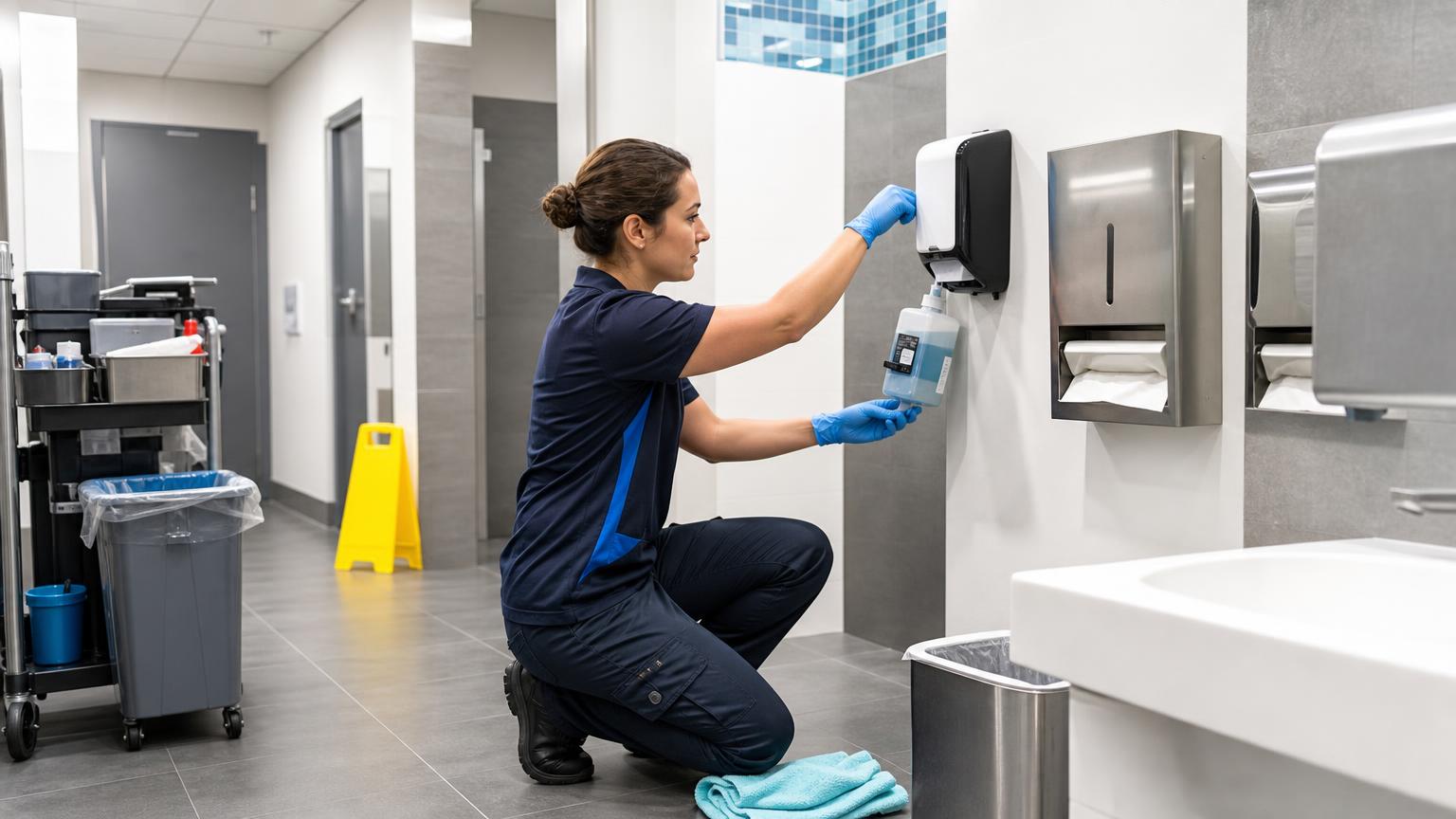
Set tighter controls for heavily used shared areas such as entrances, lifts, washrooms, kitchens and corridors. Define boundaries for tenant offices as well, particularly where confidential material, locked rooms or after-hours access affect the work.
What this looks like in practice
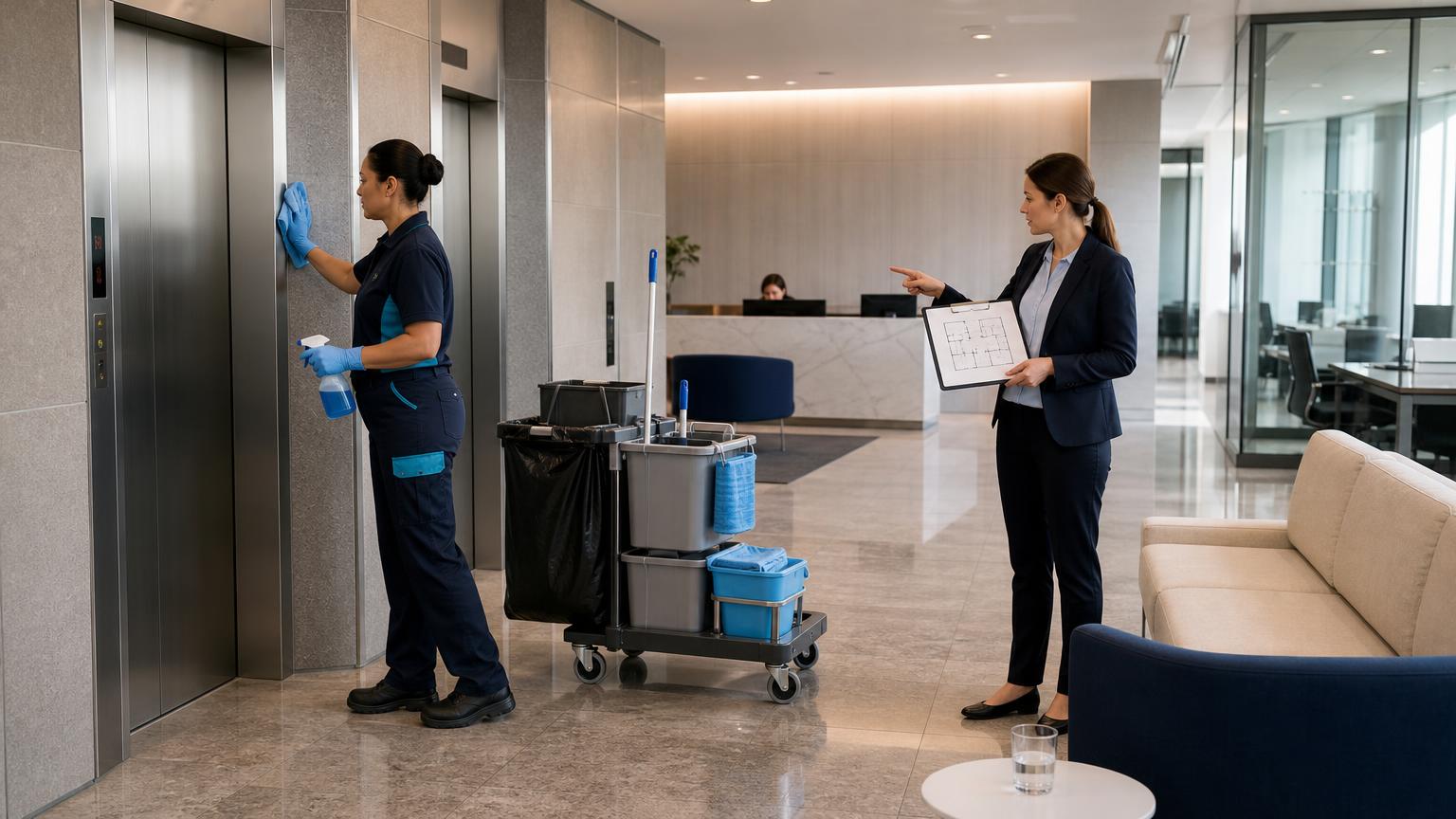
A workable plan begins with a site walk-through and a written scope. Record each area, surface type, task, frequency, preferred work window, access requirement and responsible party. A one-line quote cannot show whether the cleaner has included internal glass, kitchen appliances, bin movement, consumables or periodic floor care.
Cygnus Facility Services operates with ISO 9001 Quality Management Systems, ISO 14001 Environmental Management Systems, ISO 45001 Occupational Health and Safety Management, and CM3 Contractor Management Compliance. When comparing these credentials, ask what they change in delivery: documented scopes, safer work planning, environmental product decisions, contractor controls and a process for reviewing service issues. A logo without those working controls should not decide the appointment.
For each tenant, confirm which parts of the tenancy sit within the shared service and which remain the tenant's responsibility. Record who can approve a change, such as a one-off kitchen clean, so that an extra request does not quietly become an undefined permanent obligation.
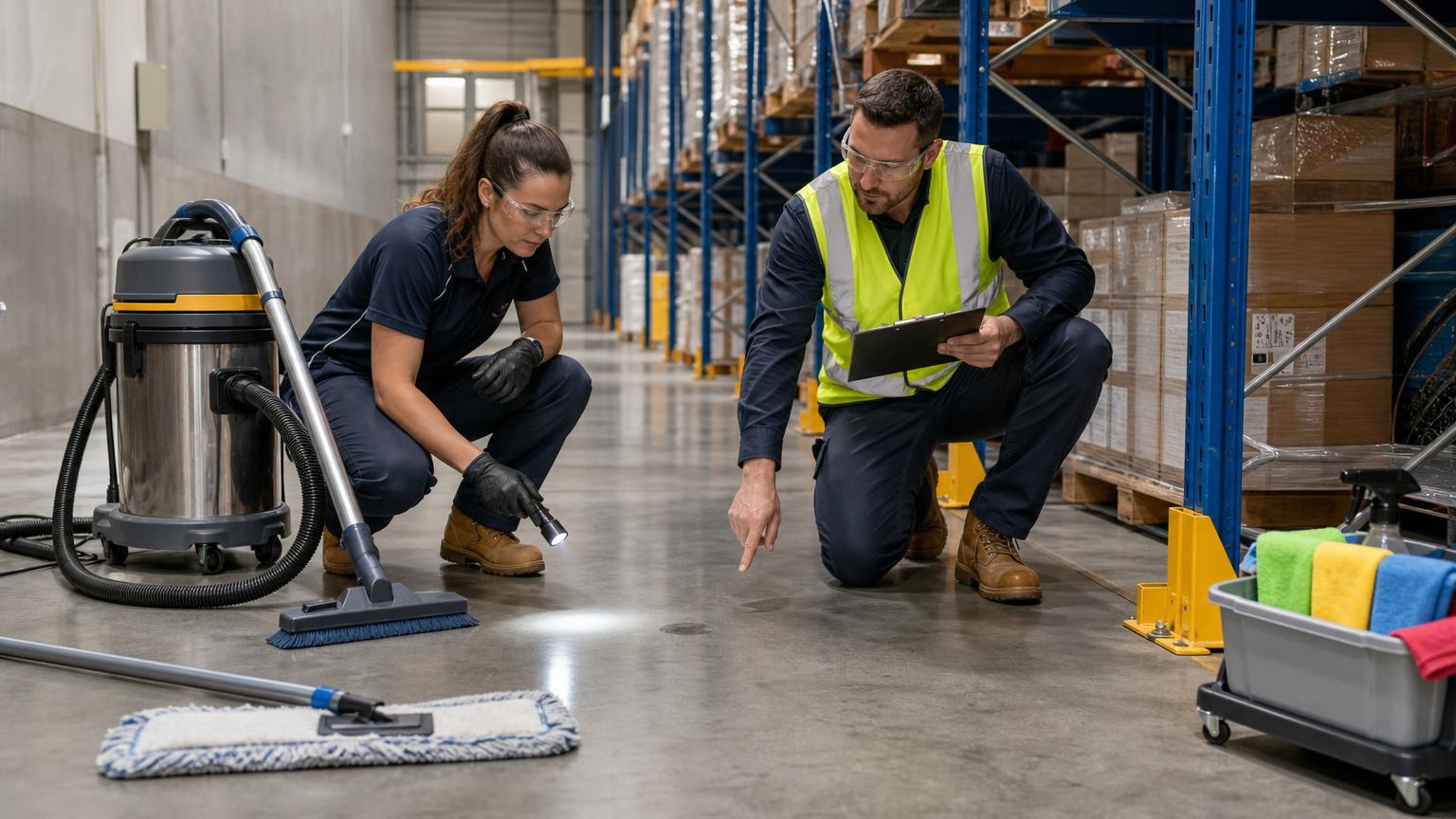
Use a service register to record missed tasks, access problems, damage reports, tenant requests and completed corrective work. Visual checks usually provide the first verification. ATP testing or a UV marker can support an audit in selected situations, but neither replaces a clear scope or proves that every surface is suitable for a particular use.
What are SOPs for cleaning?
SOPs, or standard operating procedures, are written instructions for completing a defined cleaning task consistently and safely. An office cleaning SOP should identify the area, equipment, products, sequence, precautions, waste process and completion check rather than simply say clean the room.
A useful SOP for a shared office might include:
- the exact room or surface covered;
- the required work window and access conditions;
- the order of work, such as removing waste before wiping surfaces;
- the approved product, dilution and contact instructions where relevant;
- equipment requirements and storage arrangements;
- what the worker must do if they find damage, a spill, a sharps risk or an occupied area;
- the inspection method and escalation contact.
Keep the SOP short enough to use on site. A long document that nobody reads is weaker than a clear task card linked to the building's actual risks. Review it when the layout, products, access arrangements or tenant use changes.
For chemical handling and workplace controls, use current guidance from Safe Work Australia and the site's approved procedures. Do not copy an office SOP into a medical, retail or industrial area. Cygnus Facility Services treats healthcare and industrial cleaning as different scopes because the surfaces, traffic patterns and safety requirements are not interchangeable.
What is the 5-5-5 rule for cleaning?
The 5-5-5 rule does not have one universally recognised meaning in commercial cleaning. If a contractor or tenant uses the phrase, ask them to define the three fives in the written scope before treating it as a service standard.
That matters because an undefined shortcut can hide the real question: which five tasks, in which five areas, within what time? A building manager should reject a rule that substitutes a slogan for a measurable requirement. Name the rooms, surfaces, frequency and inspection method instead.
If a team adopts a five-item priority routine for a busy period, document it as a local procedure. For example, the list might focus on shared entry points, lift touchpoints, washrooms, kitchen surfaces and visible waste. That example is a planning choice, not a universal rule or a replacement for the full cleaning scope.
What is the 6 to 10 cleaning list?
The 6 to 10 cleaning list is also not a universal Australian commercial cleaning standard. Treat it as a local checklist format, not as evidence that a building meets a legal, health or contract requirement.
A practical list should contain six to ten named tasks that matter most for the building's current use. The manager should rank them rather than add random items. Shared washrooms, entry points, lifts, kitchen surfaces, waste stations, high-touch doors, visible spills and tenant move-out areas may belong on the list, but the final selection must reflect the site inspection.
Put the list on the daily or shift inspection record and include an action for missed work. A checklist without an owner, due time and follow-up field only records that someone looked at the problem.
Deep cleaning for allergies that makes a difference
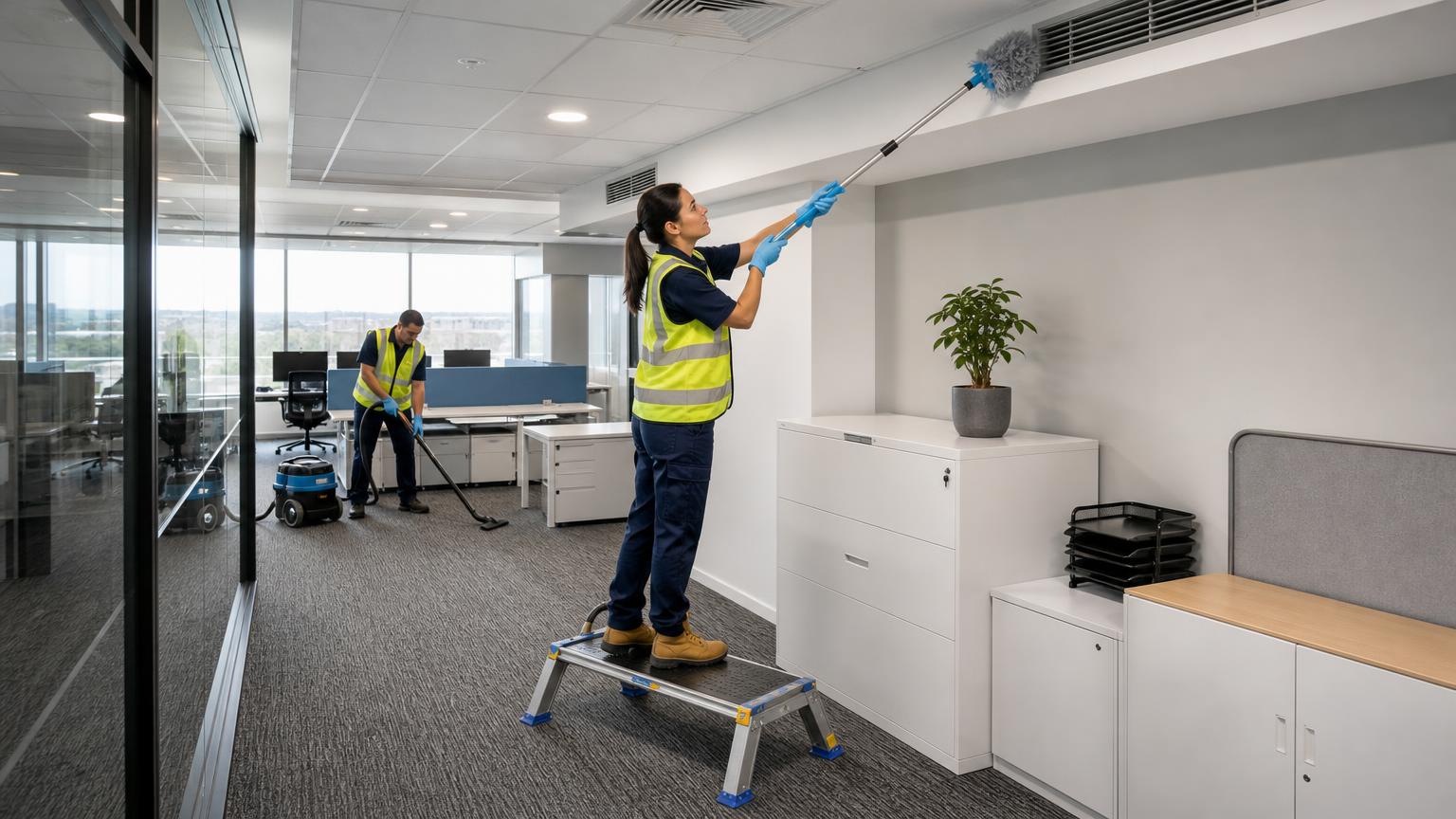
Deep cleaning cannot promise to remove every allergy trigger, but a targeted programme can address dust accumulation, residue and neglected surfaces that a routine clean may miss. Focus first on the source and the material holding it. Soft furnishings, carpet edges, vents, high ledges, blinds and under-furniture areas need a different method from desks or hard floors.
Do not start with a fogging treatment or a broad chemical application. Start with a site inspection, dust control, suitable equipment, careful waste removal and a plan for occupant access. Product selection must suit the surface and the building's safety requirements.
For a multi-tenant building, communicate the work window before the clean. A deep clean that moves through one tenancy while staff remain at their desks creates access problems and may spread dust into occupied areas. Schedule it after hours where the building's operations require that approach, then inspect the areas before normal use resumes.
Rental turnover cleaning for faster handover
When a tenant leaves, the cleaning scope should support the handover condition rather than repeat the routine office service. Record the starting condition with photographs, identify tenant fixtures and building fixtures, and separate cleaning from repairs, rubbish removal and make-good work.
Rank the handover tasks by what the next occupant or property representative must inspect first. That usually means entry areas, kitchens, washrooms, meeting rooms, floors, internal glass and visible marks. Add fixtures, cupboards or high-level surfaces only when the agreed scope includes them.
Do not promise a handover date before confirming access, power, water, remaining furniture, construction residue and other trades. A cleaner cannot resolve a damaged fitting or remove every building defect through cleaning. The property team should record those items separately so the final inspection stays fair.
Common mistakes that create gaps between tenants
- Using one scope for every tenancy: a clinic, office, retail area and warehouse do not create the same cleaning requirements.
- Pricing from floor area alone: work windows, room density, washrooms, floor types, access and periodic tasks affect the actual scope.
- Leaving tenant responsibilities unclear: shared kitchens and waste stations often sit between building and tenant duties.
- Changing the schedule without updating the SOP: a new access window can change the safe order of work.
- Measuring complaints instead of completed tasks: use inspections and corrective actions, not only tenant feedback.
Portfolio matters less than a scope that matches this building. Do not pay for extra technology, testing or periodic work until the daily service, access arrangements and inspection process are defined. This framework will not solve a building that lacks safe access, usable facilities or an agreed authority to approve changes.
How to verify the result
Use a simple inspection record for shared areas. It should show the date, area, required task, result, issue owner and close-out action. For recurring work, review patterns rather than isolated complaints. Repeated missed kitchen tasks may indicate an access problem, an incomplete scope or an unrealistic work window.
Ask the contractor to explain how they handle complaints, staff changes, missed access and scope variations. ISO 9001, ISO 14001, ISO 45001 and CM3 credentials are useful comparison points, but the key question is what changes in daily delivery. Request evidence through the scope, inspection process and corrective-action workflow.
Local considerations for Victorian sites
Cygnus Facility Services is based in Warrnambool and serves commercial and industrial sites across South West Victoria, Geelong, Ballarat, Melbourne and other Victorian locations. The same management principles apply across those locations, but the quote still needs the actual building scope, access arrangements, preferred frequency and work window.
For an open project elsewhere in Australia, confirm availability and site requirements before assuming the same schedule can apply. Location alone does not determine the service. Building use, occupancy, floor types, security controls and tenant turnover carry more weight.
Where to go from here
Use this framework with the building's floor plans, tenancy list, access rules and current cleaning complaints. Then compare the proposed scope with Budgeting for Commercial Office Cleaning before discussing a quote.
For a broader view of available options, review Commercial Cleaning Services. If the building includes specialised areas, the relevant scopes may include Commercial Cleaning Warrnambool, Industrial Cleaning Warrnambool or Medical Cleaning Warrnambool.
To apply the framework to your building, request a free quote from Cygnus Facility Services with the site location, tenancy mix, required frequency, preferred work window and access details.