Reduce Dust in Commercial Offices: A Practical Plan
Reducing office dust starts with finding where particles enter or form, not simply adding cleaning visits. This guide explains how to sequence cleaning, choose suitable methods and identify when maintenance needs to address the source.
A Practical Plan to Reduce Office Dust
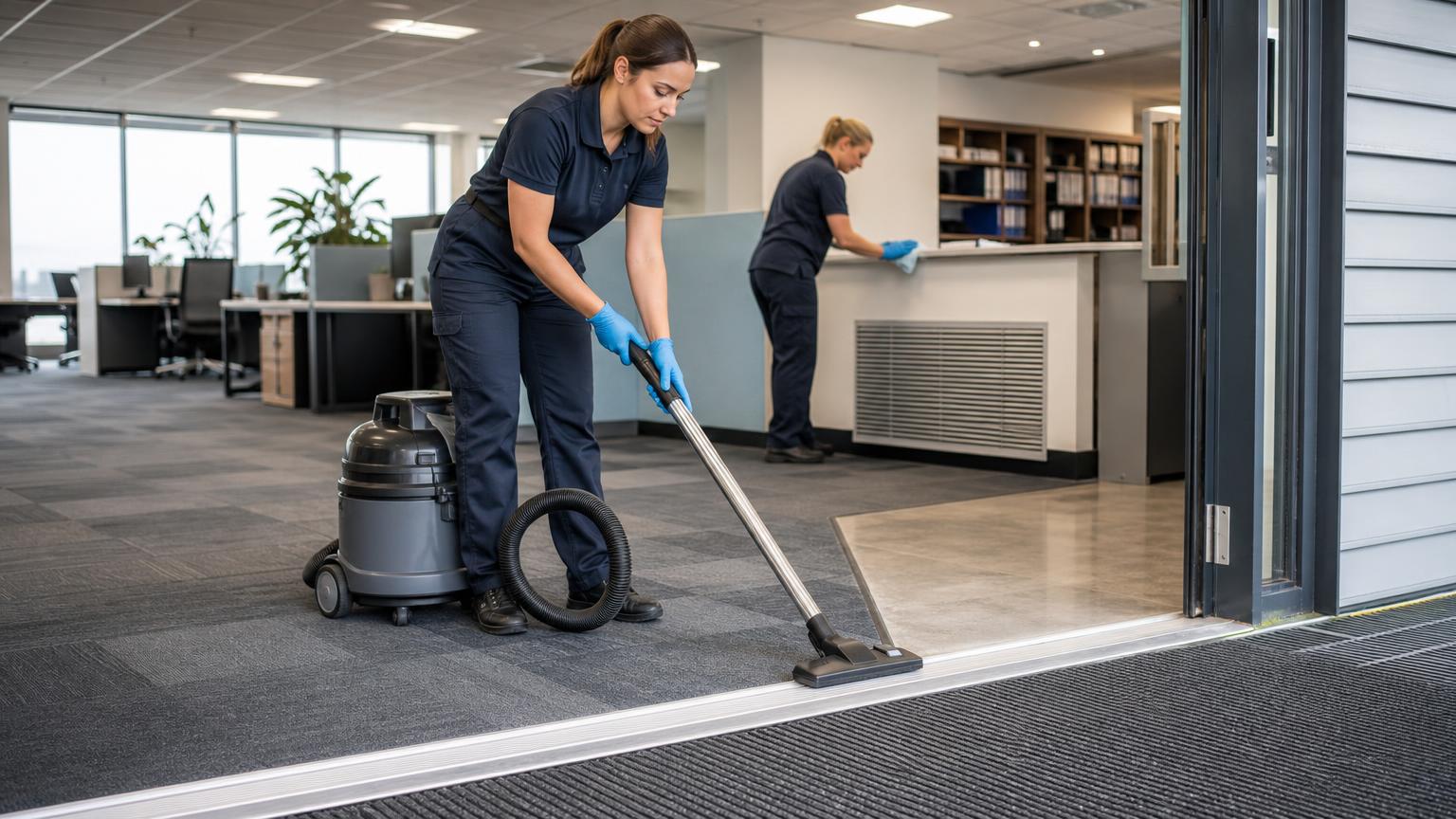
Start where dust becomes visible, then trace back to the nearest entry or activity. Check door thresholds, mat edges, carpet transitions, loading routes and return grilles before adding cleaning visits. The source determines whether the answer is better matting, a different work window, targeted vacuuming or a maintenance referral.
Inspect mats and thresholds for tracked material, vacuum floors with maintained filtration, clean shelves and other high surfaces before lower ones, then damp-wipe ledges, desks and compatible hard surfaces. This sequence removes loose material before wiping can spread it, while damp methods capture settled dust instead of simply lifting it.
The practical answer
Use one cleaning sequence consistently: entry points and floors first, followed by desks, ledges, partitions, vents and other horizontal surfaces. Choose a vacuum whose filtration and attachments suit the site, use a HEPA filter when the equipment and task call for it, and damp-clean surfaces that can tolerate moisture. The recommendation is to map the source before increasing frequency, because extra visits cannot correct dust entering through an uncontrolled route.
A useful scope names the affected areas, likely dust source, cleaning method, work window and inspection point. The Budgeting for Commercial Office Cleaning guide explains why that scope matters when comparing quotes. A one-line price is not enough to judge whether a cleaner has allowed for the actual space.
What this looks like in practice
A useful office dust plan follows the building rather than treating every room alike. Reception areas may need more attention to tracked-in material, open-plan offices collect dust around desks and cable routes, and plant rooms or loading areas may introduce heavier particles into nearby spaces.
- Find the source. Check entrances, door mats, windows, carpet edges, air return grilles, storage areas, construction activity and nearby traffic routes.
- Remove larger debris first. Vacuum or collect loose material before wiping. This reduces the chance of spreading it across desks and ledges.
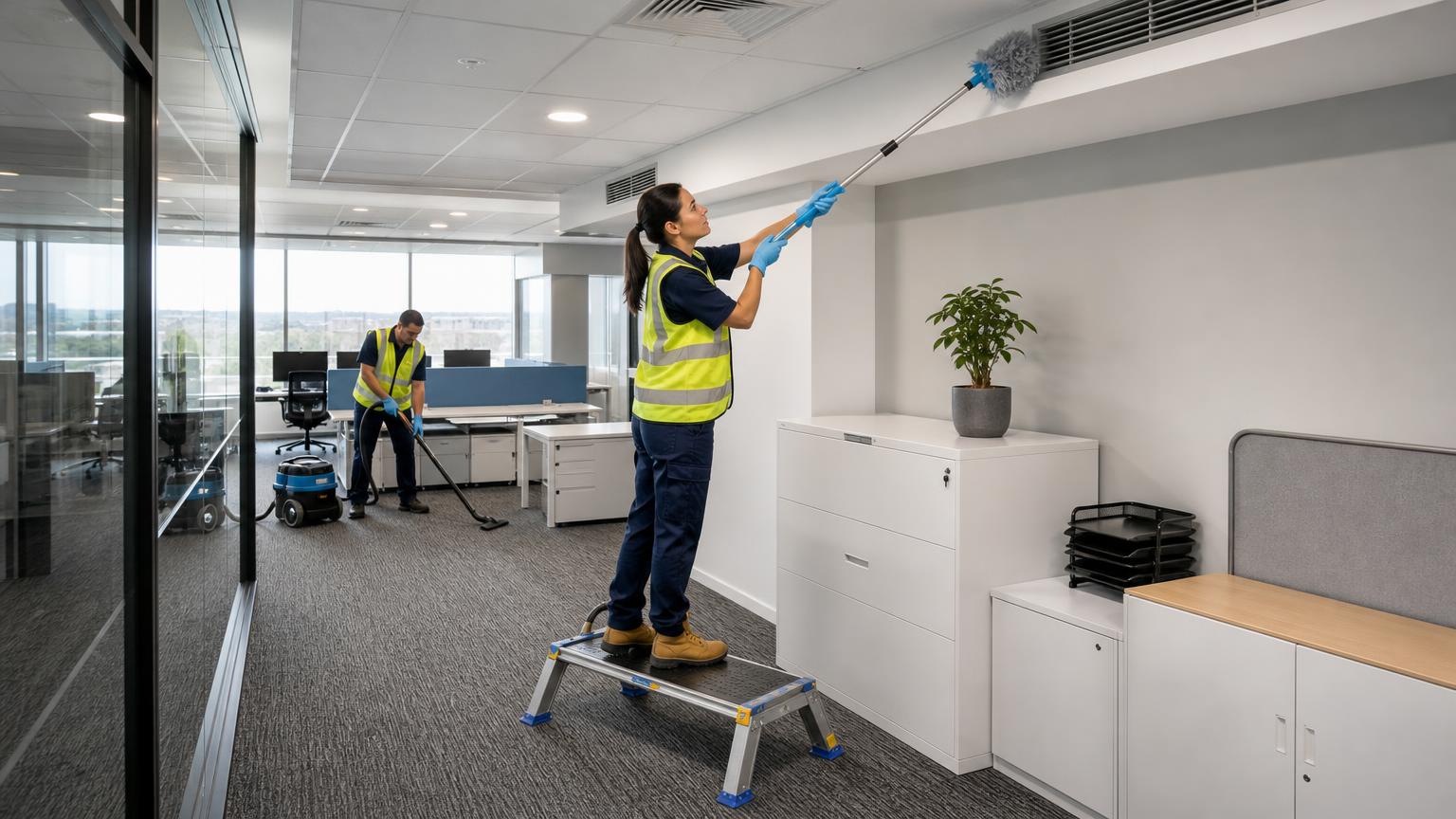
- Clean high surfaces before low surfaces. Dust that falls from shelves, vents or partition tops should be removed before the floor receives its final clean.
- Use damp methods for settled dust. A suitable damp cloth or mop captures particles more effectively than repeatedly moving them with a dry cloth.
- Inspect the same points each visit. A repeatable check shows whether the source has been controlled or whether the cleaning scope only hides the symptom.
ISO 9001, ISO 14001 and ISO 45001 management systems, along with CM3 Contractor Management Compliance certification, are useful comparison points only when they change day-to-day delivery. Ask how the stated systems affect documented scopes, site checks, safety controls, environmental decisions and review processes. A logo by itself is not a dust-control method.
How to keep dust down in a shop?
Keep shop dust down by controlling the entrance first, then separating customer-facing areas from stock, fit-out and delivery routes. A clean display area will not stay clean if dust continues to arrive on footwear, cartons, trolleys or construction materials.
- Place the entrance and matting inside the routine rather than treating them as occasional tasks.
- Schedule vacuuming around trading hours where practical, especially near entrances and fitting rooms.
- Keep stock and packaging organised so loose cardboard, fibres and debris do not spread into customer areas.
- Use a separate scope for a new-store or fit-out clean. A retail deep clean is not the same as recurring office cleaning.
- Inspect shelves, display tops, skirting, corners and ventilation grilles, not only the visible floor.
Retail and healthcare sites need different checklists from offices. Copying an office scope into a shop usually misses display fixtures, delivery paths and trading-hour restrictions.
What are three main types of dust?
For cleaning planning, it helps to divide dust into three practical groups: settled dust, airborne dust and tracked or generated dust. This is a worksite classification, not a universal scientific taxonomy.
- Settled dust sits on desks, shelves, ledges, floors, equipment and other surfaces. Damp wiping and suitable vacuuming remove it.
- Airborne dust remains suspended or becomes airborne when people walk, move boxes, open doors or disturb surfaces. Source control and appropriate filtration matter more than simply wiping after the event.
- Tracked or generated dust enters on shoes, wheels, packaging and vehicles, or forms through activities such as drilling, stock movement and construction work. Entry controls and task-specific cleaning address this group.
The label matters because each type needs a different response. A cleaner cannot solve generated dust by polishing desks more often, and an air cleaner cannot remove material that has already settled on a carpet.
What is the best way to clean a warehouse?
The best warehouse method is a planned sequence that separates heavy soil, traffic routes, racking dust and occupied work areas. An industrial floor should not receive the same treatment as an office carpet.
- Identify pedestrian, forklift, loading and storage routes.
- Remove loose debris with equipment suited to the floor and material.
- Work from higher areas down, including accessible racking surfaces and ledges.
- Give extra attention to corners, dock areas, thresholds and places where dust collects beside traffic routes.
- Complete the floor clean after overhead and surface work, then inspect the routes that workers use most.
Industrial cleans fail when floor care, racking dust and traffic routes are treated like a standard office vacuum run. The required equipment, access controls and work window depend on the site, stored goods, floor type and active operations. Cygnus provides Industrial Cleaning Warrnambool for industrial and warehouse cleaning requirements, with the scope set against the facility rather than a generic room list.
Managing humidity without creating another problem
Humidity does not remove dust, but moisture conditions affect how particles behave and how comfortable an indoor space feels. Excess moisture can create separate mould and maintenance concerns, while very dry conditions may allow settled particles to become airborne more easily.
Cleaning staff should not guess at building-system settings. Record visible condensation, damp areas, water leaks and unusual odours, then refer building-services issues to the responsible facilities or maintenance team. An air-conditioning adjustment will not fix dust entering through a loading route or accumulating on neglected surfaces.
Minimising allergen entry points
Dust control starts before particles reach the desk. Focus on doors, mats, carpet transitions, delivery points, open windows where relevant, storage areas and shared equipment that moves between zones.
Use a simple inspection map for these entry points. It should show the location, the cleaning frequency, the method, the person responsible for reporting defects and the condition that triggers escalation. If the site uses records labelled PRO or PPCS, retain those labels and record service dates consistently, whether the entry says July or JAN. This creates a clearer handover between cleaners, facility managers and maintenance contractors.
Personal habits also affect dust. Food crumbs, outdoor material on footwear, open storage and cluttered workstations give particles more places to settle. A desk does not need a sterile routine, but it does need clear surfaces and a repeatable wipe and vacuum schedule.
Plants should not be treated as air-cleaning equipment. Their leaves collect dust and their containers can complicate cleaning access, so include them in the surface schedule or move them temporarily during service where appropriate.
Do air purifiers really get rid of dust?
Air purifiers can reduce some airborne particles when the unit, filter and room conditions suit the task. They do not remove settled dust from desks, carpets, shelves or vents, and they do not replace source control or routine cleaning.
Choose equipment based on the room, operating conditions, filter maintenance and manufacturer instructions. A purifier that runs beside an open loading door may treat the symptom while the source continues. Read the US EPA guidance on air cleaners and filters before treating a purifier as the main dust-control measure.
Keeping desks and surfaces cleaner for longer
To keep a desk dust free, remove clutter, store loose papers and equipment, and include the desk edges, monitor stand, cable area and nearby floor in the cleaning scope. Wipe from the cleaner area towards the dirtier area, and avoid dry movements that simply redistribute particles.
To prevent dust on surfaces, reduce the amount entering the room, clean high surfaces before low ones and use a method that captures dust rather than flicking it into the air. Do not use abrasive materials on screens or delicate finishes. Follow the surface and equipment manufacturer's instructions.
Regular breaks and outdoor time may support sensible workplace routines, but they are not a dust-control measure. The practical controls remain source reduction, ventilation and filtration decisions, surface cleaning and floor care.
Local considerations for Victorian sites
Cygnus Facility Services is based in Warrnambool VIC and serves commercial and industrial sites across South West Victoria, Geelong, Ballarat, Melbourne, Victoria and Australia-wide for open projects. A quote should confirm the site's location, building type, operating hours, access arrangements, dust sources and required frequency.
After-hours cleaning may suit an office that needs surfaces and floors ready before the next workday. A retail centre, clinic, education facility or warehouse needs its own scope, because trading, patient, student, delivery and safety requirements change the order and timing of work.
For office sites, see Commercial Cleaning Warrnambool. The wider Commercial Cleaning Services page covers the sectors and scheduling options available from Cygnus, including daily, weekly, fortnightly and after-hours arrangements. Medical premises require a separate scope, so use Medical Cleaning Warrnambool rather than adapting an ordinary office checklist.
Where to go from here
This advice will not solve dust caused by an unresolved leak, building defect, active construction activity or poorly maintained mechanical system. It is not for situations where the source needs building, engineering or project controls first. Escalate those issues to the responsible maintenance or project team instead of asking cleaners to compensate with extra surface work.
For a cleaning plan, list the affected areas, likely sources, preferred work window, required frequency and any access or safety restrictions. If you want Cygnus Facility Services to assess that information against a site-specific scope, request a free quote through the Commercial Cleaning Services page.