School Cleaning Checklist: What to Check and Why
A school cleaning checklist should define exact room tasks, access windows, frequencies, completion evidence and escalation actions. This guide shows how to turn a room list into a usable service scope and daily handover record.
A School Cleaning Checklist Staff Can Use
Most schools start by asking how often each room should be cleaned. That is backwards, because frequency depends on use, access and the consequence of missing a task. Set the room, exact task, access window, responsible cleaner, checker and escalation action first, then agree the frequency.
Use the table below as a scope-setting tool, not as a universal schedule. A toilet used throughout the school day may need checks or replenishment during occupied periods, while an office may only be available after hours. The school must confirm each frequency against its timetable, room use, products, safety instructions and access arrangements.
Build the scope around how each school space is used
Use this table when preparing a cleaning scope or reviewing a contractor's proposal. Replace general wording with the exact tasks the school wants completed.
| Area | Exact task | Frequency | Timing | Cleaner | Checker | Completion evidence | Escalation action |
|---|---|---|---|---|---|---|---|
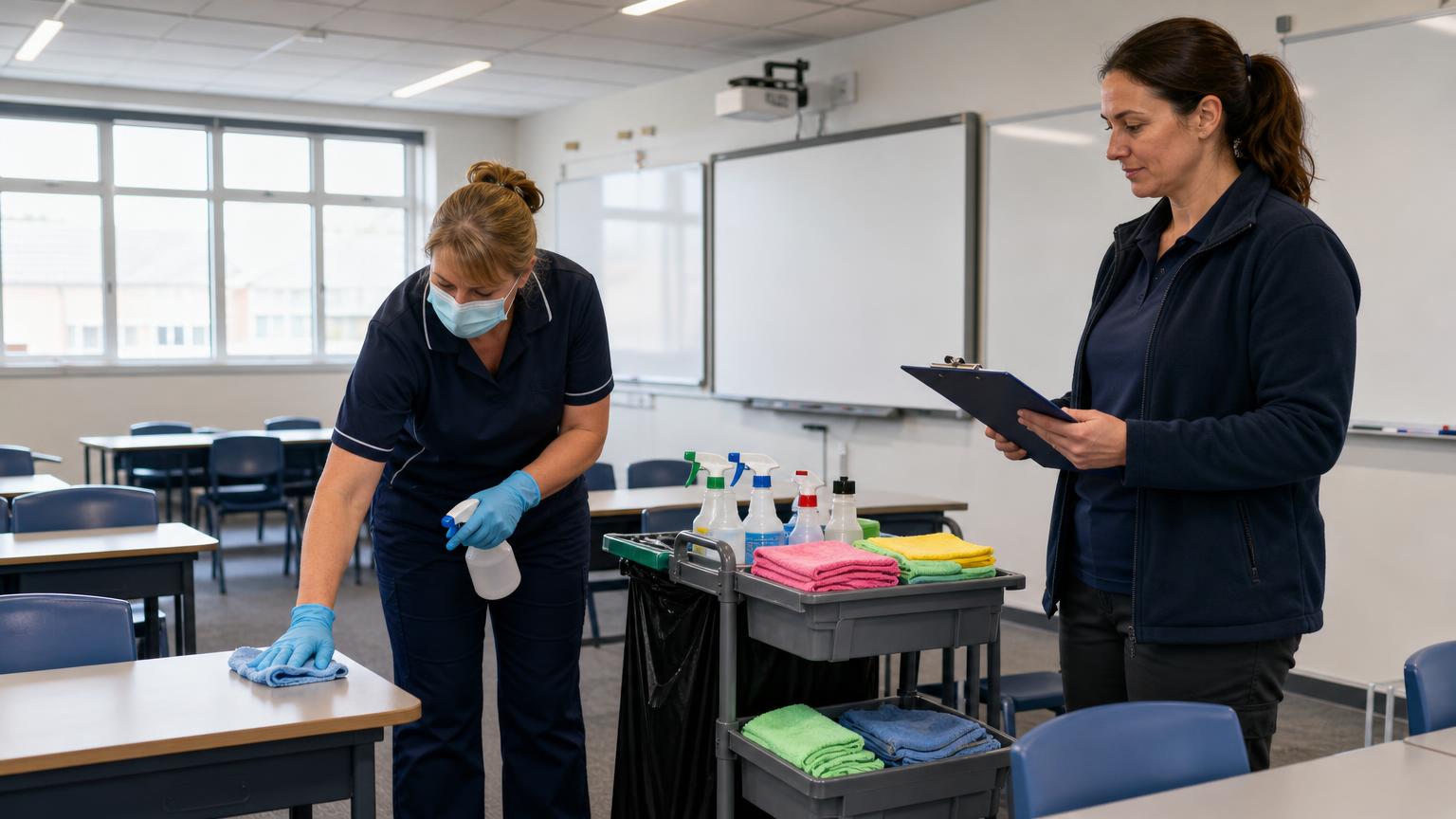
| Classrooms | Remove waste; clear loose dust and visible soil; clean floors; wipe approved desks, tables, door handles, light switches and other agreed touch points; report damaged furniture or obstructed areas. | Daily proposed; weekly dusting of higher or less frequently touched surfaces; periodic floor or detail work. School to confirm. | After teaching or during an agreed unoccupied period. | Assigned cleaning staff. | Named supervisor or school contact. | Room listed as complete on the daily record, with missed tasks noted. | Report blocked access, defects, spills or unsuitable surfaces to the nominated school contact and supervisor. |
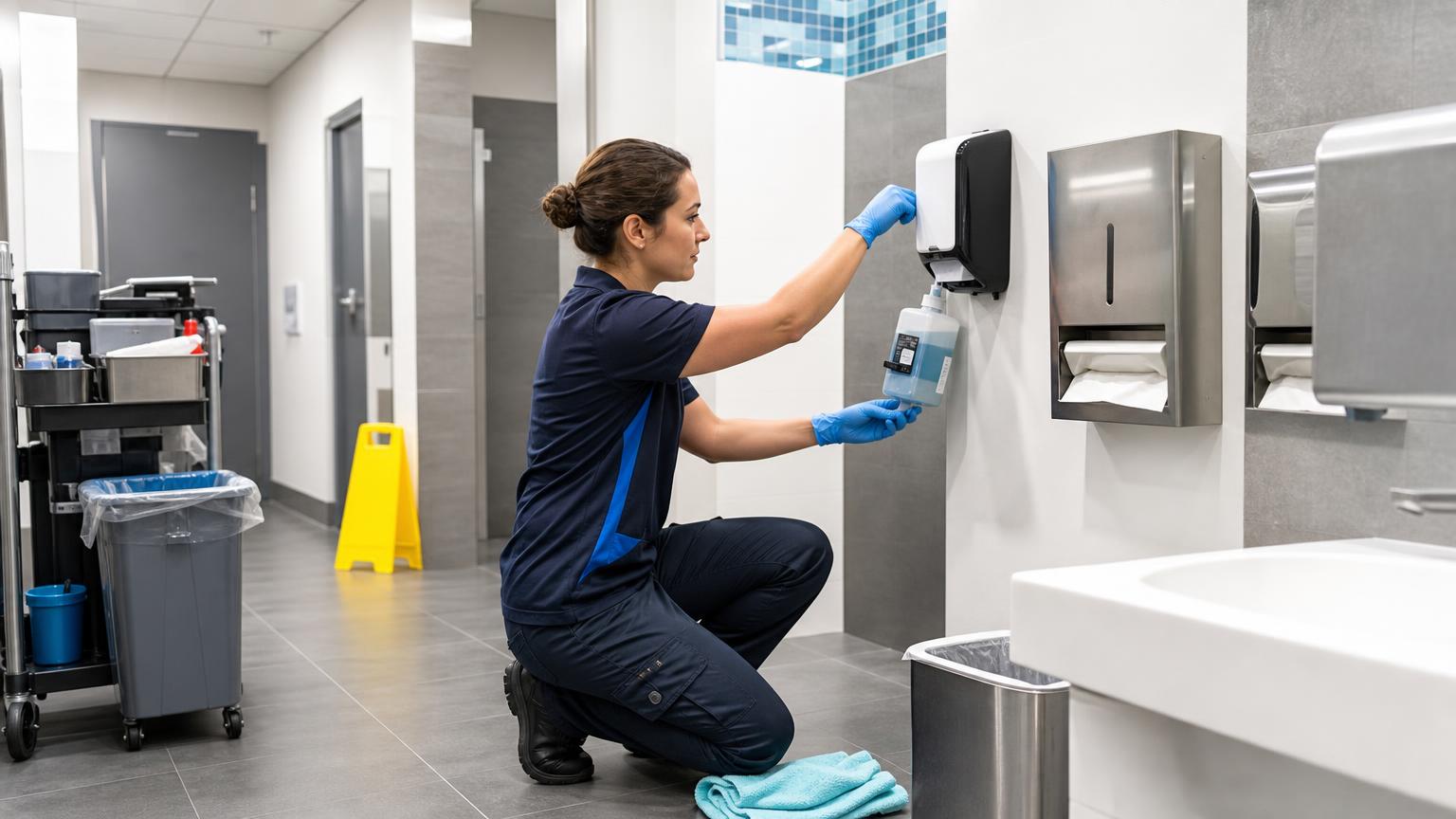
| Toilets | Clean toilets, basins, taps, dispensers, mirrors, floors, doors and agreed touch points; remove waste; replenish soap, paper and other agreed consumables; report leaks, blocked fixtures and damaged dispensers. | Daily proposed, with checks or replenishment during occupied periods where required; weekly detail cleaning; periodic scale, floor or fixture work. School to confirm. | Before opening, after use peaks or during agreed service windows. | Assigned cleaning staff. | Named supervisor or school contact. | Toilet areas and consumable levels recorded as complete. | Make the area safe, report contamination, damage, leaks or shortages immediately, and record the corrective-action owner. |
| Corridors | Remove litter; clean floors; wipe agreed handrails, door handles and other touch points; keep routes free from cleaning equipment and report trip hazards. | Daily proposed; touch-point or spot cleaning as required; weekly detail work; periodic floor treatment. School to confirm. | During low-traffic periods or after hours, with spills handled promptly. | Assigned cleaning staff. | Named supervisor or school contact. | Route recorded as complete, including any inaccessible section. | Isolate or report spills and hazards, then notify the nominated contact if access or repair prevents completion. |
| Offices | Empty waste; clean floors; wipe approved desks, shared work surfaces, phones, door handles and other agreed touch points without moving confidential material; report inaccessible surfaces. | Daily proposed; weekly detail cleaning; periodic higher-surface and floor work. School to confirm. | After hours or during the agreed office service window. | Assigned cleaning staff. | Named supervisor or office contact. | Office list marked complete, with locked or occupied rooms recorded. | Do not enter without permission. Record missed access and notify the office contact for re-entry or rescheduling. |
| Staff rooms | Remove waste; clean floors, tables, sinks, taps, handles and other approved shared surfaces; clean food residue; replenish agreed supplies; report appliances or fixtures needing attention. | Daily proposed; weekly detail cleaning; periodic floor or appliance-area cleaning. School to confirm. | After agreed meal periods or after hours. | Assigned cleaning staff. | Named supervisor or school contact. | Room record showing tasks complete and supplies checked. | Report spills, food residue, blocked access, damaged fixtures or missing supplies to the nominated contact. |
| Eating areas | Remove food waste; clean tables, chairs, floors, bins and approved food-contact or surrounding surfaces using the product and method specified for each material; report residue or pests. | After each agreed use period where required; daily proposed; weekly detail cleaning; periodic floor or fixture work. School to confirm. | After meals and during agreed low-use periods. | Assigned cleaning staff. | Named supervisor or school contact. | Area and waste points recorded after the service period. | Remove immediate hazards where safe, restrict access if necessary, and report contamination, pests, damage or unavailable equipment. |
| Waste points | Empty designated bins; replace liners where required; clean bin surfaces and surrounding floors; separate waste only as the school's procedure requires; report overflowing or damaged bins. | Daily proposed, with additional service when full or soiled; weekly detail cleaning; periodic waste-area cleaning. School to confirm. | Before bins obstruct routes or create odour, and at the agreed collection time. | Assigned cleaning staff. | Named supervisor or school contact. | Waste points marked serviced, with unusual waste or missed collection recorded. | Report overflow, unsafe contents, damaged containers or collection failures to the nominated site contact. |
| Specialist rooms | List the room's approved tasks, including floors, suitable surfaces, fixtures, waste and touch points; follow the room's access, product, equipment and safety instructions; do not clean restricted equipment unless the scope authorises it. | Daily, weekly and periodic frequencies must be set by the school for each room and procedure. | Only during the room's approved access window. | Named staff authorised for that room. | Named specialist-room owner or supervisor. | Room-specific checklist signed or recorded, including equipment or areas excluded. | Stop if instructions, access or equipment are unclear. Record the issue and refer it to the room owner and cleaning supervisor. |
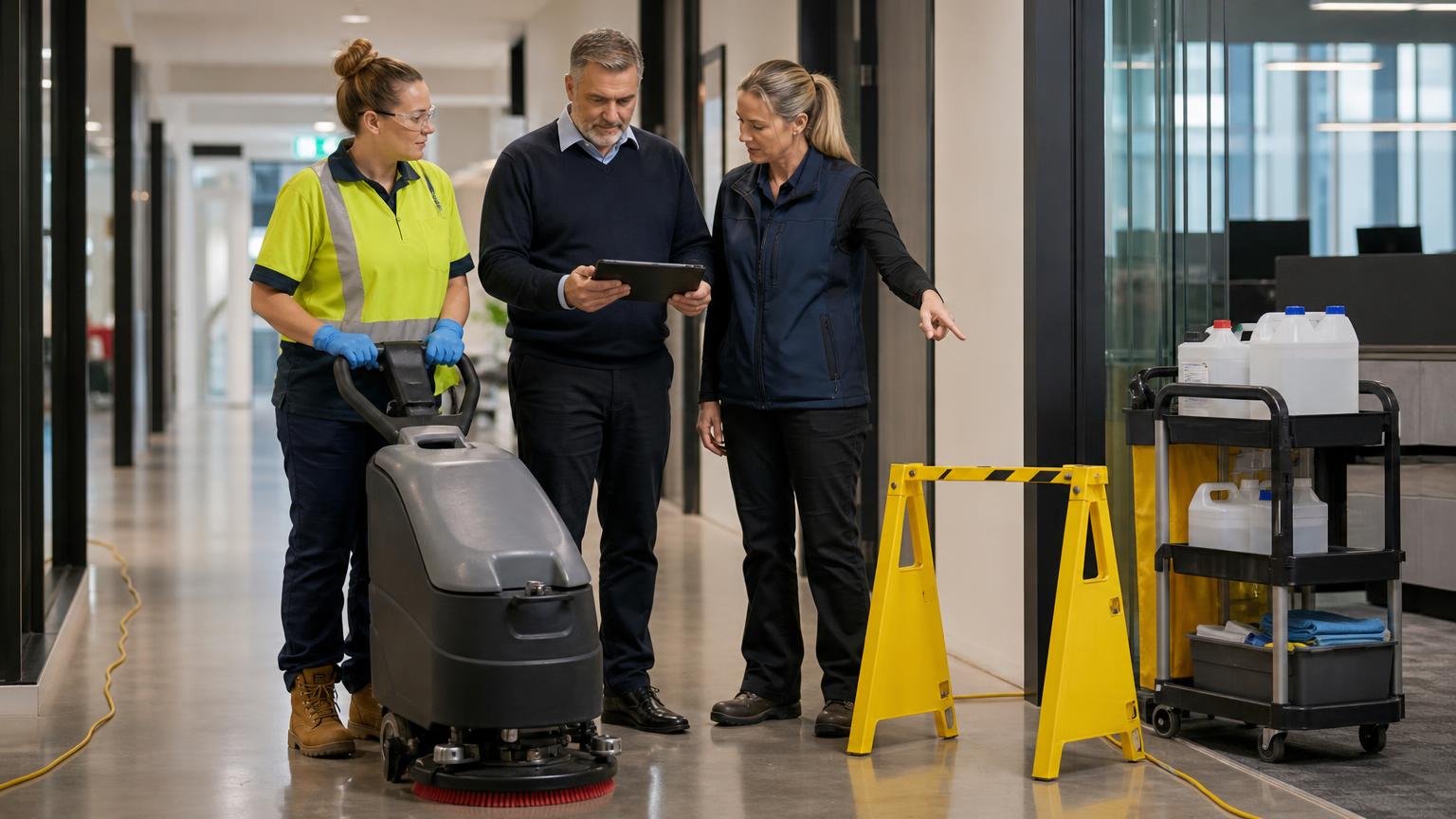
Before pricing or service commencement, replace every “school to confirm” entry with an agreed frequency. Also name the person doing the work and the person verifying it. A tick does not prove completion when a room was locked, a defect was found or a consumable fell below the agreed minimum level.
Use a daily handover record
A handover record gives the school a dated account of what happened during the shift. It should capture completed areas, missed access, defects, consumable shortages, the checker and the owner of any corrective action.
Completed example:
| Field | Record |
|---|---|
| Date and shift | Daily after-hours handover, date recorded by the school |
| Areas completed | Classrooms, corridors, staff room, toilets and waste points completed against the agreed task list. |
| Missed access and reason | Office 3 not entered because it remained occupied when the agreed access window ended. |
| Defects found | Toilet dispenser reported damaged; corridor floor reported with a surface issue requiring review. |
| Consumables below minimum level | Paper supply in the staff room below the school-confirmed minimum level. |
| Checker | Jordan Lee, site checker. |
| Time checked | Handover checked at the recorded end-of-shift time. |
| Corrective-action owner | Office contact to arrange access to Office 3; facilities contact to address the dispenser and floor issue; supervisor to replenish the paper supply. |
If access is missed, do not mark the room complete. Record the reason, notify the person who controls access, agree whether the task will be rescheduled, and keep the item open until someone verifies the result.
Confirm these points before adopting the checklist
- School access hours, occupied periods and room access restrictions.
- A complete room inventory, including specialist rooms and areas excluded from the service.
- Approved products, equipment, surface instructions and safety procedures.
- Consumables, agreed minimum levels and the person responsible for replenishment.
- Waste types, bin locations, collection arrangements and reporting requirements.
- Site-specific procedures for spills, restricted rooms, defects and incidents.
- The person who approves the final scope, checks completion and owns corrective actions.
Optional project or builders cleaning
Project cleaning should sit in a separate optional scope from routine school cleaning. Refurbishment, fit-out or final handover work may involve construction residue, different access restrictions and a separate presentation standard.
Before accepting project cleaning, check:
- Residue has been removed from the agreed rooms, fixtures and surfaces.
- Floors are clean and free from project debris or residue.
- Windows and agreed glass surfaces meet the stated handover standard.
- Fixtures are clean, present and free from avoidable residue.
- Defects, damage and incomplete work are recorded rather than treated as cleaning tasks.
- Excluded areas are listed clearly and signed off by the relevant project contact.
Do not add builders-clean tasks to a routine schedule without a revised scope, access arrangement, equipment plan and acceptance standard. The project scope should identify who accepts the result and how outstanding items are resolved.
How to keep yourself clean in school?
Wash your hands with soap and water after using the toilet, before eating and after contact with visibly dirty surfaces. Cover coughs and sneezes, avoid touching your face with unwashed hands and keep personal items such as drink bottles separate from shared items.
Personal hygiene does not replace facility cleaning. Students and staff also need a clear way to report spills, overflowing bins, broken dispensers or contaminated areas so the site checklist can trigger the right response.
Healthdirect's handwashing guidance supports thorough hand hygiene. The school's cleaning scope should separately identify who checks soap, paper and other agreed supplies.
What is the 5-5-5 rule for cleaning?
There is no single, universally recognised 5-5-5 cleaning rule that schools can adopt without defining it. The phrase may refer to different informal systems, so it should not replace a written scope, product instructions or site procedure.
If a school uses the term internally, write down what each “5” means. The meaning must come from the organisation's own procedure. A checklist with named tasks, frequency, responsible person and completion check provides a clearer standard.
What is the correct order for cleaning a classroom surface?
Remove loose items and visible soil first, clean from higher or cleaner areas towards lower or dirtier areas, then disinfect only where the site procedure requires it. Follow the product label for dilution, application method, ventilation, personal protective equipment and contact time.
- Remove rubbish, loose dust and items that obstruct the surface.
- Clean the surface with the approved product and method.
- Work from higher surfaces towards lower surfaces and from cleaner areas towards dirtier areas.
- Use disinfectant only where the written procedure calls for it.
- Allow the stated contact time and leave the surface in the condition required by the product instructions.
- Move to the next area with clean equipment or the required change of cloth and mop materials.
Do not spray an unknown product onto interactive screens, coated furniture, soft furnishings or electrical equipment. The material, manufacturer instructions and school procedure determine the safe method.
Turn the list into a service scope
Turn the checklist into a working scope by adding every area, exact task, confirmed frequency, access condition, responsible cleaner, checker and escalation path. Quotes should be based on that real scope of the space, not a one-line price. When comparing commercial cleaners, ask what ISO or CM3 credentials change in day-to-day delivery rather than comparing logos alone.
This checklist will not solve problems caused by an unclear school access policy, unsafe products or a contractor being asked to clean restricted equipment. Those issues need a site decision before the cleaning schedule starts.
Before finalising the procedure, confirm any site-specific requirements with the school, relevant authorities and the product manufacturer. For broader scope planning, see the commercial cleaning checklist and review the commercial cleaning service options.