Shopping Centre Cleaning During Trading Hours
Cleaning a shopping centre while it trades requires a site-specific scope, ranked response priorities and clear separation between routine and after-hours work. This guide explains what to include in the brief and how to compare quotes without relying on a headline hourly rate.
Shopping Centre Cleaning During Trading Hours: A Practical Plan
If customers and retailers remain on site, shopping centre cleaning during trading hours needs a clear priority order rather than a generic frequency. Start by mapping entrances, main walkways, food areas, amenities, lifts, waste points and back-of-house spaces, then decide which tasks take priority when access or customer flow changes.
An office programme is the wrong starting point for a shopping centre. A regional centre in Warrnambool, a retail complex in Melbourne and a smaller Victorian site may differ in layout, tenant interfaces, access arrangements and pressure points, so the scope should follow the building and its operating pattern, not a standard office checklist.
Author: Cygnus Facility Services
Start with the conditions inside the centre
Cleaning while customers shop requires a zone plan, not a cleaner following an unranked route. Divide the site into working zones, list the tasks in each zone and specify who receives reports about spills, damaged fixtures, waste problems and other urgent issues.
A usable scope names the public entrances, main walkways, food areas, amenities, lifts, car park access points, waste areas, common areas and any included back-of-house zones. It should also separate centre-managed work from tasks assigned to individual tenants.
Cygnus's position is that cleaning should be scheduled around how the workplace actually operates, including after-hours work when the site needs detailed floor care or unobstructed access. A fixed daytime routine is the wrong solution when access constraints or heavier presentation work require an empty area.
Build a service brief that staff can follow
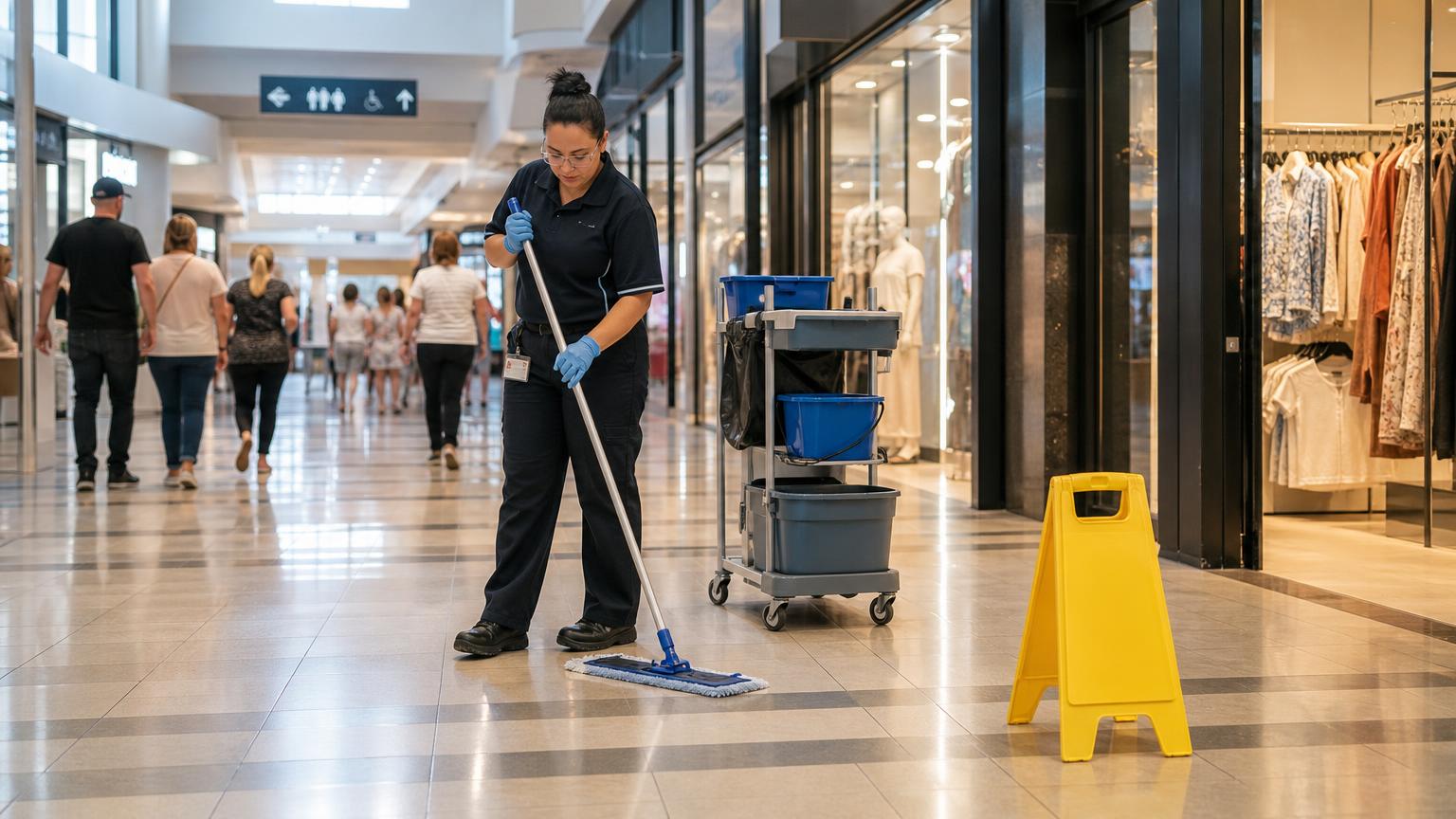
A trading-hours programme normally combines planned presentation work with responsive cleaning. A cleaner may inspect public areas, remove visible litter, service amenities, refresh agreed high-contact surfaces and check waste points while customers and retailers remain on site.
Priority should be explicit. A spill in a busy walkway requires controlled access and prompt attention; a floor detail in a quiet area can wait for an appropriate access window. The scope should say what happens when customer flow prevents a scheduled task from being completed.
Do not accept a one-line price before the contractor has assessed the site. The quote should connect the charge to the areas, task frequencies, staffing, equipment, access windows, consumables and response requirements included in the brief.
When a contractor presents ISO 9001, ISO 14001, ISO 45001 or CM3 credentials, ask what each system changes in daily delivery, such as how the team controls scope, reports safety issues, manages environmental practices and reviews follow-up work. A logo ranks below evidence that the proposed retail checklist fits the centre.
Use response targets only when the contract defines them
There is no single Australian meaning for a phrase such as the 20 minute rule in cleaning. It may describe an internal service target, an inspection interval or a contractor's response expectation, but its meaning comes from the agreement and documented site procedure.
If a contractor refers to a 20 minute rule, ask four direct questions: What starts the time? Which areas does it cover? Does it mean arrival, completion or inspection? Who records compliance? Without those answers, the phrase is too vague to use as a performance measure.
A useful scope turns the idea into an observable requirement. It can specify how staff report a spill, who attends it, what barricading or communication the site requires and how the area is checked after cleaning. Do not treat a claimed response time as proof of quality unless the contract explains how the team measures it.
Price the work from the site, not a headline rate
A casual cleaner's hourly pay is different from the hourly rate a shopping centre pays a cleaning contractor. Worker pay depends on employment arrangements and applicable Australian workplace rules, including the relevant award where one applies. The customer's charge also reflects supervision, insurance, equipment, products, travel, administration, compliance and the agreed service scope.
There is no responsible single hourly figure for every Australian centre. The quote is determined by trading-hours access, floor area, amenities, waste handling, equipment, staffing, frequency and the amount of responsive work required. A low headline rate may leave products, consumables, supervision or urgent attendance outside the stated scope.
For a useful comparison, ask for the included labour, equipment, consumables, GST treatment, scheduled hours, exclusions and additional charges. Cygnus's position is that a quote should come from a real scope of the space, not a one-line price.
Decide what a cleaner should do in three hours
Three hours is not a universal shopping centre checklist. The cleaner should apply that time to the site's ranked priorities, with public safety and customer-facing presentation ahead of low-priority detail work.
A practical allocation may include:
- Inspecting entrances, main walkways and other high-use areas.
- Removing visible litter and responding to spills or contamination risks.
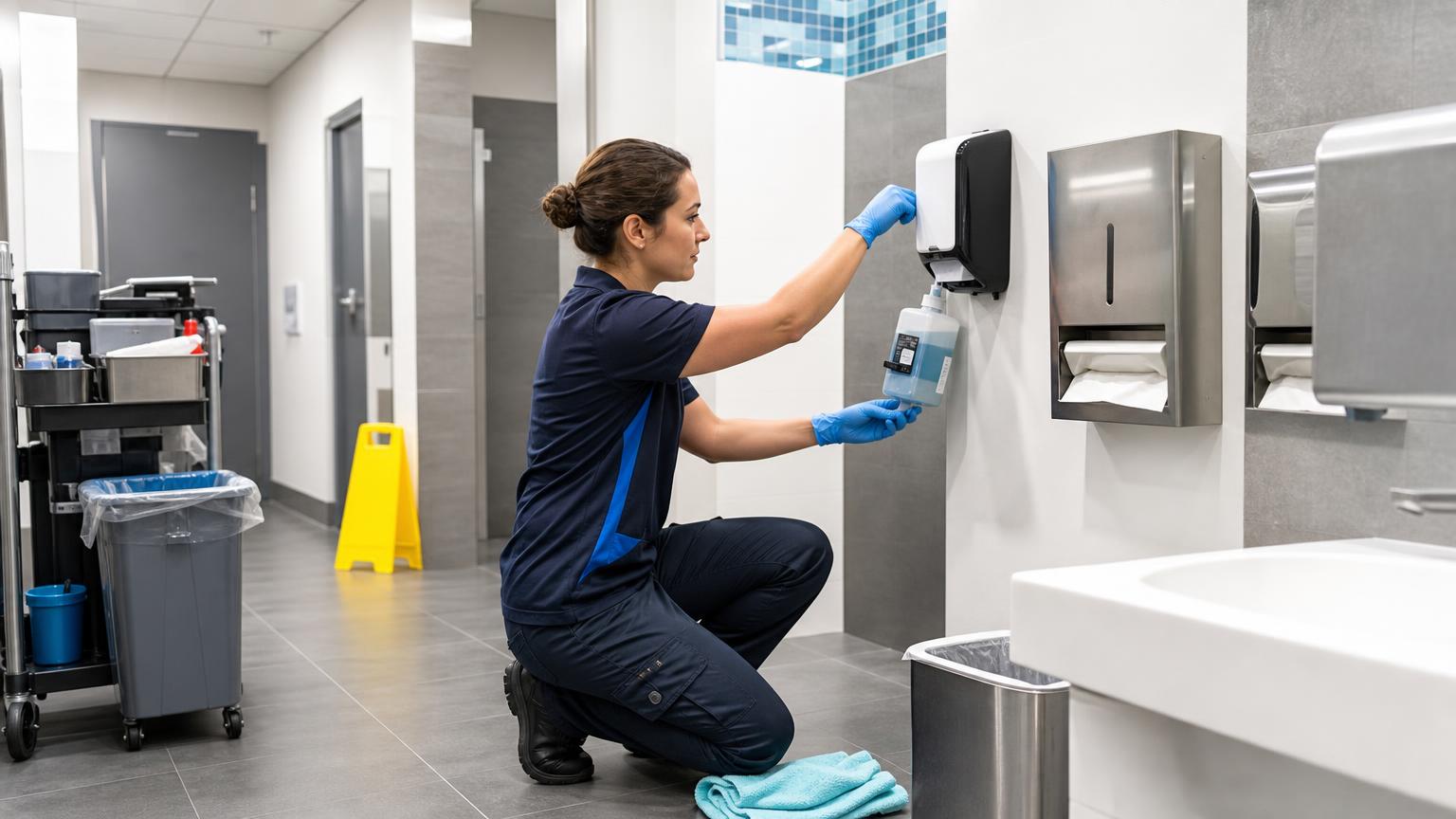
- Cleaning and restocking included amenities.
- Checking waste points and following the site's waste procedure.
- Refreshing agreed high-contact surfaces and customer-facing areas.
- Recording issues that need centre management, maintenance or a longer service window.
This list is a planning framework, not a promise that every item fits into three hours. A large service area, busy trading period, heavy waste load or unexpected spill can use the available time. If a contractor promises every task without checking the site, ask which item gets deferred when demand rises.
Protect presentation where customer traffic is highest
Entries, main paths, food areas, amenities, lifts and waste points need active attention because customers use them repeatedly. A fixed route can miss the area under the most pressure, so centre staff and cleaners need a reporting method that directs the next task to the current priority.
Use zones rather than one undivided floor plan. Each zone can list its included tasks, inspection points, frequency and escalation contact. This makes it easier to separate centre responsibilities from tenant responsibilities.
During trading hours, visual control matters as much as the cleaning task. Equipment should not create an avoidable obstruction, wet areas need clear communication and the cleaner needs to follow the centre's access and safety procedures. The exact control depends on the documented requirements of the site.
Do not pay for a longer routine shift until you know where the existing scope fails. First identify missed zones, peak pressure points and tasks that need after-hours access. Then decide whether the answer is better sequencing, additional labour, a different frequency or a separate after-hours service.
Check whether the proposed scope fits the site
A useful shopping centre cleaning scope connects work to the way the centre operates. It should state the areas covered, the task in each area, the frequency, the response process, the required products or equipment and the person who checks completion.
For a trading-hours programme, ask the contractor to explain:
- Which public and back-of-house areas are included.
- How the team handles spills, broken items, bodily fluid incidents or other urgent events under the site's procedure.
- How amenities, waste points, entrances and high-use paths are checked.
- How tenant requests are separated from centre-managed work.
- What happens when a scheduled task cannot be completed because of customer flow or access.
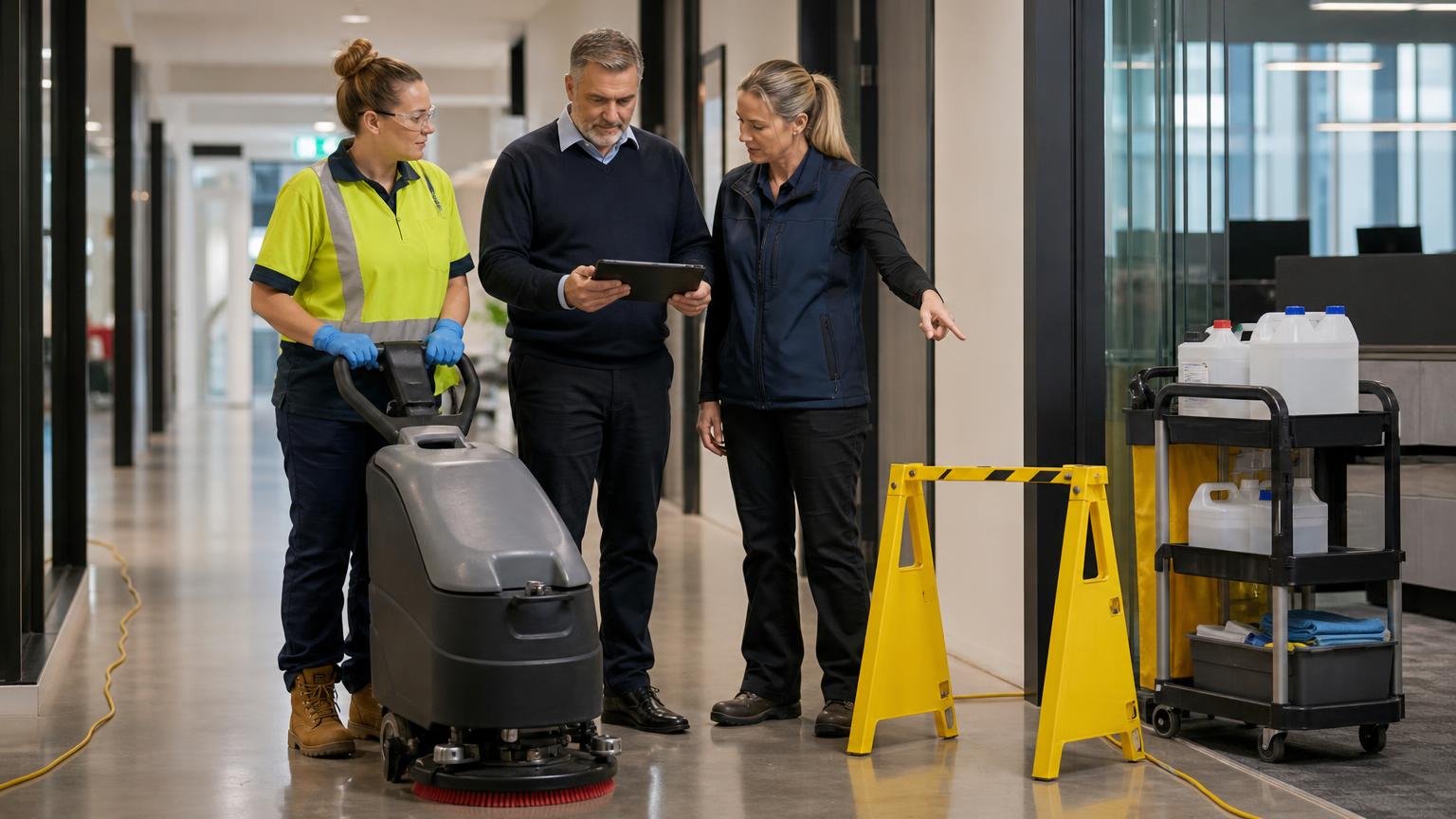
- How supervisors record issues and communicate follow-up work.
Retail and healthcare sites need different checklists from offices. Copying an office scope into a shop usually fails because it does not account for customer flow, tenant interfaces or public-facing waste and amenity work. Industrial cleaning has a different failure point again: floor care, racking dust and traffic routes cannot be treated like a standard office vacuum run.
Confirm the Victorian service model
Cygnus Facility Services is based in Warrnambool and serves commercial and industrial sites across Victoria, including South West Victoria, Geelong, Ballarat and Melbourne. It also considers open projects Australia-wide. Availability, travel arrangements and the practical service model should be confirmed for each site rather than assumed from a location page.
A centre's location is only one part of the brief. The quote should also record the building layout, trading hours, access arrangements, tenant interfaces, preferred cleaning frequency, after-hours options and any site-specific safety or environmental requirements.
Questions to ask before appointing a cleaner
- Has the contractor assessed the actual site rather than priced from floor area alone?
- Which tasks happen during trading hours and which need an after-hours window?
- How will staff report urgent cleaning needs?
- What does the quote include for labour, products, equipment, supervision and consumables?
- How does the contractor check that the agreed work happened?
- What do the contractor's ISO and CM3 systems change at site level?
Prepare the brief before requesting quotes
Use the questions above to create a short site brief before requesting quotes. Include the centre location, areas in scope, trading hours, preferred frequency, after-hours requirements, access limitations and the response process you need.
For related service information, read the Commercial Cleaning Services page. If your project includes warehouses, compare the requirements with Industrial Cleaning Warrnambool, because industrial floor, traffic-route and racking work should not be priced like public retail areas.
This advice does not determine a price or staffing level without a site scope, and centres seeking only a one-off deep clean should ignore it. To move from a general plan to a site-specific quote, submit the centre details through the Cygnus Facility Services enquiry form.
FAQs
What is the 20 minute rule in cleaning?
It is not a universal cleaning requirement. In a shopping centre contract, it may describe a response, inspection or service target. Ask what starts the time period, what completion means and how the result is recorded.
What is the hourly rate for a casual cleaner?
A cleaner's employment rate is separate from the contractor's customer charge. The customer rate depends on the agreed labour, supervision, equipment, products, compliance costs and service scope, so it must come from a site-based quote rather than a generic figure.
What should a cleaner do in 3 hours?
The cleaner should follow the site's ranked scope, starting with public safety, spills, customer-facing areas, amenities and waste points. The available time may not cover every task if the centre is busy or the service area is large.
How much do commercial cleaners charge per hour in Australia?
There is no single rate that applies to every commercial site. Centre size, access, trading hours, frequency, equipment, consumables, waste and response requirements all affect the quote.