What Does a Facility Services Company Do?
A facility services company turns a property's operating requirements into defined cleaning, maintenance coordination and support tasks. Learn how to compare providers by scope, work windows, site requirements and accountability.
How a Facility Services Company Supports a Working Site
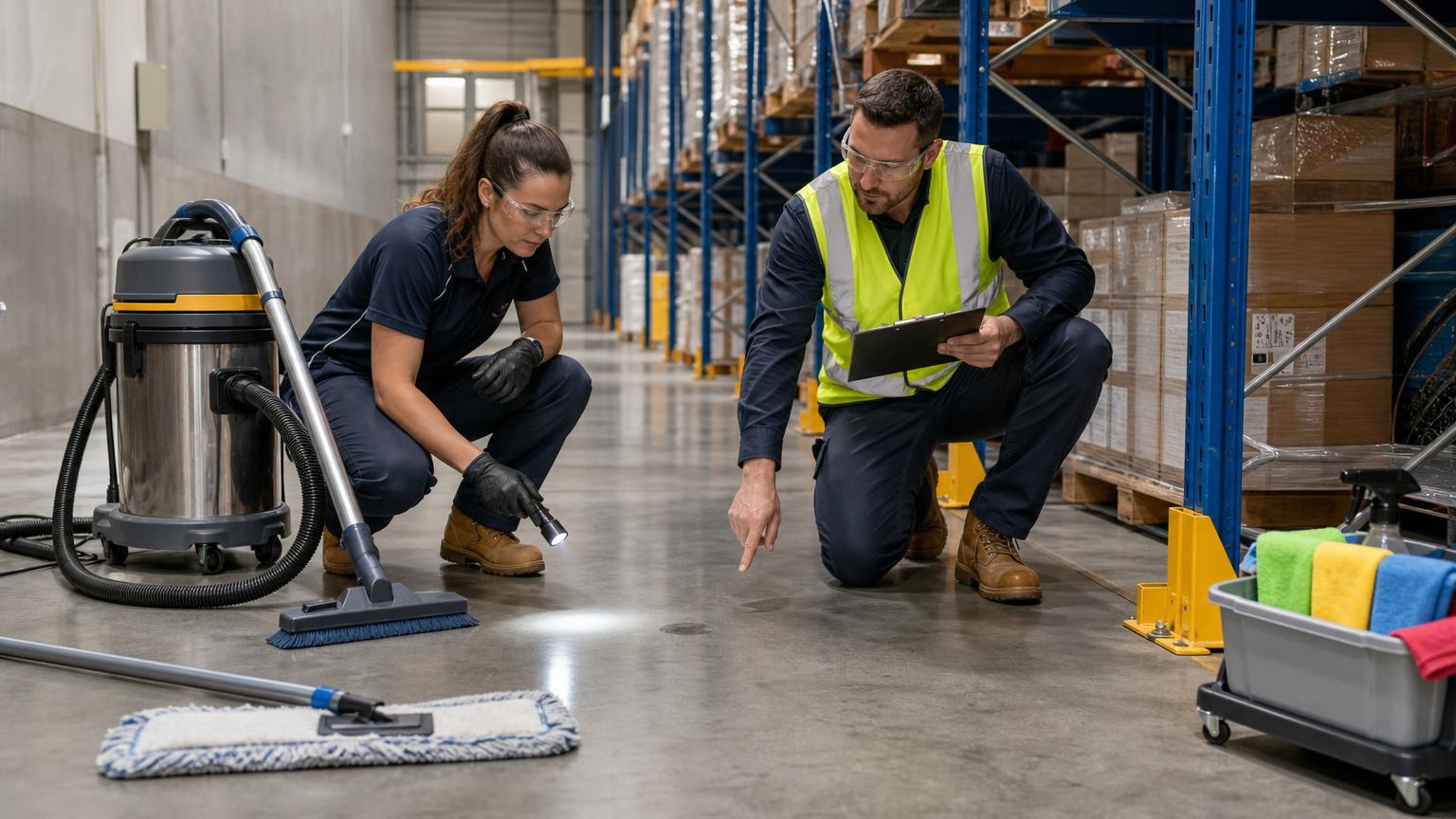
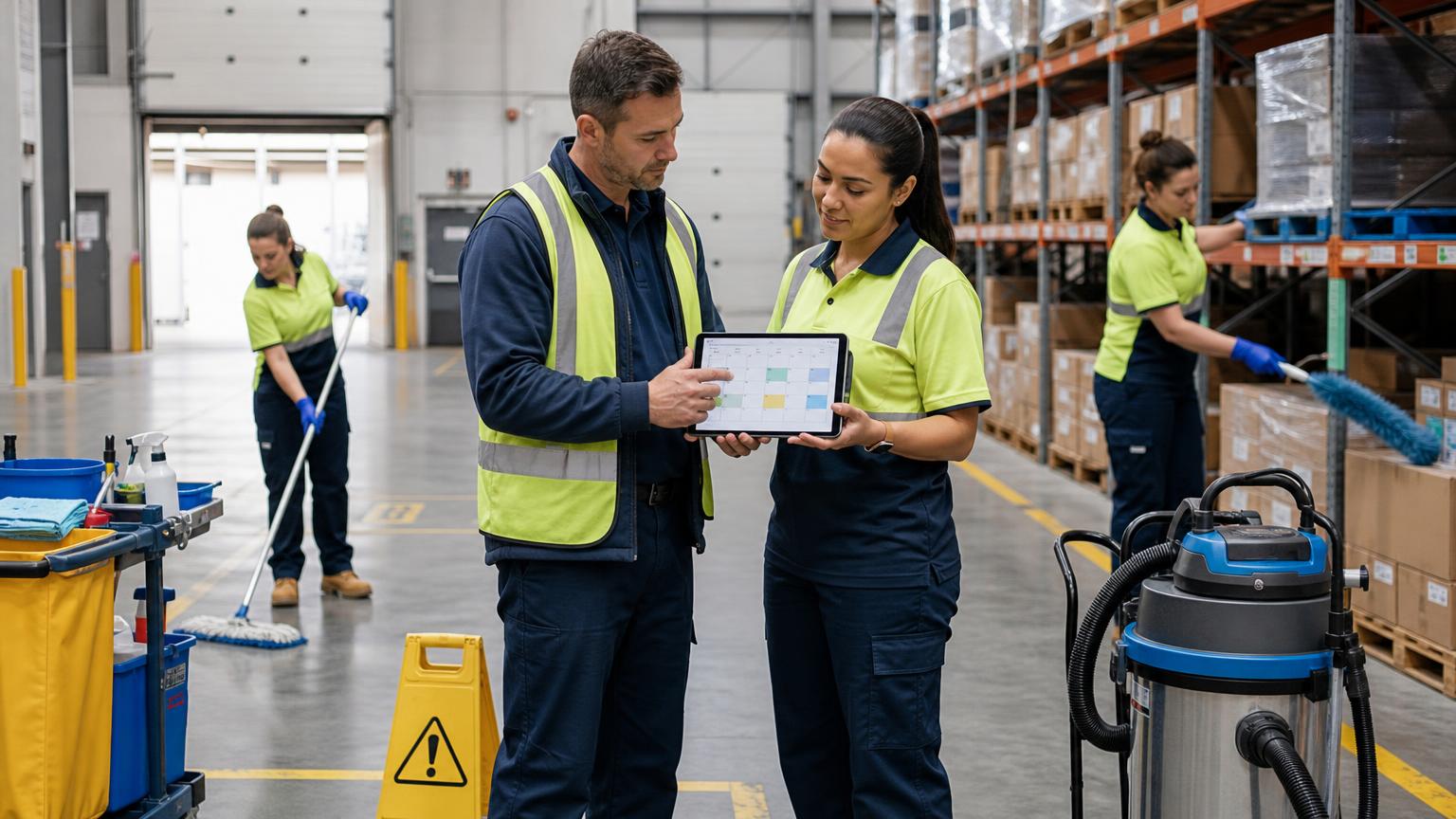
A facility services company turns a site's operating requirements into a written schedule: each area has a task, frequency, work window and responsible party. A warehouse brief should state whether floor care, racking dust and traffic routes are included, rather than describing the job simply as cleaning.
The useful distinction is whether the provider can document the areas, tasks, frequencies, work windows and responsibilities for your facility. That written scope lets you compare a focused cleaning contract with broader facility service management on the same requirements, instead of comparing one-line descriptions.
Author: Cygnus Facility Services
The practical answer
A facility services company delivers or coordinates recurring work that keeps a property ready for use after construction is complete. A workable service schedule identifies the covered areas, required tasks, frequency, access contact, work window and method for reporting completed or missed work.
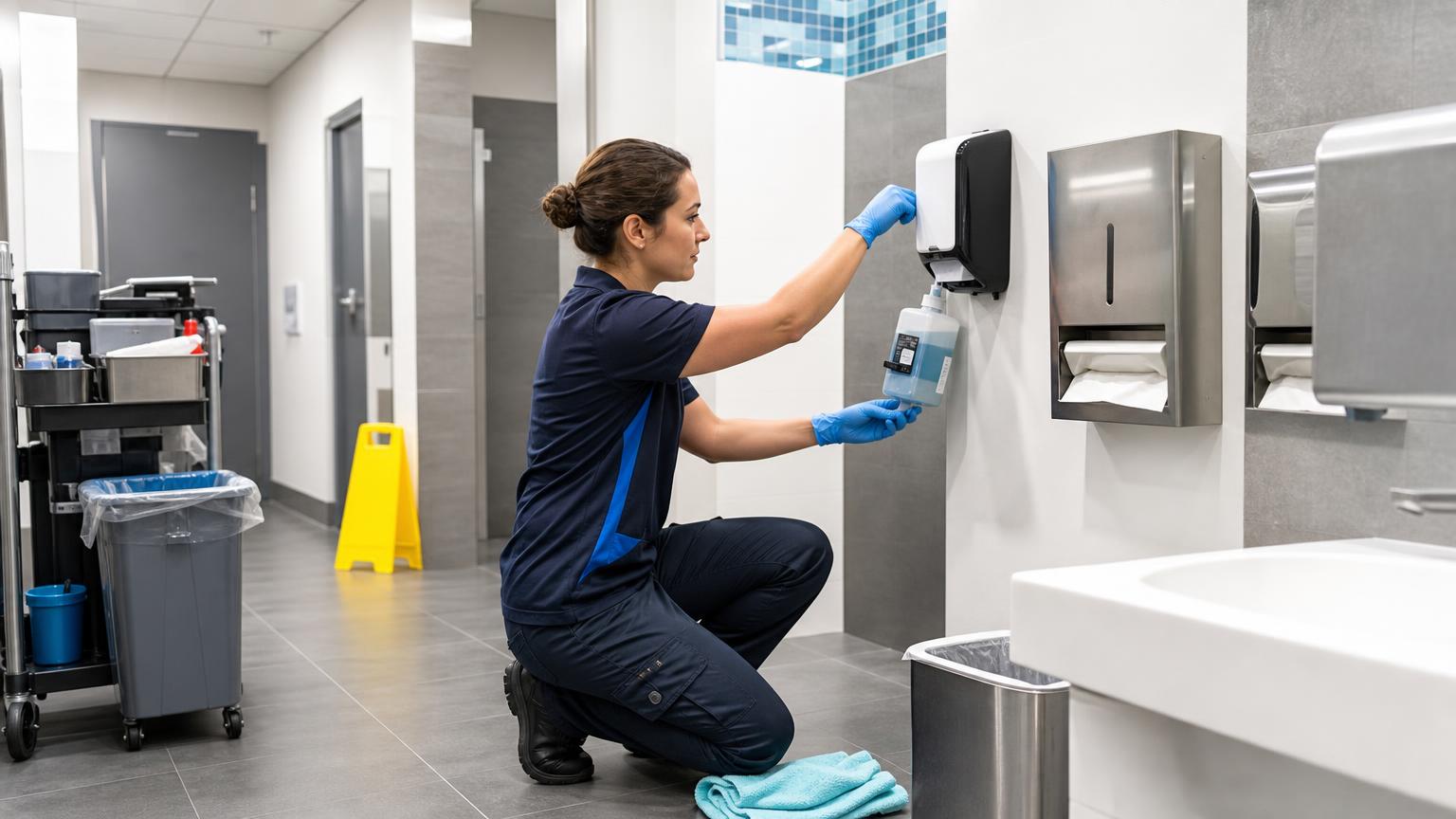
In FM and Facility Management terms, the provider connects site requirements with repeatable service delivery. Read the scope as an operating document, not as a marketing description. A one-line promise to maintain a property does not tell you whether washrooms, traffic routes, storage areas or high-touch surfaces are included.
How the work changes by facility
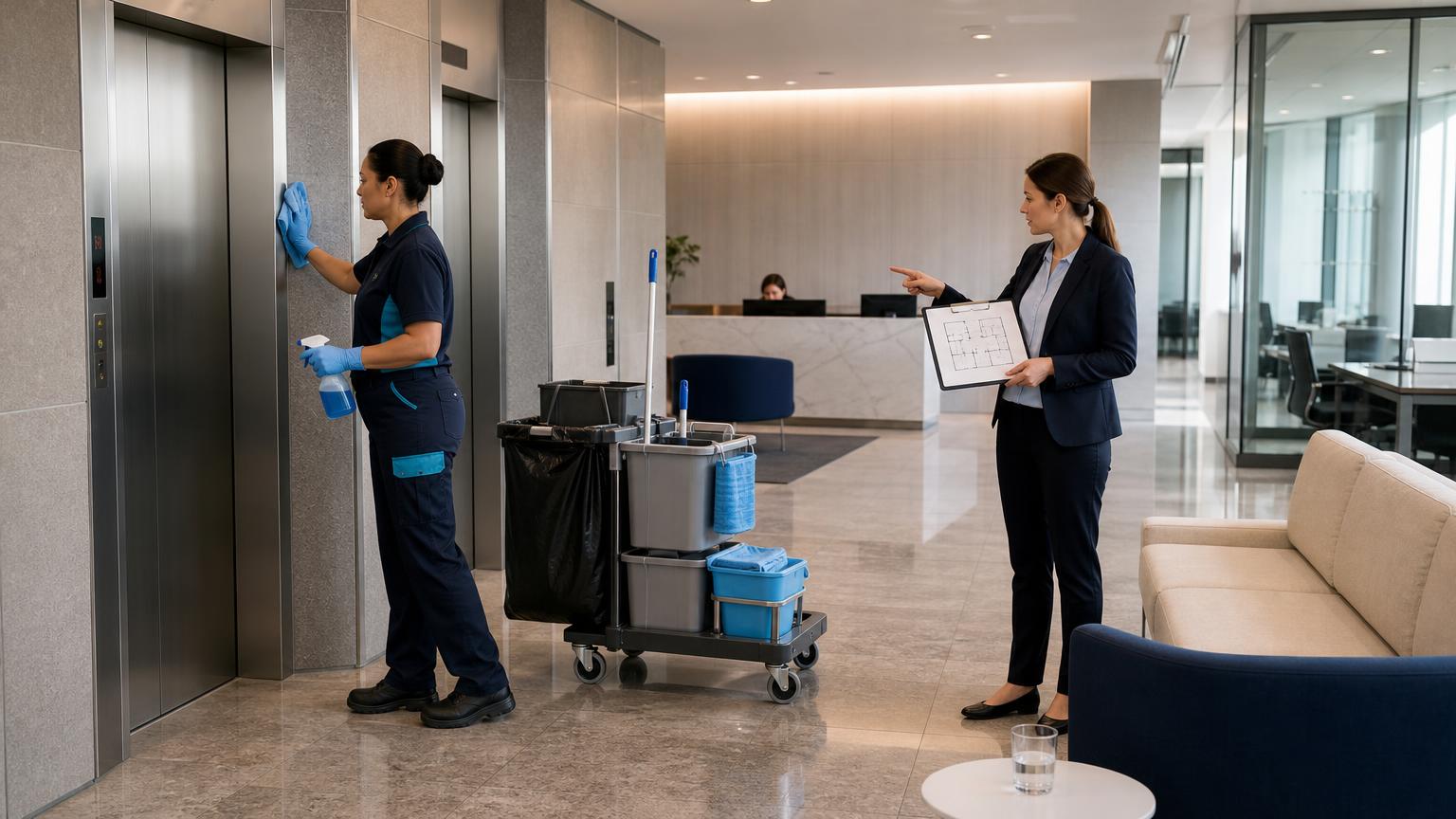
A provider should assess the facility before recommending a routine. An office may need cleaning outside working hours. A warehouse may require attention to floor care, racking dust and traffic routes. Retail and healthcare sites need different checklists from offices because their surfaces, users, access conditions and daily activities differ.
Cygnus Facility Services uses site-scoped quotes, custom schedules and after-hours options for commercial and industrial cleaning. Its listed frequencies include daily, weekly and fortnightly work, with the final schedule based on the building, usage and agreed scope.
Cygnus lists ISO 9001 Quality Management Systems, ISO 14001 Environmental Management Systems, ISO 45001 Occupational Health and Safety Management and CM3 contractor management compliance. Those labels only help when the provider can explain their effect on task planning, safety processes, quality reviews and corrective action.
ISO and CM3 credentials matter most when they explain how a provider works, not when they appear as unexplained logos. The strongest evidence is a clear scope, a defined work window and a practical process for reporting missed or changed requirements.
Which services may be included?
Facility services can cover recurring operational work that supports a property's use. Depending on the provider and contract, examples include:
- Commercial and office cleaning
- Industrial and warehouse cleaning
- Retail and shopping centre cleaning
- Cleaning for banking, finance and government premises
- Medical and healthcare facility cleaning
- Owners corporation and strata common-area cleaning
- Education facility cleaning
- Builders cleaning and end-of-build cleans
- After-hours and scheduled cleaning
- Maintenance coordination and other property support
These services do not automatically belong in one contract. A business should pay for the tasks it needs rather than accept a broad label with unclear boundaries. Cleaning may be the complete requirement for one site, while another may need cleaning alongside maintenance coordination.
For commercial cleaning, ask the supplier to identify each area, task, frequency, preferred work window, access arrangement and site-specific requirement. Cygnus's Commercial Cleaning Services page outlines the sectors it supports, while its individual service pages add context for particular facility types.
Is facility maintenance a good career?
Facility maintenance can suit someone who enjoys practical problem-solving, planned work and responsibility for how a site functions. The role may involve inspecting assets, arranging repairs, responding to faults, coordinating contractors, recording tasks and keeping planned maintenance on schedule.
It is not one job with one routine. A maintenance worker may complete hands-on tasks, a facilities coordinator may organise suppliers and access, and a facilities manager may oversee budgets, service performance and contractor relationships.
The trade-off is responsibility for reliable operations, including work that may occur outside standard business hours. Anyone considering the field should compare the role, site conditions and working hours rather than treating facility maintenance as a single career path.
How do Australian facility services providers operate?
In Australia, a facility services company may support commercial, industrial, retail, healthcare, education, government or strata properties. Its operating area depends on the provider's teams, project availability and service model.
When comparing a provider, confirm the service location, access arrangements, work hours, site contact, contractor requirements, insurance and exact inclusions in the quote. Do not assume that an office cleaning method will suit a warehouse, clinic or retail centre.
Industrial cleaning fails when floor care, racking dust and traffic routes receive the same treatment as a standard office vacuum run. Cygnus Facility Services identifies these areas as part of the site-specific discussion. Its Industrial Cleaning Warrnambool page is relevant when the requirement involves an industrial or warehouse environment.
Where facility management fits
A facilities management company organises the operational parts of a property so the client can focus on its core business. It may provide services directly, manage subcontractors or combine both approaches under an agreed service model.
Facility Management is broader than sending people to complete isolated tasks. It links the building, its users, suppliers and operating schedule. In some organisations, these functions sit under facilities and corporate services, or FCS. The label matters less than a clear statement of who is responsible for each task.
Facility Service Management may therefore cover one service stream or several coordinated services. This does not mean every provider handles every building function. Some companies focus on cleaning, while others offer integrated facilities management. The contract must state the boundary before work begins.
What should the provider be responsible for?
Duties vary by contract, but a facilities management company may be responsible for:
- Assessing the site's operational requirements and documenting the service scope.
- Scheduling recurring work around occupancy, access and business activity.
- Allocating staff or contractors to the agreed tasks.
- Coordinating site access, work windows and communication with the client.
- Applying relevant safety, environmental and quality procedures.
- Recording completed work, issues and follow-up actions where reporting forms part of the contract.
- Reviewing service performance when the facility or its requirements change.
For a cleaning contract, scope control deserves the highest priority. A price without defined areas and frequencies cannot tell a buyer what will happen. Cygnus Facility Services takes the position that quotes should reflect the real scope of the space, with clear pricing and no hidden fees.
Do not pay for an integrated service model until you know which separate tasks it replaces or coordinates. A broader contract may reduce supplier administration, but it will not solve unclear accountability. Businesses that only need one well-defined cleaning service should ignore an unnecessarily broad package.
Common mistakes when choosing support
Most buyers start by comparing prices. That is backwards, because the price cannot be evaluated fairly until every supplier receives the same scope. Define the work first, confirm the work window second, test the supplier's safety and quality systems third, then compare the commercial offer.
Copying an office checklist into a clinic, retail centre or industrial site usually fails. Choosing a frequency before assessing how the building operates creates the same problem. Credentials support due diligence, but they cannot substitute for measurable tasks and agreed responsibilities.
Considerations for Victorian sites
Cygnus Facility Services is based in Warrnambool and supports commercial and industrial sites in South West Victoria, Geelong, Ballarat and Melbourne, as well as open projects Australia-wide. Staffing, travel, access and scheduling should match the specific site being serviced.
For a Warrnambool or South West Victoria property, discuss the building type, required frequency and preferred work window with the Warrnambool-based team. For sites in Geelong, Ballarat or Melbourne, confirm availability for the specific project rather than assuming that an existing schedule transfers unchanged.
Local detail is useful when it reflects actual service coverage and delivery conditions. It is not a reason to create interchangeable suburb pages or make a generic promise.
How to prepare a comparable request
Write down the building type, areas included, required frequency, preferred work window, access information, known risks and reporting requirements. Ask each supplier to price that same scope, and require them to identify exclusions rather than leaving them implicit.
This guide will not choose a contractor or replace a site-specific assessment. It is not intended for businesses seeking only advice about building design, capital works or specialist engineering. If you want to test a real cleaning requirement against a defined scope, request a free quote from Cygnus Facility Services with the facility type, location, required frequency and preferred work window.